
Trees
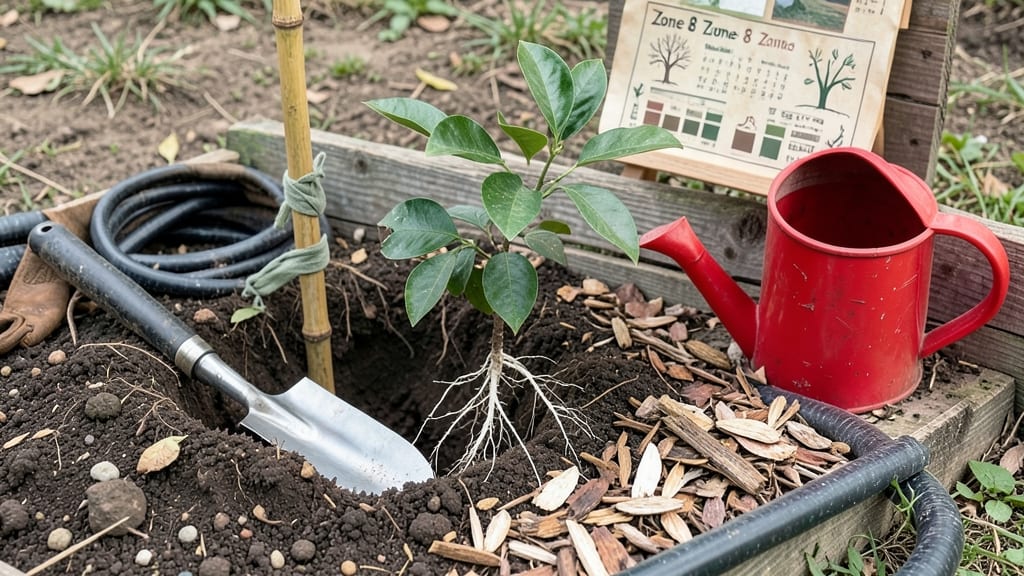
Planting a fruit tree 🍎 at the wrong time in Zone 8 could mean wasted money and years waiting for fruit—unless you time it perfectly with the climate. The key isn’t just picking a season, but matching your tree’s chill-hour needs to Zone 8’s mild winters.
Whether you’re dreaming of juicy peaches or sweet apples, getting this right ensures strong roots and reliable blooms.
Most gardeners in Zone 8 rush to plant in spring, but that’s not always the best move. Fall planting—especially in September or October—gives young trees time to establish roots before summer heat hits. This head start means less stress and faster growth when spring rolls around.
But not all fruit trees thrive on the same schedule, which is why knowing your tree’s chill-hour requirements is the game-changer.
Let’s break down the best windows for planting in Zone 8, from low-chill citrus to classic apples. You’ll learn how to avoid common mistakes like planting too early (which can trigger premature bud break) or ignoring soil temperature.
By the end, you’ll have a clear plan to pick the perfect moment for your fruit tree—so you’re not left waiting another year for that first harvest.
Ready to turn your backyard into a fruit-filled paradise? The right timing starts now, and I’ll show you exactly how to get it right the first time.
Best planting months for fruit trees in Zone 8 based on chill-hour needs
Zone 8 gardeners face a unique challenge: balancing warm winters with fruit trees that need chill hours to bloom. Most varieties require 300-1,000 hours below 45°F (7°C) for proper dormancy. Planting at the wrong time—like mid-summer—can trigger premature bud break, killing flowers before fruit sets.
My strategy? Focus on two ideal windows: late winter/early spring and early fall.
For bare-root trees, I always plant in February-March when soil temperatures rise above 50°F (10°C) but before buds swell. This gives roots time to establish before summer heat stress. Container-grown trees, however, offer more flexibility—plant them September-October to avoid transplant shock during Zone 8’s sweltering summers.
Here’s the key: Chill-hour needs dictate timing. Low-chill varieties (like figs or loquats) can handle 200-300 hours, while peaches or apples need 500-1,000 hours. My Southern California neighbors often fail with standard peach trees because they don’t get enough winter chill.
Instead, they opt for low-chill cultivars like Redhaven peaches (400 hours) or Elberta plums (300 hours).
Soil temperature is just as critical as air temperature. Use a soil thermometer—roots struggle below 50°F (10°C). In Zone 8a (colder microclimates like Atlanta), I plant late February to align with last frost dates (March 15). In Zone 8b (warmer areas like Los Angeles), I shift to early March to avoid heat stress during April’s 80°F+ (27°C+) days.
Mulching is non-negotiable in Zone 8. A 4-inch layer of wood chips keeps roots cool in summer and retains moisture. I also water deeply (15-20 gallons per young tree) once a week during establishment. Overwatering is a common mistake—soggy soil leads to root rot, especially in clay-heavy soils like those in Georgia’s Piedmont region.
Dormancy timing separates successful Zone 8 fruit growers from those who give up. Trees planted in fall (September-October) enter dormancy naturally, while spring plantings must wait for bud swell before active growth. I test dormancy by scratching bark—if green tissue appears, the tree is waking up and needs shade cloth to prevent sunscald.
| Planting Window | Best For | Chill-Hour Range | Soil Temp Requirement | Zone 8 Microclimate |
|---|---|---|---|---|
| Late Winter (Feb-Mar) | Bare-root trees | 500-1,000 hours | 50°F+ (10°C+) | Zone 8a (colder) |
| Early Fall (Sep-Oct) | Container-grown trees | 200-500 hours | 60°F+ (15°C+) | Zone 8b (warmer) |
| Avoid: Mid-Summer (Jun-Aug) | Any fruit tree | Risk of bud break | Heat stress | All sub-zones |
🌱 Pro Tip: Use anti-desiccant spray on bare-root trees to prevent moisture loss during winter planting.
Rootstock selection is another game-changer in Zone 8. Dwarf rootstocks (like M9 for apples) establish faster, but semi-dwarf or standard trees handle heat better. I’ve seen peach trees on Lovell rootstock thrive in San Diego because it’s drought-resistant. For citrus, I stick to container growing—they hate frost but love Zone 8’s mild winters.
Post-planting care in Zone 8 isn’t optional—it’s survival. Stake young trees to prevent wind rock (common in coastal areas), and prune suckers aggressively. I also fertilize lightly in spring with 10-10-10 to avoid burning tender roots. By June, trees should show new growth—if not, I check for aphids or nutrient deficiencies (yellow leaves = nitrogen deficit).
Microclimates within Zone 8 can vary wildly. A valley in Georgia might get 500 chill hours, while a coastal garden in Orange County might only hit 300. I always ask local nurseries for site-specific recommendations. For example, ‘Flame’ nectarines (300 hours) work in LA, but ‘Redhaven peaches (500 hours) struggle. Figs? They’re my Zone 8 MVP—they produce year-round with almost zero chill hours.
Timing isn’t just about months—it’s about reading your tree. Watch for bud swell (when buds plump up) and leaf emergence.
If buds break before March 15 (last frost), I cover them with frost cloth at night. Patience is key: a peach tree might take 3-4 years to bear fruit in Zone 8, but figs can produce in 1-2 years.
The reward? Homegrown peaches in July and figs in September—all because I planted at the right time.
Best planting months for fruit trees in Zone 8 based on chill-hour needs
Zone 8’s mild winters and hot summers create a unique challenge for fruit trees—too early, and your tree may break dormancy prematurely; too late, and it won’t establish roots before summer heat.
The ideal planting window depends on whether you’re planting bare-root or container-grown trees, as well as your specific chill-hour range (300–1,000 hours).
For bare-root trees, late winter to early spring (February–March) is best—this gives roots time to establish before summer stress. However, if you’re in a warmer microclimate (like coastal Zone 8a), fall planting (September–October) can work, as cooler soil temperatures reduce transplant shock.
Container-grown trees offer more flexibility, allowing planting almost year-round except during extreme heat or frost.
Timing isn’t just about the calendar—it’s about soil temperature. Aim to plant when soil temps are above 50°F (10°C) but below 85°F (29°C). Use a soil thermometer to check; if temps exceed 85°F, wait until fall.
In Zone 8b (e.g., Southern California), fall planting is often safer, while Zone 8a (e.g., Georgia) leans toward spring.
| Planting Window | Best For | Soil Temp | Chill-Hour Match | Zone 8 Region |
|---|---|---|---|---|
| Late Winter (Feb–March) | Bare-root trees | 50–65°F (10–18°C) | 300–600 hours | Zone 8a (cooler) |
| Early Fall (Sep–Oct) | Container-grown or bare-root | 60–75°F (15–24°C) | 600–1,000 hours | Zone 8b (warmer) |
| Spring (April) | Low-chill varieties | 65–80°F (18–27°C) | Under 300 hours | Coastal/microclimates |
⚠️ Pro Tip: Mulch heavily after planting to retain moisture and regulate soil temperature.
If you miss the ideal window, don’t panic—container-grown trees can be planted in late fall (November) as long as the ground isn’t frozen. Just avoid planting during peak summer heat, which causes transplant shock and root desiccation.
For citrus trees (which need minimal chill hours), early spring is safest, while stone fruits (peaches, plums) thrive with fall planting to align with natural dormancy cycles.
One critical mistake is ignoring root flare exposure. When planting, ensure the root flare (where roots meet trunk) is 1–3 inches above soil level. Burying it too deep suffocates roots, while planting too high risks girdling.
After planting, stake young trees only if necessary—over-staking can restrict root growth. Water deeply once a week for the first month, then taper to bi-weekly once established.
Remember, Zone 8’s variability means your neighbor’s success might not apply to you. Check your local microclimate—urban areas, slopes, and proximity to water bodies all affect chill hours. For example, Los Angeles (Zone 8b) may need low-chill varieties, while Atlanta (Zone 8a) can handle standard chill-hour trees.
Use a chill-hour calculator to match varieties to your specific location.