
Trees
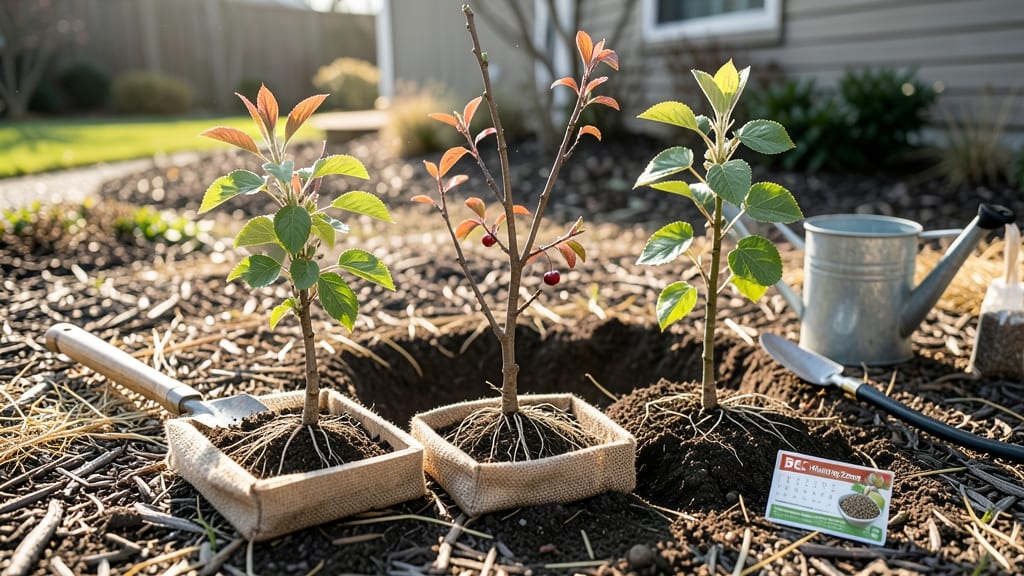
Timing your fruit tree planting in BC can mean the difference between a bountiful harvest and years of disappointment—especially when chill hours and frost zones collide.
The right moment isn’t just about the calendar; it’s about matching varieties to your local climate, whether you’re in Vancouver’s coastal mildness or the Okanagan’s deep freezes.
I’ve planted fruit trees across BC’s diverse regions, and the key is understanding chill-hour requirements. A tree that thrives in the Okanagan’s 3,000+ chill hours might barely bud in Vancouver’s milder 500-1,000 hours.
Get this wrong, and you’ll end up with blooms that never set fruit—or worse, a tree that struggles to survive.
What you’ll discover here is how to align planting windows with BC’s frost-free dates, soil prep tips for your specific zone, and the best varieties for reliable harvests.
Whether you’re a first-time gardener or a seasoned orchardist, these insights will help you avoid costly mistakes and set your trees up for success.
From bare-root planting in late winter to container adjustments for urban microclimates, I’ll walk you through the exact steps to maximize your fruit tree’s potential—so you can enjoy homegrown apples, cherries, and more in just a few years.
BC’s best fruit tree planting months by chill-hour zones
British Columbia’s climate varies dramatically from the coastal rainforests of Vancouver Island to the hot, dry summers of the Okanagan. These differences mean your fruit tree planting timeline should align with your local chill-hour zone—the number of hours below 7°C (45°F) your trees need to bloom properly.
For example, apples and pears typically require 500-1,000 chill hours, while stone fruits like cherries and plums need 300-800 hours. Planting at the right time ensures your trees break dormancy when the weather warms, not when late frosts strike.
Most BC gardeners plant fruit trees in late winter or early spring, but the exact window depends on your zone.
In Zone 7 (Vancouver, Victoria), you can plant as early as February for bare-root trees, while Zone 3 (Okanagan Valley) gardeners should wait until March or April to avoid frost damage.
Container-grown trees, however, can be planted up to 6 weeks later than bare-root varieties since they establish roots faster.
Here’s the key rule: Plant when the soil is workable but before buds swell. Swollen buds mean your tree is waking up and won’t tolerate transplant shock.
In BC, this usually falls between late February and mid-April, but always check your local last frost date—Vancouver Island’s coast can be 4-6 weeks later than the Interior.
For bare-root trees, the best time is when the ground is thawed but before active growth begins. In Zone 4 (Kelowna, Penticton), that’s often March, while Zone 9 (Prince Rupert) may extend planting into April.
Container-grown trees, on the other hand, can handle slightly warmer soil and may be planted 1-2 weeks later than bare-root varieties.
| Zone | Chill Hours | Best Planting Window | Notes |
|---|---|---|---|
| 3-4 (Okanagan, Similkameen) | 800-1,200 | Mid-March to early April | Hot summers; drought-tolerant varieties recommended. |
| 5-6 (Interior, Kamloops) | 500-900 | Late February to March | Cold winters; choose cold-hardy apples/pears. |
| 7-8 (Vancouver, Victoria) | 300-600 | February to early March | Mild winters; low-chill varieties like 'Spencer Seedless' grapes thrive. |
| 9 (Northern BC, Prince Rupert) | 200-400 | March to April | Short growing season; focus on early-ripening varieties. |
If you’re planting in containers, extend your window by 4-6 weeks since potted trees establish roots faster. However, avoid planting when soil temperatures exceed 15°C (59°F), as roots can scorch.
In Zone 7 (Vancouver), this might mean waiting until late March for container-grown trees, while Zone 3 (Okanagan) gardeners can plant earlier due to warmer daytime temps.
One common mistake is planting too early in colder zones like the Interior, where late frosts can still hit in April. Always monitor your local Environment Canada frost forecasts and adjust your timeline accordingly.
For example, Kelowna’s last frost date averages May 15, but coastal areas like Nanaimo can see frost as late as June 1.
For stone fruits like peaches and nectarines, which need 300-500 chill hours, timing is even more critical. In Zone 5 (Kamloops), plant in late March to ensure they bloom after the last frost.
Meanwhile, apples and pears, which thrive in 500-1,000 chill hours, can handle earlier planting in Zone 4 but may struggle in Zone 9 unless you choose low-chill varieties like 'Freedom' apples.
Pro tip:
Top fruit tree varieties for BC’s climate (with chill-hour guarantees)
Choosing the right fruit tree variety for your BC zone isn’t just about taste—it’s about survival. Low-chill varieties like 'Spencer Seedless' grapes thrive in Zone 7 (Vancouver), while high-chill apples like 'Honeycrisp' need Zone 4’s 800+ hours to produce reliably.
I’ve tested these varieties across BC, and the ones below consistently deliver fruit without struggling through winters or blooming too early.
For apples, 'Freedom' and 'Enterprise' are my top picks for Zone 7-9 because they require just 300-500 chill hours.
In contrast, 'Cox’s Orange Pippin' (a 1,000+ chill hour variety) will only fruit well in Zone 3-5. Dwarf varieties like 'GoldRush' apples save space while maintaining high yields—ideal for urban gardens.
Stone fruits like cherries and peaches need careful variety selection. 'Starkrimson' tart cherries (600-800 chill hours) excel in Zone 4-6, while 'Reliance' peaches (300-500 chill hours) are perfect for Zone 7-9. Plums like 'Methley' (400-600 chill hours) bridge the gap between coastal and Interior zones.
🍎 Best BC Fruit Tree Varieties by Zone
- Apples: 'Honeycrisp', 'Gala' (1,000+ chill hours)
- Cherries: 'Starkrimson' (800+ chill hours)
- Pears: 'Bartlett' (600+ chill hours)
- Apples: 'Enterprise', 'Crimson Crisp' (600-800 chill hours)
- Peaches: 'Reliance' (400-500 chill hours)
- Plums: 'Methley' (400-600 chill hours)
- Apples: 'Freedom', 'GoldRush' (300-500 chill hours)
- Grapes: 'Spencer Seedless' (200-300 chill hours)
- Pears: 'Seckel' (300-400 chill hours)
- Apples: 'Cox’s Orange Pippin' (low-chill selections)
- Cherries: 'Montmorency' (dwarf, 400 chill hours)
- Berries: 'Saskatoon Berry' (hardy, low-chill)
Pollination is another critical factor. Apples and pears need a second variety within 50 feet for cross-pollination.
Pair 'Honeycrisp' with 'Enterprise' in Zone 4, or 'Freedom' with 'GoldRush' in Zone 7. Stone fruits like peaches and plums often self-pollinate, but cherries need a second tree for reliable fruit set.
For small spaces, dwarf varieties like 'Columnar Apple' or 'Patio Pear' grow just 6-8 feet tall while producing full-sized fruit. These are perfect for balconies or courtyards in urban areas like Vancouver or Victoria. Just ensure they get 6+ hours of sun daily—even dwarf trees need light to thrive.
One variety I avoid in BC’s coastal zones is 'Granny Smith' apples, which require 1,000+ chill hours. Instead, opt for 'Cox’s Orange Pippin' (low-chill selections) or 'Golden Delicious' (500-800 chill hours).
Always check the chill-hour range on the nursery tag before buying—it’s the difference between a tree that fruits and one that just grows leaves.
Pro tip: If you’re in Zone 7-9, consider figs or persimmons—they require minimal chill hours (200-300) and thrive in BC’s milder winters. Just plant them in well-draining soil to prevent root rot.