
Plants
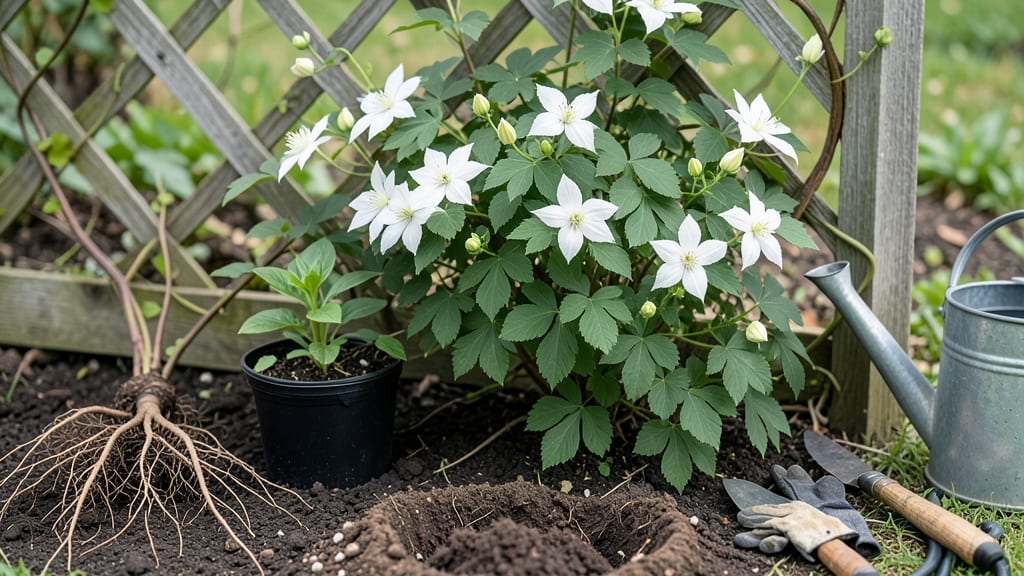
Planting your clematis 🌸 at the wrong time in Michigan could mean struggling with frost damage—or worse, losing your investment entirely.
The perfect window for planting these hardy vines depends on your local USDA zone, and getting it right means the difference between a lush, blooming vine and a sad, stunted one.
Most Michigan gardeners swear by early spring (April) or early fall (September-October) as the ideal times, but the exact timing shifts depending on whether you're in colder Zone 5b or milder Zone 6b. I’ll break down the frost-free timeline so you can plant with confidence, whether you’re prepping in-ground beds or containers.
Why does timing matter so much? Clematis roots need time to establish before winter hits, and planting too late in fall or too early in spring can leave them vulnerable. Let’s walk through the best strategies for your specific zone—plus how to adjust for Michigan’s unpredictable weather patterns.
You’ll also discover how to prepare your soil, choose the right varieties for your climate, and even extend your planting window with simple tricks. Ready to give your clematis the best possible start? Let’s get growing!
Michigan clematis planting timeline by USDA Zone (5 & 6)
Michigan spans USDA Zones 5b and 6b, which means your clematis planting window shifts slightly depending on whether you're in northern or southern Michigan.
In Zone 5b (northern MI), the last frost typically arrives around May 10, while Zone 6b (southern MI) sees its last frost closer to April 25. These dates are critical because clematis roots need 4-6 weeks to establish before winter dormancy.
For both zones, the ideal planting window is either early spring (April-May) or early fall (September-October). Spring planting lets roots establish before summer heat, while fall planting gives them time to root before winter.
Let’s break down the exact timing for each zone to help you avoid frost damage and maximize blooms next season.
Here’s the key detail: soil temperature must be at least 50°F (10°C) for 10 days straight before planting. In Michigan, this usually aligns with late April to early May for spring planting.
For fall, aim to plant at least 6 weeks before your first frost—typically by mid-September in Zone 5b and late September in Zone 6b.
If you’re in Zone 5b (northern MI), your frost-free window is shorter, so fall planting is riskier. I recommend prioritizing spring planting (May 1-15) here, as late fall frosts can still catch young roots off guard.
In Zone 6b (southern MI), you’ve got more flexibility—planting in early fall (September 1-15) is often safer due to milder winters.
🌸
| Zone | Last Frost | Ideal Planting Window | Soil Temp Requirement | First Frost Risk |
|---|---|---|---|---|
| 5b (Northern MI) | May 10 | May 1-15 (Spring) or Sept 1-15 (Fall) | 50°F (10°C) for 10 days | High (Oct 10) |
| 6b (Southern MI) | April 25 | April 15-May 1 (Spring) or Sept 15-Oct 1 (Fall) | 50°F (10°C) for 10 days | Moderate (Oct 15) |
One common mistake Michigan gardeners make is planting clematis too early in spring when soil is still cold. If you plant before May 1 in Zone 5b, roots may not activate, leaving your vine vulnerable to late frosts.
Similarly, planting too late in fall (after September 20 in Zone 5b) risks roots not hardening off before winter.
For container planting, you’ve got more flexibility—just ensure your pots are well-draining and move them indoors if temperatures drop below 20°F (-7°C). Containers warm up faster in spring, so you can often plant 2-3 weeks earlier than in-ground vines.
However, containers also dry out faster, so monitor moisture closely during Michigan’s hot, dry summers.
If you’re unsure about your exact last frost date, check the Michigan State University Extension’s frost calendar or use a local weather app for real-time updates. Remember, clematis roots are sensitive to cold soil, so always prioritize soil temperature over air temperature when deciding your planting date.
Finally, consider mulching heavily after planting to insulate roots—especially in Zone 5b where winters are harsher. A 4-inch layer of straw or wood chips can make all the difference in protecting young roots from freeze-thaw cycles.
✂️
How to adjust planting time for Michigan’s microclimates
Michigan’s climate isn’t one-size-fits-all—urban heat islands, lake-effect zones, and high-altitude areas can shift your clematis planting window by 2-4 weeks.
If you live near Great Lakes shorelines, for example, you might enjoy earlier springs due to lake warming, while inland areas can experience delayed soil warming from cold air pooling. Adjusting your planting time based on these microclimates helps you avoid frost damage and maximize root establishment.
For urban gardeners in cities like Detroit or Grand Rapids, asphalt and concrete create heat islands that warm soil faster. This means you can plant 1-2 weeks earlier than rural areas—aim for mid-April in spring instead of late April.
However, urban soils often compact, so amend with organic matter to improve drainage and root penetration.
🌿
- 🌊 Lake-effect zones (e.g., Traverse City, Saugatuck): Plant 10-14 days earlier than inland areas—lake breezes moderate temps, and soil warms faster near shorelines.
- 🏙️ Urban heat islands (e.g., Detroit, Ann Arbor): Soil temps rise 3-5°F faster—plant April 1-15 in spring. Use shade cloth in summer to prevent heat stress.
- 🏔️ High-altitude areas (e.g., Upper Peninsula): Delay planting until May 1-15—cooler temps and shorter seasons reduce your frost-free window.
- 🌳 Wooded or shaded areas: Soil stays cooler—plant 2 weeks later than sunny spots. Choose shade-tolerant varieties like ‘Comtesse de Bouchaud’.
- 🏡 Container gardeners: Move pots to warmer microclimates (e.g., south-facing patios) in spring. Use black plastic pots to absorb heat faster.
If you’re planting in fall, microclimates play a different role. Areas near large bodies of water may experience later first frosts, so adjust your timeline accordingly.
For example, in Zone 5b near Lake Michigan, you might safely plant until October 1, while inland areas should wrap up by September 20 to avoid frost damage.
To extend your planting window, consider using frost blankets or cold frames in early spring or late fall. These tools can add 2-3 weeks to your growing season by trapping heat.
For example, covering newly planted clematis with a frost blanket after a light frost can protect tender roots while they establish. Just remember to remove the cover during the day to prevent overheating.
Another trick is to use black plastic mulch in spring. This dark material absorbs sunlight and warms the soil 5-10°F faster than bare earth, helping you meet the 50°F soil temp requirement weeks earlier.
Lay the mulch 2-3 weeks before planting to maximize soil warming—just leave a small gap around the base of your clematis to prevent rot.
Finally, if you’re in a high-altitude area like the Upper Peninsula, focus on fall planting for better success. The shorter growing season means spring planting is riskier, but fall gives roots time to establish before winter.
Choose extra-hardy varieties like ‘Jackmanii’ or ‘Niobe’ for these conditions, as they tolerate colder soils better than tender types.
✂️