
Companion Plants
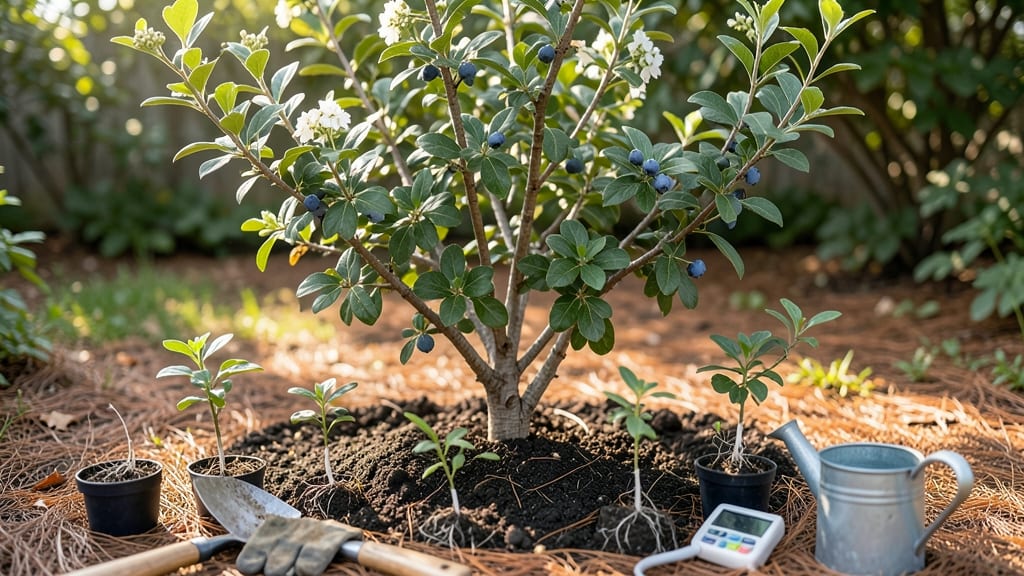
Planting a blueberry bush 🫐 in Michigan isn’t just about timing—it’s about matching your variety to the state’s chill hours and avoiding those pesky late frosts that can stall your harvest before it even starts.
The right window means the difference between a thriving shrub and one that struggles to take root, especially in zones 5b-6b where temperatures can swing wildly.
Most gardeners in Michigan swear by fall planting in September, when the soil is still warm but the air cools down—giving young roots time to establish before winter.
But spring planting (after your last frost, typically late April to early June) works too, if you’re patient and prepared for frost protection. The key is knowing your blueberry’s chill-hour needs and aligning them with Michigan’s climate quirks.
In this guide, I’ll break down exactly when to plant—whether you’re working with high-bush, low-bush, or rabbiteye varieties—and how to prep your soil for maximum success. We’ll also cover how to shield your bushes from Michigan’s unpredictable frosts, so you can enjoy a bountiful harvest from July to August.
Ready to grow the sweetest, healthiest blueberries your neighbors will envy? Let’s get started with the steps that’ll set your blueberry bush up for success from day one.
Best planting months in Michigan based on chill-hour requirements
Michigan’s USDA zones 5b-6b demand careful timing for blueberry bushes, especially since they require 200-1,000+ chill hours to thrive. The best planting windows align with spring thaw (after last frost) or early fall, when soil temperatures stabilize.
For high-bush varieties (most common), aim for late April to early June in southern Michigan or May to early June in the Upper Peninsula.
Fall planting (early September to October) is ideal for bare-root bushes because cooler temps reduce transplant shock.
However, avoid planting after mid-October, as young roots won’t establish before winter’s freeze. Container-grown bushes can handle slightly later fall planting (up to November), but protect them with mulch or frost cloth.
Regional microclimates matter! Southern Michigan (e.g., Ann Arbor, Detroit) has earlier last frosts (mid-April), while the Upper Peninsula (e.g., Marquette, Houghton) often sees frosts until late May. Use NOAA frost maps to pinpoint your local window—this can shift planting by 2-4 weeks between regions.
🌱
If you’re planting in containers, extend your window to late May or early September—containers warm up faster in spring and lose heat quicker in fall. For bare-root bushes, plant as soon as soil is workable (around 40°F) to avoid drying out roots.
Pro tip: Soak bare-root plants for 2-3 hours before planting to rehydrate roots.
For fall planting, focus on September in northern Michigan or early October in southern regions. This gives roots 6-8 weeks to establish before winter. Avoid fall planting if your area gets early hard frosts (below 20°F
🌿 To verify your local chill hours, check the Michigan State University Extension or use a chill-hour calculator (like the one from University of Georgia). Most of Michigan falls in the 600-800 chill-hour range, perfect for varieties like ‘Bluecrop’ or ‘Jersey’. If you’re in the Upper Peninsula, opt for low-bush types like ‘Pawnee’, which tolerate fewer chill hours. Remember: Spring planting risks frost damage to new shoots, while fall planting can stress bushes if done too late. The sweet spot is 6-8 weeks before your first expected frost—this balances root establishment and shoot growth. ☀️
How to adjust planting time for Michigan’s unpredictable spring frosts
Michigan’s late spring frosts can devastate young blueberry bushes, so adjusting your planting timeline is critical. The Upper Peninsula often sees frosts until mid-May, while southern Michigan may be frost-free by early April. Always check the NOAA frost forecast for your specific county before transplanting.
For bare-root plants, aim to plant 4-6 weeks before your region’s last frost date. This gives roots time to establish before soil warms. Container-grown bushes can handle slightly later planting since their root systems are already developed.
Use frost cloths or row covers if you must plant early. These create a 2-4°F warmer microclimate, protecting tender new growth. Secure the fabric loosely to allow airflow and prevent moisture buildup.
If frost strikes after planting, cover bushes with frost cloth at dusk and remove by 10 AM. Water roots deeply before a frost event to protect them. With these adjustments, your blueberry bushes will thrive despite Michigan’s unpredictable spring weather.
🌱