
Plants
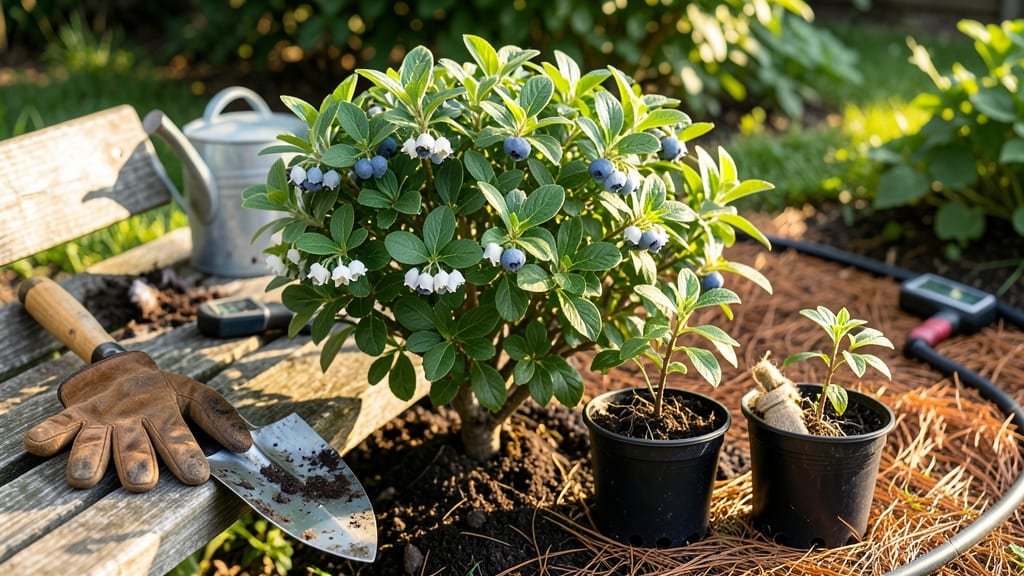
Planting blueberry bushes in Georgia at the wrong time could mean waiting years for that first sweet harvest—because these shrubs need the right chill hours to fruit properly.
The key is timing your planting between late October and early March, when cooler temperatures and dormant soil create ideal conditions for root establishment.
Georgia’s humid subtropical climate adds another layer of complexity, with chill-hour requirements varying dramatically from 7b to 8b zones. In colder northern areas like Athens, you’ll need varieties that tolerate 800+ chill hours, while southern regions like Savannah thrive with 400–600 hours.
Getting this match right means the difference between a bush that bursts with berries and one that stays stubbornly barren.
I’ve learned the hard way that rushing the process—like planting too early in warm soil or too late before winter dormancy—can stunt growth or even kill young roots. The solution?
A strategic approach that includes soil prep, proper spacing, and post-planting care tailored to Georgia’s unique microclimates. Let’s break down exactly how to set your blueberry bushes up for success.
Whether you’re planting bare-root bushes in fall or container-grown varieties in early spring, the right timing and techniques will ensure your 🫐 bushes produce reliably for years.
Stick with me, and I’ll show you how to avoid common pitfalls that waste time and money—so you can enjoy your first harvest sooner than you think.
Georgia’s best planting months for blueberries: chill-hours by region
Blueberries thrive in Georgia’s climate, but timing is everything. The state’s three chill-hour zones—ranging from 400 to 1,000 hours—dictate when to plant for optimal fruit set. Northern Georgia (like Athens) needs more chill hours, while southern areas (like Savannah) require earlier planting to avoid summer stress.
Missing this window can delay your harvest by up to a year.
For northern Georgia (Athens, Blue Ridge), aim for planting between mid-October and early December. This aligns with the 600–1,000 chill-hour range needed for varieties like ‘Tifblue’ and ‘Premier.’
Southern Georgia (Savannah, Brunswick) should plant late September to November to accommodate 400–600 chill hours, favoring heat-tolerant types like ‘Climax’ or ‘Peach Sorbet.’
Atlanta’s 500–700 chill-hour zone offers flexibility, but planting in November or early December ensures roots establish before winter’s mild freezes. Avoid spring planting—Georgia’s sudden heat can shock young bushes, stunting growth for months.
Here’s how Georgia’s regions break down for optimal planting windows and chill-hour requirements:
| Region | Chill-Hour Zone | Best Planting Months | Recommended Varieties |
|---|---|---|---|
| Northern GA (Athens, Blue Ridge) | 600–1,000 hours | Mid-October – Early December | Tifblue, Premier, Legacy |
| Central GA (Atlanta, Macon) | 500–700 hours | November – Early December | Climax, Powderblue, Southern Highbush |
| Southern GA (Savannah, Brunswick) | 400–600 hours | Late September – November | Peach Sorbet, Emerald, Sharpblue |
If you’re in Zone 7b–8a, prioritize bare-root bushes in late fall—they establish roots faster than container-grown plants. For container-grown bushes, plant in early spring (March) to avoid summer heat stress. Always test your soil’s pH (4.5–5.5) before planting; Georgia’s native soils often need sulfur amendments to acidify them.
Pro tip: Use mulch (pine straw or wood chips) after planting to retain moisture and regulate soil temperature. In southern Georgia, a 3-inch mulch layer can protect roots during summer’s brutal heat, preventing transplant shock that delays fruiting by 6–12 months.
Remember, Georgia’s last frost date varies by region—March 15 in north Georgia vs. February 28 in south Georgia. Planting too late risks frost damage to new growth, so adjust your timeline based on your local USDA Zone and microclimate.
For example, Atlanta’s urban areas can be 5°F warmer than rural spots just 20 miles away.
Once planted, your blueberries will need 1–2 years to mature before producing a full harvest. Patience pays off—following these region-specific guidelines ensures your bushes enter dormancy correctly, setting the stage for sweet, juicy berries by late spring.
🫐
How to adjust planting time for southern Georgia’s heat tolerance
Southern Georgia’s warmer climate—especially in areas like Savannah, Brunswick, and Albany—can make blueberry planting a tricky balancing act. If you plant too early, the heat stresses young roots before they establish.
But delaying too long risks summer heatwaves that stunt growth or even kill tender shoots. The solution? Adjust your planting timeline to align with your microclimate’s heat tolerance and chill-hour needs.
For example, in Zone 8a (Savannah), where chill hours rarely exceed 500–600 hours, you’ll want to plant heat-resistant varieties like ‘Peach Sorbet’ or ‘Climax’ as early as late September to early October. These varieties handle the heat better and still meet their chill requirements by winter.
Meanwhile, in Zone 7b (Athens), where chill hours reach 800+ hours, late October to November is ideal for standard varieties like ‘Duke’ or ‘Tifblue’. The key is matching the plant’s needs to your local heat patterns.
Another trick for southern Georgia gardeners is to plant container-grown bushes instead of bare-root varieties. Containers let you delay planting until cooler months (November–December) while keeping roots cool and hydrated.
Just be sure to acclimate plants gradually to outdoor conditions if they’ve been grown in a nursery with shade or drip irrigation.
Don’t overlook the power of mulching—a thick layer of organic mulch (like pine needles or shredded bark) can keep soil temperatures 10–15°F cooler during summer heatwaves.
This mimics the natural acidic, moisture-retentive conditions blueberries love. I’ve seen mulched bushes in Albany (Zone 8a) thrive where unmulched ones struggled during 100°F heatwaves.
Finally, if you’re in a transition zone (like Macon or Columbus600–800 hourshalf-high varieties like ‘Premier’ or ‘Chandler’. These adapt better to mild winters and still produce well.
The goal is to minimize stress on your bushes during their critical first year—so they’re ready to fruit by Year 3 or 4, not Year 5 or 6.
With these adjustments, you’ll beat the heat and set your blueberries up for a reliable harvest—no matter where you garden in Georgia. 🌡️☀️