
Plants
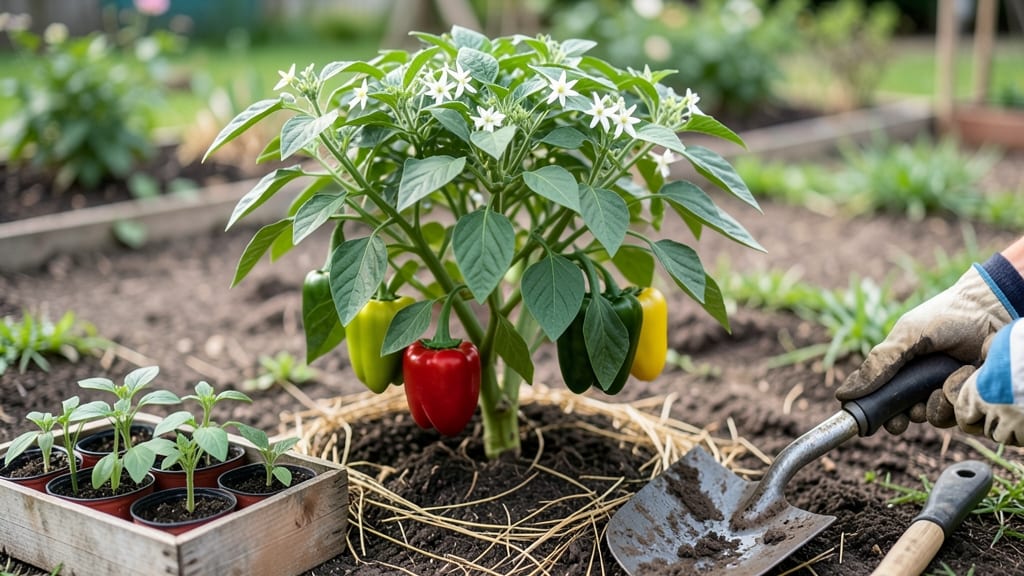
Planting your 🌶️ bell peppers in Alabama at the wrong time means slow starts, wilted leaves, or even lost crops—especially when soil stays cool longer than you expect.
The key to fast germination and healthy growth isn’t just waiting for spring; it’s tracking soil temperatures that actually trigger those seeds to wake up.
Alabama’s 7b-8b climate gives you two chances: a spring window (March 15–April 30) and a fall crop (August 1–September 15), but timing matters more than dates. Cold soil below 60°F will stall your peppers, while waiting too long risks heat stress.
I’ll show you exactly how to read your soil’s temperature cues—no guesswork.
You’ll also discover how Alabama’s humidity and regional microclimates (from the mountains to the coast) demand adjustments. Whether you’re in North Alabama’s cooler valleys or South Alabama’s steamy lowlands, these fast-growing tips will help you avoid common pitfalls like overwatering or planting too early.
By the end, you’ll know the precise windows for your area, how to prep your soil for speedy germination, and which pepper varieties thrive in Alabama’s heat. Let’s get those seeds in the ground the right way—so you’re harvesting 🌶️ bell peppers in record time.
Alabama’s ideal bell pepper planting window based on soil temperature
Alabama’s bell peppers (🌶️) thrive when planted after the last frost and when soil temperatures consistently reach 60°F or higher. Unlike cooler crops, bell peppers are heat-loving annuals that refuse to germinate in cold soil, making timing everything.
In Alabama’s USDA Zones 7b-8b, your planting window hinges on two critical factors: soil warmth and regional frost dates.
Most Alabama gardeners aim to plant bell peppers between mid-March and late April for a summer harvest, or early August to mid-September for a fall crop.
However, these dates are general guidelines—your exact timing depends on whether you’re in North Alabama’s cooler highlands or South Alabama’s humid coastal plains. A soil thermometer is your best tool for precision planting.
🌱 Bell Pepper Planting Timeline for Alabama
| Stage | Action | Soil Temp Requirement | Alabama Region |
|---|---|---|---|
| Start Seeds Indoors | 8-10 weeks before last frost | N/A | All regions |
| Transplant Seedlings | After last frost, soil ≥60°F | 60°F+ | North AL: April 15-May 1 South AL: March 15-April 15 |
| Direct Sow Outdoors | Soil ≥70°F, after May 1 | 70°F+ | All regions |
| Fall Planting Window | August 1-September 15 | 60°F+ | North AL: August 15-Sept 1 South AL: July 31-Aug 31 |
💡 Pro Tip: Use a soil thermometer to confirm warmth before planting—bell pepper seeds won’t germinate below 60°F, even if air temps are mild.
North Alabama’s higher elevations (like Huntsville or Decatur) often experience later last frosts, sometimes as late as April 15. In these areas, wait until mid-to-late April to transplant seedlings, even if your neighbors in Birmingham are planting earlier.
Meanwhile, South Alabama’s coastal regions (Mobile, Gulf Shores) can safely plant as early as mid-March if soil temps are ideal.
For fall planting, aim to have peppers established by mid-August so they mature before first frost (typically mid-November). In North Alabama, this means starting seeds indoors by July 1, while South Alabama gardeners can direct-sow until early September.
The key is ensuring 60°F soil temps during germination.
If you’re unsure about your local frost dates, check the Alabama Agricultural Statistics Service or use the National Weather Service’s frost prediction maps.
For most of Alabama, the last frost date falls between March 15 and April 1, but microclimates—like urban heat islands in Birmingham or shaded valleys in the Appalachians—can shift this by 1-2 weeks.
One common mistake is relying on air temperature instead of soil temperature. A sunny 70°F day can hide 50°F soil, which will delay germination by weeks.
Always check soil temps 1 inch deep in the morning for accuracy. For fastest results, use black plastic mulch to warm soil 5-10°F faster than bare ground.
Alabama’s clay-heavy soils also play a role—amend beds with compost or aged manure to improve drainage and warmth retention. A well-prepared bed can help peppers establish 2 weeks earlier than in poor soil.
Pair this with drip irrigation to maintain consistent moisture, and your bell peppers will reward you with bold flavors and high yields.
For heat-sensitive varieties like ‘Sweet Banana’ or ‘California Wonder’, plant on the earlier side of the window (March-April) to avoid summer’s brutal heat. Conversely, heat-tolerant types such as ‘Jupiter’ or ‘Aristotle’ can handle late May plantings in South Alabama.
Remember: Bell peppers are not frost-tolerant—even a light frost will kill seedlings. Use row covers if planting early, but remove them once flowers appear to prevent heat stress. With the right timing, you’ll enjoy homegrown peppers from June through October!
How to adjust planting timing for Alabama’s microclimates
Alabama’s varied geography—from the Appalachian foothills in the north to the Gulf Coast in the south—means your bell pepper planting window can shift by weeks depending on where you live. North Alabama’s cooler springs (like Huntsville or Decatur) may delay planting until mid-April, while South Alabama’s warmer zones (like Mobile or Dothan) can start as early as late February in sheltered microclimates.
Even within cities like Birmingham, urban heat islands can push planting dates 10–14 days earlier than rural areas.
For higher elevations (USDA Zone 7b), like Madison or Albertville, aim for after April 15 to avoid late frosts. In coastal areas (Zone 8a), such as Gulf Shores, you might safely plant as early as March 1 if you use row covers for extra protection.
Always check your local Alabama Cooperative Extension office for hyper-local frost data, as microclimates can vary even within counties.
🌶️ Pro Tip: If you’re in a transitional zone (like Montgomery), test your soil with a soil thermometer—bell peppers won’t germinate well below 60°F, even if frost risk is low.
A black plastic mulch can warm soil by 5–10°F faster than bare earth, giving you an earlier start in cooler microclimates.
- Plant after April 15—wait for soil to hit 65°F+.
- Use row covers until May 1 to extend the season.
- Choose shorter varieties (e.g., 'Aristotle') for cooler nights.
- Start March 15–April 1 in urban heat zones.
- Avoid planting before March 1 unless using greenhouses.
- Fall planting works until September 10 for harvests.
- Plant as early as February 28 in sheltered spots.
- Watch for humidity-related diseases—space plants 18–24 inches apart.
- Fall planting extends to October 1 for late harvests.
Extending your growing season with row covers or cold frames can add 3–4 weeks to your planting window. For example, in North Alabama, covering seedlings with floating row covers can let you plant 3 weeks earlier than the standard date.
Just remove covers when peppers flower to prevent heat stress. In South Alabama, shade cloth (30–50%) can protect peppers from midday sunburn during summer’s peak heat (July–August).
Don’t overlook container gardening—pots warm up faster than garden beds, letting you plant 2–3 weeks earlier in spring or 1–2 weeks later in fall. Just ensure containers have drainage holes and use a lightweight potting mix to avoid waterlogging in Alabama’s heavy clay soils.
🌱 Final Tip: Keep a gardening journal for 2–3 years to track your local microclimate’s quirks. Note when your soil hits 60°F, how long it stays warm, and which varieties thrive in your zone. This data will help you fine-tune planting dates for years to come!