
Planting
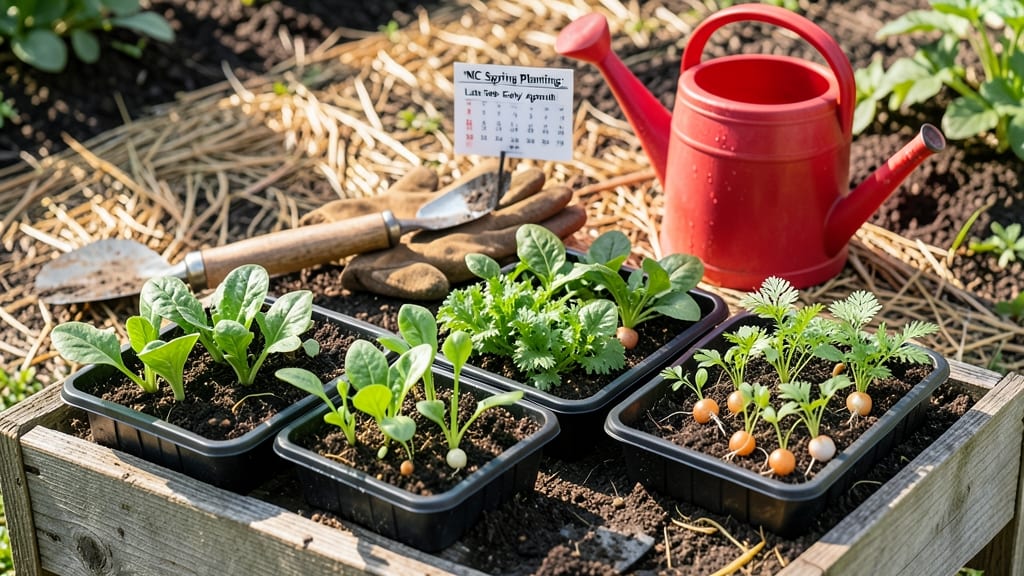
Planting a garden in North Carolina isn’t just about grabbing seeds and digging in—it’s about timing those frost-free windows to the day for your specific county. Miss the mark, and you’ll either be racing against early frosts or watching your seedlings wilt in summer heat.
With zones ranging from 6a to 8a, the right schedule makes all the difference between a thriving 🌱 General Vegetable Garden and a disappointing harvest.
Whether you’re in the Coastal Plain’s humid warmth or the Mountains’ cooler climate, knowing when to plant—like late February for hardy greens or August for heat-loving tomatoes—can stretch your growing season by months.
I’ll break down the exact dates for your region, so you can avoid common mistakes like planting warm-season crops too soon or cool-season veggies too late.
This guide covers everything from frost dates to soil prep, tailored to NC’s microclimates. You’ll learn which crops thrive in your zone, how to adjust for elevation or urban heat, and even how to extend harvests with succession planting.
No more guesswork—just a clear, county-by-county roadmap to a garden that outperforms your neighbors’.
Ready to turn your backyard into a year-round harvest hub? Let’s get started with the planting windows that work for your corner of North Carolina—no matter where you live in the state.
NC frost-free dates by heat Zone: county-specific planting timelines
North Carolina spans USDA hardiness zones 5b through 8a, meaning frost dates vary dramatically from the mountains to the coast. Understanding these zones helps you avoid late spring frosts that can devastate tender seedlings or miss the fall planting window for cool-season crops.
The key? Planting based on your last average frost date in spring and first average frost date in fall.
For example, Asheville (Zone 6b) typically sees its last frost around April 15, while Wilmington (Zone 8a) often waits until March 15. These differences mean your tomato seedlings might be ready to transplant in April in the mountains but should go in by March on the coast.
Let’s break down the critical dates by region to help you plan your 2024 planting schedule.
🌱 PRO TIP: Use the NC State Extension’s Frost-Free Date Map (linked below) to find your exact county’s averages. Even within a zone, microclimates—like urban heat islands or sheltered valleys—can shift your timeline by 1-2 weeks.
| Region | USDA Zone | Last Spring Frost | First Fall Frost | Spring Planting Window | Fall Planting Window |
|---|---|---|---|---|---|
| Mountains (Asheville, Boone) | 6b-7a | April 15–May 1 | October 15–20 | March 1–April 15 (cool crops) | August 1–September 15 |
| Piedmont (Raleigh, Greensboro) | 7a-7b | March 25–April 10 | October 25–November 1 | February 15–March 30 (cool crops) | August 15–September 30 |
| Coastal Plain (Wilmington, Fayetteville) | 8a | March 1–15 | November 15–December 1 | January 15–March 1 (cool crops) | September 1–October 15 |
| Sandhills (Pinehurst, Sanford) | 7b-8a | March 10–20 | November 1–15 | February 1–March 15 (cool crops) | August 15–October 1 |
📍 Find your county’s exact dates: NC State Extension Frost Dates
Now that you know the general frost dates for your area, let’s talk cool-season vs. warm-season crops. Cool-season plants—like lettuce, spinach, and broccoli—can handle light frosts and should go in 4-6 weeks before your last frost date.
Warm-season crops, such as tomatoes, peppers, and cucumbers, need soil temperatures above 60°F and should wait until 2-3 weeks after your last frost.
For instance, in Zone 7a (Piedmont), with a last frost of April 10, you’d plant cool crops like kale by March 1 and warm crops like basil after April 24.
Miss these windows, and you’ll either lose seedlings to frost or struggle with stunted growth from cool soil. Use row covers or a cold frame to extend your spring planting by 2-3 weeks if needed.
Don’t overlook fall planting, which can be just as productive as spring. In Zone 6b (mount
How to adjust planting dates for NC’s microclimates and soil types
North Carolina’s diverse geography means frost dates and soil conditions vary wildly from the Coastal Plain to the Blue Ridge Mountains. A garden in Asheville (Zone 6b) might have 3 weeks earlier last frosts than one in Wilmington (Zone 8a).
Even within counties, elevation changes of just 500 feet can shift planting windows by 10–14 days. Ignoring these microclimates risks frost damage or stunted growth—here’s how to adapt.
Soil drainage is another critical factor. Sandy soils (common in the Coastal Plain) dry out faster, while clay-heavy soils (like those in the Piedmont) hold moisture too long. Amend your soil 4–6 weeks before planting to match your crop’s needs: add compost for sandy soil or perlite for clay. Test your soil’s pH too—most vegetables thrive at 6.0–7.0, while blueberries need 4.5–5.5.
🌱
Urban heat islands in cities like Raleigh or Charlotte can create 5–10°F warmer microclimates than rural areas just miles away. If you’re in a city, start warm-season crops like tomatoes or peppers 1–2 weeks earlier than rural guidelines suggest. Conversely, mountain valleys (like Boone or Brevard) often experience later frosts—wait until May 1 to plant heat-loving crops unless you’re using row covers for protection.
Succession planting is your secret weapon for extending harvests. In Zone 7a (e.g., Greensboro), plant bush beans or lettuce every 2 weeks from April to July to avoid gaps. For cool-season crops like kale or carrots, sow late summer (August) for a fall harvest before the first frost. Use shade cloth in Zone 8a (e.g., Fayetteville) to protect delicate greens from intense summer sun.
💧
Watch for false springs—those unseasonably warm stretches in March or April that trick you into planting too early. Check your local National Weather Service forecast for 10-day outlooks and wait until consistent warmth (nighttime temps above 50°F) before planting tender seedlings.
In Zone 6b (e.g., Lenoir), this often means holding off until mid-April, even if March feels mild.
Container gardening offers flexibility for tricky microclimates. Move pots to sheltered spots at night if frost threatens or place them in sunniest locations during the day. Herbs like basil or cilantro thrive in containers and can be brought indoors if heat waves exceed 90°F. For root vegetables like carrots or radishes, ensure containers are at least 12 inches deep and use well-draining mix to prevent rot.
✂️
Pro Tip: Keep a gardening journal for 2–3 years to track your local frost dates, soil moisture, and plant performance. Note which varieties thrive in your microclimate—some heirloom tomatoes or native flowers may outperform hybrids in your specific conditions. Share your observations with neighbors to build a community planting guide for your area!
Key Takeaway: NC’s planting calendar isn’t one-size-fits-all. Use USDA Zone maps as a starting point, then adjust for elevation, soil, and urban heat. When in doubt, start small with fast-growing crops like radishes or lettuce to test your timeline before committing to long-season plants like squash or corn.