
Planting
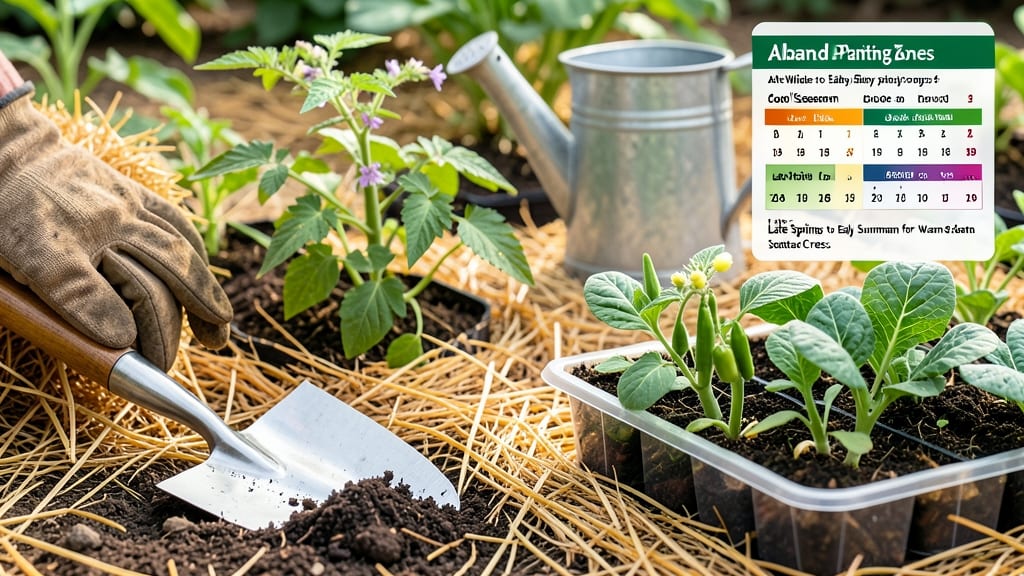
Knowing when to plant a garden in Alabama can transform your summer from a battle against wilting plants into a season of lush, productive harvests. The state’s unique climate—with its long summers and mild winters—demands precise planting windows to avoid the heat’s worst months.
I’ve learned the hard way that cool-season crops like lettuce and broccoli need to hit the soil 4-6 weeks before the last frost, while warm-season favorites like tomatoes and peppers should wait until 2-3 weeks after. Get it wrong, and you’ll be fighting the heat instead of harvesting.
In this guide, I’ll break down the exact months for spring vs. fall planting, tailored to Alabama’s USDA Zones 7a-8b. Whether you’re in Birmingham or Mobile, you’ll discover when to start seeds indoors, when to transplant, and how to stretch your growing season for year-round harvests.
Ready to turn your Alabama garden into a thriving oasis? Let’s dive into the calendar that’ll keep your 🌱 crops happy—and your dinner table full—all year long.
Alabama planting calendar by heat zone: best months for spring vs fall gardens
Alabama’s three distinct heat zones—North (7a-7b), Central (8a-8b), and South (9a)—dictate when to plant for maximum success. Cool-season crops like lettuce and broccoli thrive in spring and fall, while warm-season favorites such as tomatoes and peppers need the heat of summer.
Missing these windows means struggling with bolting greens or stunted vines.
For North Alabama (Zones 7a-7b), the last frost date typically falls around March 15, giving you a 4-6 week head start for cool-season crops. Meanwhile, South Alabama (Zone 9a) enjoys a longer growing season with no frost risk after February 15, allowing for extended planting windows.
Central Alabama sits in between, with March 1-March 15 as the critical frost cutoff.
| Zone & Region | Last Frost Date | Best Spring Planting Window | Best Fall Planting Window |
|---|---|---|---|
| North (7a-7b) | March 15 | March 1 - April 15 | August 15 - September 15 |
| Central (8a-8b) | March 1 | February 15 - April 30 | July 30 - September 30 |
| South (9a) | February 15 | January 15 - May 1 | July 1 - October 15 |
In North Alabama, aim to plant cool-season crops like spinach and peas 4-6 weeks before March 15, while warm-season crops such as okra and sweet potatoes should wait until April 15 to avoid frost damage. Central Alabama gardeners can start early spring crops like broccoli in February and transition to summer heat lovers by May 1.
For South Alabama, the extended season means year-round planting is possible for heat-tolerant crops like collard greens and sweet potatoes. However, even here, late summer heat (August-September) can stress plants, so opt for shade-loving varieties or use row covers to protect seedlings.
My rule of thumb? Cool-season crops belong in spring and fall, while warm-season crops need the heat of summer. For example, tomatoes and peppers planted before April 15 in North Alabama will bolt or rot in unpredictable spring frosts.
Conversely, lettuce and kale planted after September 1 in South Alabama may struggle with late-season heat stress.
Don’t overlook herbs like basil and cilantro, which thrive in cool spring mornings but wilt under summer’s intensity. Plant basil after Memorial Day in North Alabama or April 15 in South Alabama for best results.
Similarly, cold-hardy onions can be sown as early as February in Central Alabama, while heat-sensitive cucumbers should wait until May 1 statewide.
Alabama’s fall planting window is just as critical as spring. In North Alabama, start cool-season crops by August 15 to harvest before first frost (November 15).
In South Alabama, you can push the window to October 15 for crops like carrots and radishes, which mature quickly in mild weather.
Pro tip: Use Alabama Cooperative Extension’s frost maps to pinpoint your exact last frost date. For most of us, it’s March 1-March 15, but higher elevations (e.g., Huntsville) may see frost as late as April 1. Adjust your planting schedule accordingly to avoid frost-damaged seedlings.
Finally, don’t forget perennials and flowers. Azaleas and camellias should be planted in fall (September-October) for root establishment before winter, while annuals like marigolds can be sown directly after last frost for continuous blooms through summer.
With these zone-specific windows, you’ll avoid the common Alabama gardening mistakes—like planting tomatoes too early or lettuce too late—and enjoy a bountiful harvest
How to adjust planting times for Alabama’s microclimates and soil types
Alabama’s diverse geography—from the Appalachian foothills to the Gulf Coast—means your planting schedule should shift based on location. Urban areas like Birmingham (Zone 7b) often experience earlier frosts than coastal Mobile (Zone 8b), while clay-heavy soils in the Black Belt can delay planting until soil warms.
Even a 5-mile elevation change can shift your frost dates by 2-3 weeks.
For example, North Alabama gardeners should wait until mid-April for warm-season crops like tomatoes, while South Alabama can start as early as late March. If you’re in a microclimate (like a sheltered valley or urban heat island), adjust by 1-2 weeks earlier or later.
Always check your local frost dates—Alabama’s last frost ranges from March 15 in the north to April 15 in the south.
🌱
⚠️ Common Alabama Planting Mistakes to Avoid
- Planting warm crops (like peppers) before May 1—they’ll bolt or rot in cool soil.
- Ignoring clay soil—it stays cold longer; amend with compost 4-6 weeks before planting.
- Skipping row covers in fall—extends harvest by 3-4 weeks for greens.
- Overwatering newly planted seeds—keeps soil too wet and causes damping-off.
Pro Tip: Use a soil thermometer—warm-season crops need soil at 60°F+.
Soil type plays a huge role too. If you have clay-heavy soil (common in Central Alabama), test your soil’s drainage—amend with organic matter like pine bark fines or compost to improve warmth and aeration.
Sandy soils in the Wiregrass region dry out fast, so mulch heavily to retain moisture. For container gardening (great for urban areas), use a fast-draining potting mix and water more frequently.
Microclimates also affect shade tolerance. In North Alabama’s cooler zones, some warm crops (like okra) thrive in partial shade during peak summer heat. Meanwhile, South Alabama’s intense sun may require afternoon shade cloth for heat-sensitive greens like lettuce.
Always observe your garden’s sun patterns—trees, buildings, and even hills can cast unexpected shade.
To extend your growing season, use season extenders like cold frames (for fall/winter) or shade cloth (for summer). A simple hoop tunnel can add 4-6 weeks to your harvest in both spring and fall.
For urban gardeners, balcony gardens with self-watering pots work well for herbs and leafy greens, while rural areas can afford larger row covers for full beds.
Finally, pay attention to local weather patterns. Alabama’s unpredictable spring rains can delay planting—wait until the ground is workable (not muddy) and seeds have a dry start.
For summer planting, aim for early August to avoid the brutal heat of September, which can stress young plants. With these adjustments, you’ll maximize your garden’s potential year-round! 🌿