
Plants
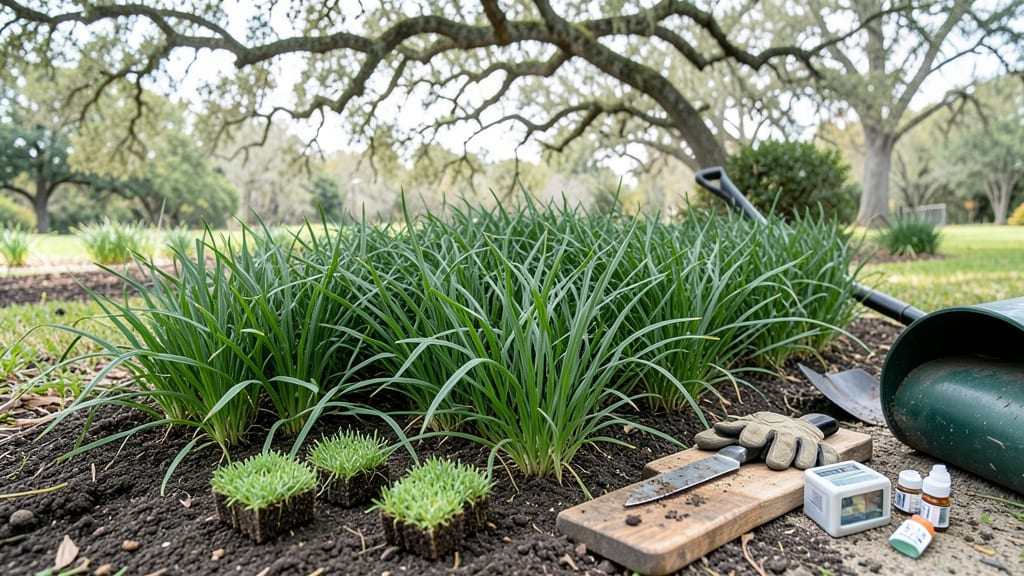
Planting St. Augustine grass 🌿 at the wrong time in Texas can mean struggling with weak growth or even watching your investment wash away before summer’s brutal heat sets in.
If you’ve ever stared at a patchy lawn wondering what went wrong, you’re not alone—timing is everything. The best time to plant St. Augustine grass in Texas isn’t just about the calendar; it’s about giving your grass the fighting chance it needs to thrive when temperatures soar.
In this guide, I’ll break down why early spring (March–May) is the gold standard for Texas lawns, how to prep your soil for summer survival, and what to avoid when the mercury climbs. Let’s get your grass off to the strongest start possible.
From Houston to Dallas, the rules are the same: plant smart, water deep, and watch your lawn transform from bare dirt to a vibrant green carpet before the heat takes over.
Optimal planting windows for St augustine grass in Texas (spring vs fall)
Choosing the right planting window for St. Augustine grass in Texas makes the difference between a lush, green lawn and a struggling patch that fades under summer heat. Texas gardeners face unique challenges, from North Texas' cooler springs to South Texas' prolonged growing seasons.
The two best times to plant are early spring (March-May) and early fall (August-September), but each has distinct advantages depending on your region.
Spring planting gives your grass a head start before summer droughts hit, while fall planting allows roots to establish before winter. However, Texas' 90°F+ summers and freezing winters mean timing is everything. Let's break down the best windows for each Texas region to ensure your St. Augustine thrives.
🌱 Texas Planting Windows Comparison
| Region | Best Spring Window | Soil Temp Threshold | Fall Window | Key Consideration |
|---|---|---|---|---|
| North Texas (Dallas/Fort Worth) | March 15 - April 15 | 60-65°F | August 15 - September 15 | Avoid late spring heatwaves |
| Central Texas (Austin/San Antonio) | March 1 - April 30 | 65°F+ | August 1 - September 10 | Longer growing season allows flexibility |
| South Texas (Houston/Corpus Christi) | February 28 - April 15 | 68°F+ | July 15 - August 31 | Higher humidity demands frequent watering |
| West Texas (El Paso/Abilene) | April 1 - May 15 | 70°F+ | September 1 - October 15 | Drier climate reduces fall planting window |
💡 Pro Tip: Always check soil temperature with a thermometer—St. Augustine needs 65°F+ soil to establish roots effectively.
In North Texas, where winters are colder, aim for March-April planting to avoid late-spring heatwaves that can stress young grass. The Dallas-Fort Worth area sees last frosts around March 15, so planting after this date ensures safety from cold snaps while allowing roots to establish before summer.
Central Texas gardeners have more flexibility due to longer growing seasons. Austin and San Antonio can plant as early as late February if soil temperatures stay above 65°F. However, April planting is often ideal—balancing warm soil with cooler air temperatures that reduce evaporation stress.
For South Texas, where humidity and heat arrive early, late winter planting (February-March) is best. Areas like Houston and Corpus Christi can even plant in January if using shade cloth to protect young grass from intense sun.
The key is ensuring consistent moisture during establishment—South Texas' high humidity means watering needs are 2-3x per week during dry spells.
West Texas presents unique challenges due to low humidity and high winds. Planting in April-May avoids both winter cold and summer drought. El Paso and Abilene gardeners should prioritize windbreaks and deep watering to help grass establish in dry conditions.
Fall planting here is limited to early September before temperatures drop too quickly.
Regardless of region, avoid summer planting—St. Augustine grass planted in June-August struggles with intense heat and drought stress, often resulting in brown patches or slow recovery. The same goes for late fall planting (after October)—young grass won't have time to establish before winter dormancy sets in.
One final tip: If you're sodding (laying pre-grown grass), timing shifts slightly. Sod can handle warmer soil better than seed, so late spring (May) or early fall (September) are safer windows. Always water deeply for the first 2-3 weeks after planting to encourage root growth.
🌱
Why spring planting (March–May) beats fall for St augustine in Texas
St. Augustine grass 🌿 thrives best in Texas when planted in early spring (March–May) because this window aligns perfectly with its biological needs. Unlike cooler climates where fall planting dominates, Texas’ long, brutal summers demand a different strategy—one that prioritizes deep root establishment before the heat arrives.
Spring’s moderate temperatures (65–85°F) and longer daylight hours create ideal conditions for rapid root growth. Studies show St. Augustine grass planted in spring develops roots 30–50% deeper by summer compared to fall-planted grass, which often struggles to establish before winter dormancy sets in.
The key advantage? Spring-planted grass hits the ground running when summer arrives, with a stronger root system to withstand drought and heat stress. In contrast, fall-planted grass in Texas often enters winter weakened, requiring extra care to survive the mild but unpredictable freezes in zones like 8a–9a (North Texas).
Here’s how spring planting gives your lawn the edge:
| Factor | Spring Planting (March–May) | Fall Planting (Aug–Sept) |
|---|---|---|
| Soil Temperature | 65–85°F (optimal) | 80–90°F (cools too fast) |
| Root Depth by Summer | 12–18 inches (deep) | 6–10 inches (shallow) |
| Drought Resistance | High (established roots) | Low (weak roots) |
| Growth Speed | Fast (1–2 inches/month) | Slow (0.5–1 inch/month) |
| Best For | Texas summers (heat tolerance) | Cooler climates (not ideal for TX) |
For North Texas (Dallas/Fort Worth), aim for mid-March to early April when soil temps consistently hit 65°F. In Central Texas (Austin/San Antonio), late March to early May works best, while South Texas (Houston/Corpus Christi) can extend planting into mid-May thanks to warmer soils.
Pro tip: If you miss spring, early fall (August) is a secondary window—but only if you’re in South Texas. North Texas grass planted in fall rarely survives winter without extra protection. The trade-off? Spring planting means faster fill-in and less stress when summer arrives.
Ready to plant? Start with soil prep—St. Augustine hates compacted soil. Test your pH (aim for 6.0–7.5) and amend with compost. Then, water deeply (1–1.5 inches per week) to encourage those critical roots before the heat kicks in. 🌱