
Plants
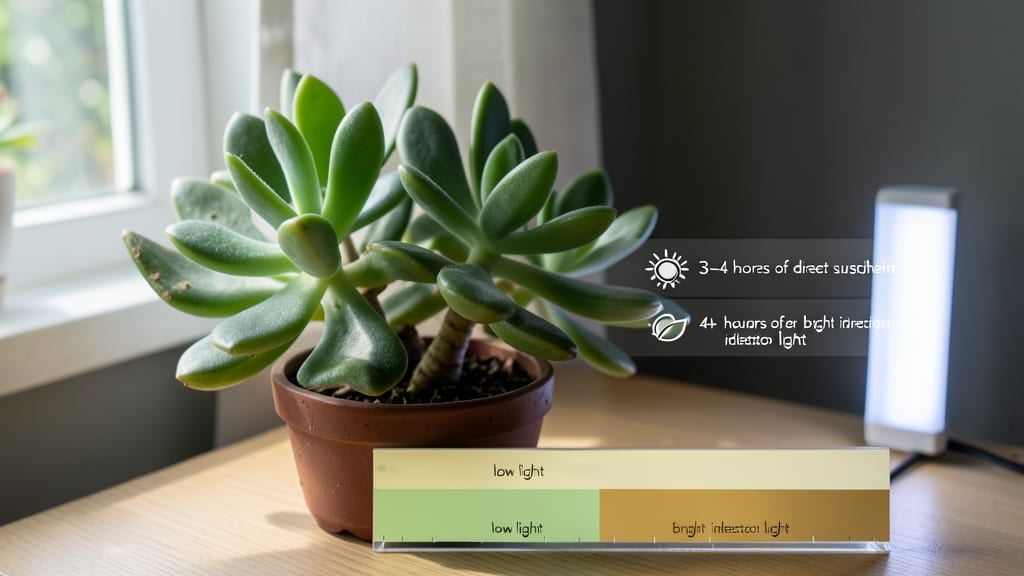
If you're wondering how much light does a jade plant require, your plant’s sad, droopy look is probably a sign you’ve got the lighting all wrong.
This succulent thrives with 3-4 hours of bright, indirect sunlight daily—but too much direct sun can turn its leaves crispy faster than toast in a toaster.
Most people assume jade plants love full sun, but that’s a myth. In reality, they prefer a spot where they get morning light and afternoon shade, like a south-facing window with a sheer curtain.
Too little light? Your plant will stretch like a sleepy cat, and those pretty leaves will turn pale and leggy.
I’ve learned the hard way that jade plants are picky about their lighting. Whether you’re dealing with a sunburnt top or a plant that’s barely holding itself up, I’ll show you exactly how to adjust its light exposure—no guesswork, just results.
Let’s get your Jade Plant back to its happy, bushy self.
From indoor placement tricks to troubleshooting common light issues, you’ll discover the perfect balance so your plant stays lush and healthy year-round. Ready to fix those light struggles once and for all?

Jade plant light requirements: the ideal sunlight balance explained
A jade plant (Crassula ovata) thrives on bright indirect sunlight, making it perfect for sunny windowsills or well-lit indoor spaces. Unlike sun-hungry succulents, jade plants can't handle harsh midday rays, which can scorch their leaves.
The key is 3-4 hours of morning or late afternoon sun, paired with diffused light for the rest of the day.
Outdoors, place your jade plant where it gets dappled shade, like under a tree canopy or on a patio with afternoon shade. In containers, rotate the pot every few weeks to ensure even growth—this prevents lopsided plants reaching toward the light.
If you notice stretched-out stems, it’s a clear sign your plant is begging for more light.
Indoors, a south-facing window is ideal, but avoid placing your jade plant directly on the glass where temperatures can fluctuate. Instead, position it 3-6 feet away to balance light exposure and warmth.
East or west-facing windows work too, but supplement with a grow light if the light feels weak, especially in winter.
| Light Condition | Daily Exposure | Best Placement | Seasonal Notes |
|---|---|---|---|
| Bright Indirect Light | 3-4 hours | South-facing window, 3-6 ft away | Ideal year-round |
| Partial Sun | 2-3 hours direct sun | East/west window or shaded patio | Best for summer |
| Low Light | <1 hour direct | North-facing window or room corner | Use grow lights; risk of legginess |
| Full Sun | >4 hours direct | Outdoor only; avoid midday sun | Risk of sunburn; acclimate gradually |
In summer, jade plants can handle a little more direct sunlight, but always acclimate them slowly to avoid shock. Start with 1-2 hours of morning sun and gradually increase exposure over 1-2 weeks.
If you move your plant outdoors, choose a shaded spot or provide afternoon shade with a sheer curtain or lattice.
Winter is trickier because daylight hours shrink. If your jade plant starts looking pale or stretched, supplement with a 12-14 hour grow light (more on this in the next section).
Position the light 6-12 inches above the plant and keep it on for 6-8 hours daily to mimic natural light cycles.
Pro tip: Observe your jade plant’s leaves—healthy ones should be thick, glossy, and deep green. If they turn yellow or develop brown patches, it’s time to adjust the light.
Remember, jade plants are succulents, so they store water but not light. Give them the right conditions, and they’ll reward you with years of lush growth.
For outdoor jade plants, watch for sudden temperature drops. Jade plants prefer 60-75°F and can suffer in extreme heat or cold. If you’re in USDA Zone 9 or lower, bring potted jade plants indoors before first frost (around October 15 in many regions) to protect them from freezing.
Lastly, rotate your jade plant every 2-4 weeks to ensure even growth. Plants naturally lean toward light sources, so a little TLC here keeps them compact and symmetrical. With the right light balance, your jade plant will stay compact, vibrant, and healthy for years.
Signs your jade plant isn’t getting enough (or too much) light
Your jade plant’s leaves tell a story—pale, stretched stems mean it’s craving more light, while brown, crispy patches scream "too much sun!"
These visual cues are your plant’s way of communicating, and ignoring them can turn your lush jade plant into a sad, leggy shadow of its former self. Let’s decode these signs so you can fix the lighting fast.
When your jade plant isn’t getting enough light, it stretches toward the nearest window, a condition called etiolation. You’ll notice thin, weak stems and small, sparse leaves clustered at the top.
This happens because the plant is desperate for light to fuel photosynthesis, and it grows tall and spindly to reach it. If left unchecked, the stems can become so weak they flop over, making your plant look like a sad, overgrown twig.
On the flip side, too much direct sunlight causes sunburn, which looks like brown, papery patches on the leaves. These spots start as yellowing and quickly turn crispy, almost like the edges of a burnt leaf.
If your jade plant’s leaves feel hot to the touch or develop white or grayish areas, it’s a clear sign it’s getting more sun than it can handle. These damaged leaves won’t recover, so act fast to move your plant to a shadier spot.
If your jade plant is losing leaves suddenly, it might be stressed from too much light or heat. This is especially common if your plant is near a hot window or direct afternoon sun.
Another red flag is red or purple tinges on the leaves, which can indicate low light conditions or cold drafts combined with insufficient light. These color changes are your plant’s way of saying, "I’m struggling—help me!"
To fix under-lighted jade plants, move them to a brighter spot like a south-facing window or under grow lights. If you’re indoors, avoid north-facing windows—they offer the least light.
For over-lighted plants, shift them to a spot with indirect light or use a sheer curtain to diffuse harsh rays. If your plant is outdoors, provide afternoon shade with a lattice or umbrella to protect it from intense midday sun.
One quick fix for leggy jade plants is to prune the stretched stems and propagate the cuttings. This encourages bushier growth and gives you more plants! Just place the cuttings in well-draining soil and give them bright indirect light until they root.
Meanwhile, your main plant will start growing more compactly once it gets the right light conditions.
Remember, jade plants are succulents, so they’re tough but not indestructible. Pay attention to their leaves and stems, and you’ll catch light issues early. With the right adjustments, your jade plant will bounce back—thick, green leaves and all.
Keep an eye on it, and soon you’ll have a thriving, bushy jade plant that’s the envy of every plant lover.