
Trees
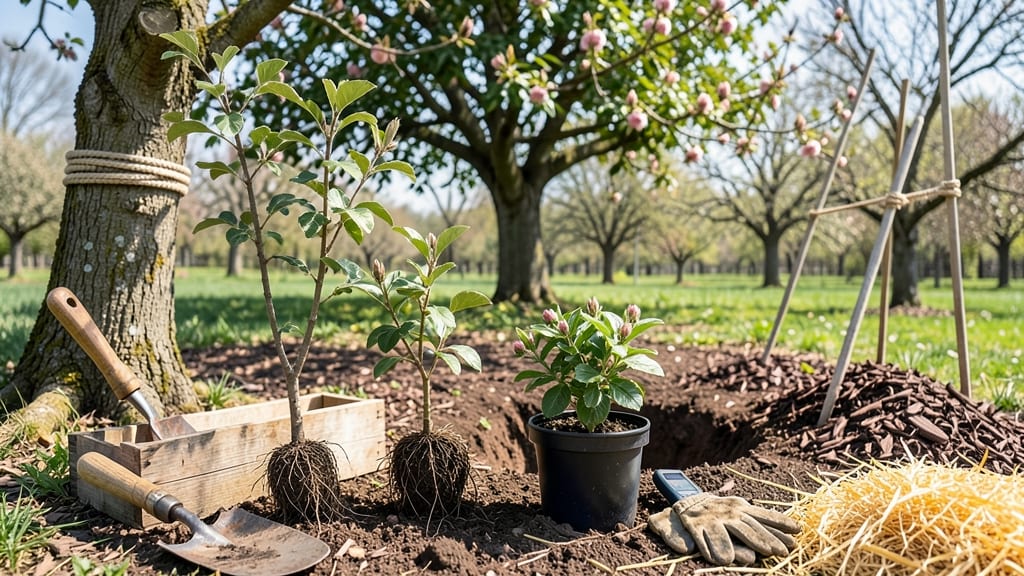
Planting your fruit trees 🍎 in Massachusetts at the wrong time can mean the difference between a bountiful harvest and years of frustration—especially when chill hours and frost dates collide.
Whether you're dreaming of crisp apples or sweet cherries, getting the timing right is the key to strong root growth and fruit production.
The best window for planting fruit trees in Massachusetts actually comes in two parts: late April through early June, once the soil warms and frost danger passes, or during the fall months of September through early October when trees enter dormancy.
These timing differences matter because apples and pears need 600-1,000 chill hours, while peaches and plums thrive with just 200-400—and planting too early can stunt young roots.
But here's where most gardeners trip up: assuming "spring" means March or April. In USDA Zone 5b-6b, late frosts can linger well into May, and planting too soon risks exposing tender roots.
I'll walk you through the exact frost-free deadlines for your region—plus how to adjust for microclimates—and which varieties handle Massachusetts' unpredictable springs best.
Let's cut through the guesswork so you can plant with confidence, whether you're working with bare-root saplings or container-grown trees. You'll learn how to prep your soil, choose the right varieties for your yard, and avoid the 5 biggest mistakes that derail fruit tree success in New England.
Massachusetts fruit tree planting calendar by chill hour requirements
Massachusetts' USDA Zones 5b-6b create a unique challenge for fruit tree growers. Chill hours—the number of hours below 45°F a tree needs to break dormancy—dictate when and which varieties you can plant.
High-chill apples and pears (600-1,000+ hours) thrive here, while low-chill peaches and plums (200-400 hours) may struggle unless planted at the right time.
Most bare-root fruit trees should be planted in late winter or early spring (February-March) while still dormant. Container-grown trees, however, can go in the ground until early June, as long as roots aren’t frozen. Fall planting (September-October) is also ideal for bare-root trees, giving roots time to establish before winter.
Here’s how to match your fruit tree variety to Massachusetts’ chill hour zones and planting windows:
For apples and pears, aim for late April to early June after the last frost.
These high-chill varieties need the winter cold to set fruit, so planting too late in spring can delay or prevent blooming. Cherries and plums are more flexible but still benefit from early planting to avoid late spring frosts, which can kill blossoms.
If you’re planting in fall (September-October), focus on bare-root trees. Container-grown trees planted in fall may not establish roots before winter. Mulch heavily (3-4 inches) to protect roots from freezing temperatures. Avoid planting peaches in fall—they’re too sensitive to cold and may not survive Massachusetts winters.
Pro tip: Check the UMass Extension’s chill hour maps for your specific town, as microclimates (like urban heat islands) can add 50-100 extra chill hours to your garden. For example, Boston’s coastal areas may have fewer chill hours than inland Worcester or Springfield, affecting peach and plum success.
Always verify your last frost date (typically mid-April) before planting container-grown trees in spring. Use row covers or cold frames to extend your planting window if needed, but never plant when soil temperatures are below 40°F—roots won’t grow in cold soil.
Critical frost-free deadlines by Massachusetts region (and how to extend your growing season)
Massachusetts' last frost dates vary dramatically by region—coastal areas like Cape Cod may thaw by March 20, while inland zones like Springfield often wait until May 1.
These differences mean your peach tree might bloom too early in Zone 5b, while apple trees in Zone 6b can handle later springs. Always check the 10-year average for your specific area, as climate change has shifted these dates by 1-2 weeks in many regions.
Understanding your frost-free window is critical because planting too early exposes young roots to late-season frosts, while waiting too long reduces the tree's time to establish before winter.
For example, Boston's average last frost is April 20, but a sudden cold snap in May can still damage tender new growth. Use these regional guidelines as your baseline, then adjust based on microclimates like south-facing slopes or protected valleys.
📅 🌱 Visual Element: Summary Table 📅
| Region | Avg. Last Frost | Avg. First Frost | Frost-Free Days | Best Planting Window |
|---|---|---|---|---|
| Cape Cod & Islands | March 20 | November 15 | 240+ | Late March - Early April (bare-root) or September - October |
| Boston & Coastal | April 20 | October 30 | 190 | Late April - Early May or September - October |
| Worcester & Central MA | May 1 | October 20 | 170 | Early May - Early June or September - Early October |
| Springfield & Western MA | May 5 | October 15 | 160 | Early May - June or September - Early October |
If you're eager to plant early spring varieties like peaches or nectarines, use row covers or frost cloth to protect young trees until the risk of frost passes.
For late-planting situations, opt for cold-hardy varieties like Honeycrisp apples or Bartlett pears, which can tolerate Zone 5b winters better than delicate plums. Always monitor UMass Extension alerts for real-time frost predictions, especially in transition zones like Worcester County.
Extend your growing season with microclimate strategies: Plant near south-facing walls to absorb heat, or choose sheltered spots like the base of a hill. In coastal areas, sea breezes can delay frost, while inland valleys often freeze earlier.
Test your microclimate by planting cold-sensitive plants like tomatoes in early May—if they survive, your fruit trees are likely safe too.
For container-grown trees, you have more flexibility—plant anytime except winter (November-February). However, avoid summer planting in Zone 6b, as the heat stress can stunt root growth. If you must plant late, water deeply every 3-4 days and use mulch to retain moisture until roots establish by fall.