
Trees
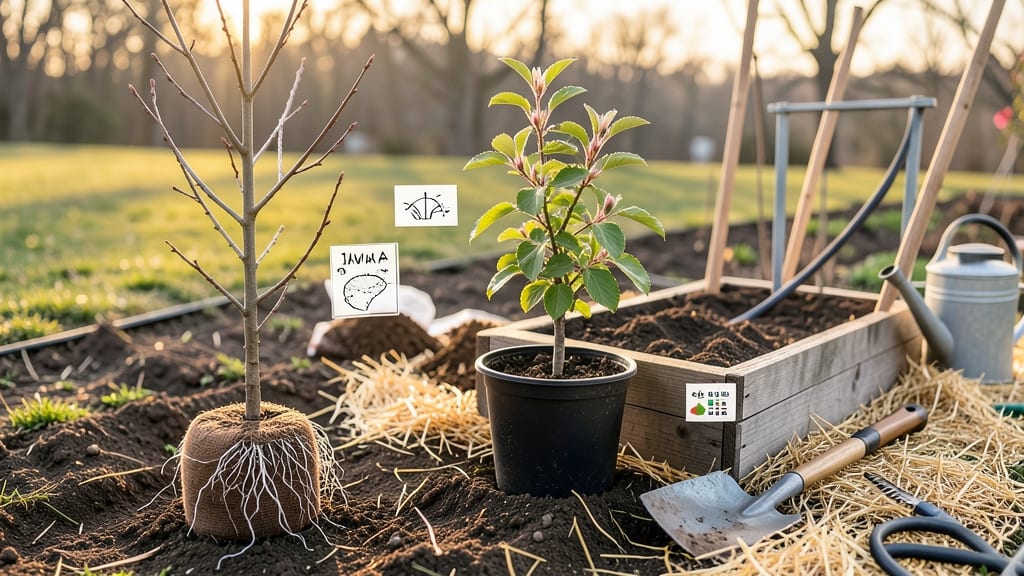
Planting your 🍎🍐🍑 fruit trees at the wrong time in Iowa’s USDA Zone 5b can mean the difference between a thriving orchard and years of disappointment—especially when early frosts or late snowstorms threaten young roots.
If you’ve ever watched a neighbor’s fruit trees flourish while yours struggle, the answer likely lies in timing. The late winter to early spring window (February through April) gives your trees the best shot at establishing strong roots before summer heat arrives, but even small mistakes can set you back.
I’ll show you exactly when to plant—whether you’re working with bare-root saplings or container-grown trees—and how to adjust for Iowa’s unpredictable frost dates. You’ll also discover which varieties thrive here (like Honeycrisp apples and Reliance peaches) and how to prepare your soil for maximum success.
Let’s get your orchard off to the right start—no guesswork, just proven strategies for Zone 5b’s short growing season.
Best planting months for fruit trees in Iowa (Zone 5b climate guide)
Iowa’s Zone 5b climate demands precise timing for fruit tree planting—get it wrong, and your trees may struggle with frost damage or poor root establishment. The best window spans late winter to early spring, but specific varieties and tree types (bare-root vs. container-grown) shift these deadlines slightly.
For bare-root trees, aim to plant between February and early April before buds swell. This gives roots time to establish before Iowa’s last frost date (April 15). Container-grown trees offer more flexibility, allowing plantings until early fall (late September), provided soil temps stay above 40°F.
Here’s the breakdown: spring planting is ideal for most fruit trees (apples, cherries, plums), while fall planting works for hardy varieties like peaches and pears. Microclimates matter too—urban areas may have 2-3°F warmer soil than rural zones, delaying frost risks.
| Planting Window | Soil Temp Threshold | Best For | Frost Risk |
|---|---|---|---|
| Late February - Early April | 40°F+ | Bare-root trees (apples, cherries) | Low (before buds break) |
| Mid-April - May | 50°F+ | Container-grown trees (peaches, plums) | Moderate (late frost risk) |
| Late September - Early October | 50°F+ | Hardy varieties (apples, pears) | Low (established roots) |
Apples and cherries thrive when planted in early spring—their roots establish quickly in cool soil, reducing transplant shock. Peaches and plums, however, prefer late spring plantings to avoid late frosts that can scorch new growth. Always check your local frost-free date (Iowa’s averages 170 days between frosts).
If you’re planting in urban areas, account for heat islands that can push soil temps up by 5-10°F. Rural zones may need 2-4 weeks earlier planting to match soil conditions. Use a soil thermometer to confirm temps before digging—40°F is the magic number for root growth.
Pro tip: Bare-root trees should never be planted if buds are already swelling (a sign of premature growth). For container-grown trees, inspect roots—if they’re circled or matted, prune before planting to encourage outward growth. This step alone can double root success rates in Iowa’s heavy clay soils.
I’ve seen late spring plantings (May) work for dwarf varieties, but they require extra mulch (4-6 inches) and weekly watering to compensate for slower root establishment. The trade-off? You avoid winter heaving (soil freezing/thawing that dislodges roots) common in early spring.
For fall plantings, focus on apples and pears—their roots harden off better before winter. Water deeply 2 weeks before the first frost to hydrate roots, then add 6 inches of mulch to insulate soil.
Avoid fall planting for stone fruits (peaches, plums) unless you’re in Zone 5a with earlier frosts.
One mistake I’ve seen new gardeners make is planting too late in spring (June+)—by then, Iowa’s heat can stress young trees. If you miss the window, wait until next fall and choose container-grown trees for better root systems. Patience here pays off with larger fruit yields in years 3-5.
How to prepare Iowa soil for fruit tree planting (step-by-step for Zone 5b)
Iowa’s clay-heavy soils can be a double-edged sword for fruit trees—too dense for roots to spread, but rich in nutrients when amended properly. The key is balancing drainage and fertility before planting, whether you’re prepping for spring or fall installation.
Start by testing your soil’s pH (6.0-7.0 ideal) and organic matter levels, as Iowa’s alkaline tendencies often require sulfur or peat moss adjustments.
For bare-root trees, dig a hole twice as wide as the root ball but only as deep—planting too deep can suffocate roots. Mix the excavated soil with compost or well-rotted manure (avoid fresh manure, which burns roots) and a handful of bone meal for phosphorus.
If your soil drains poorly, add coarse sand or perlite to the backfill mix to create air pockets.
One of my biggest mistakes early on was skipping soil prep in favor of quick planting—my apple trees struggled for years with poor root development. Now, I always prep the hole 2-3 weeks ahead of planting to let amendments settle.
For container-grown trees, the process is simpler: just ensure the planting hole mirrors the container’s depth and loosen the root ball gently before setting it in.
If your yard has poor drainage, consider planting on a mound or berm to prevent waterlogging, which is deadly for fruit tree roots. Add a drainage layer of gravel at the bottom of the hole if your soil stays soggy after rain.
In urban areas, where soil may be compacted, rent a post-hole digger to create a wider planting zone for better root spread.
After planting, mulch with wood chips or straw (keep it 3-4 inches thick but 6 inches away from the trunk to prevent rot). This conserves moisture, regulates soil temperature, and suppresses weeds—critical in Iowa’s hot summers and cold winters.
Replenish mulch annually, and avoid piling leaves against the trunk, which can harbor pests like voles.
Finally, water deeply immediately after planting to eliminate air pockets in the soil. Use 10-15 gallons for young trees and let it soak in slowly. In drought-prone years (like Iowa’s 2020), I’ve seen trees wilt within weeks if not watered consistently.
A soaker hose or drip irrigation system makes this easier and more efficient than hand-watering.