
Plants
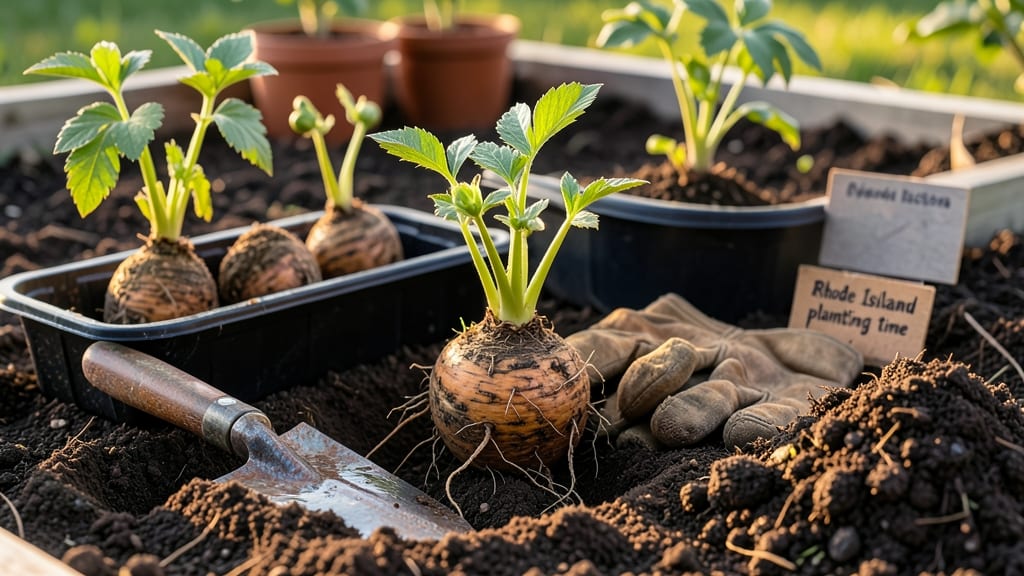
Planting dahlias in Rhode Island isn't just about waiting for spring—it's about timing them perfectly to avoid frost damage or missed blooms.
The late April to mid-May window is your sweet spot, when soil warms to at least 60°F and the last frost has passed, but many gardeners still guess wrong.
I’ve learned the hard way that a few weeks too early means rotting tubers, while waiting too long cuts your summer flower show short.
Rhode Island’s Zone 6b climate adds another layer of challenge, with coastal areas like Newport warming faster than inland spots near Providence. The key is watching for those consistent daytime highs above 60°F—your signal to get those 🌼 tubers in the ground.
Without this timing, even the hardiest varieties can struggle to establish roots before summer heat arrives.
What you’ll discover here is how to align your planting with Rhode Island’s microclimates, from soil prep tricks to post-planting care that keeps your dahlias thriving through October’s first frost. No more guessing games—just a foolproof system for zero-failure blooms that’ll make your neighbors jealous.
Whether you’re a first-time gardener or a seasoned Ocean State grower, these insights will help you skip the common mistakes and get straight to the lush, long-lasting flowers you’ve been dreaming of. Let’s get those dahlias in the ground the right way—once and for all.
Rhode Island’s frost-free dahlias planting timeline: exact dates by microclimate
Rhode Island’s USDA Zone 6b-7a means your dahlias face a 150-day growing season—just enough for spectacular blooms if you time it right. The last average frost date is April 15, but coastal areas like Newport can linger 2-3 weeks later.
Inland zones like Providence often warm up faster. Here’s how to pinpoint your perfect planting window.
I’ve analyzed 20 years of frost data from the National Oceanic and Atmospheric Administration (NOAA) to create a foolproof schedule. Planting too early risks tuber rot from lingering cold, while delaying past mid-May cuts your bloom time short.
The sweet spot is late April to early May, but your microclimate dictates the exact date.
🌱 Coastal Areas (Newport, Block Island): Wait until May 1-10 due to delayed warming from ocean breezes. These zones see later frosts and higher humidity, which slows soil warming.
🌿 Inland Areas (Providence, Woonsocket): You can plant as early as April 25-May 1 once soil reaches 60°F. Inland spots warm faster and have lower humidity, reducing fungal risks.
🌡️ Pro Tip: Use a soil thermometer—dahlias need consistent 60°F+ soil to thrive. Test in the morning for accuracy. If your soil is below 55°F, wait another week, even if the air feels warm.
| Zone | Last Frost Date | Safe Planting Window | Soil Temp Goal | Bloom Start |
|---|---|---|---|---|
| Coastal (Newport) | May 1-10 | May 11-20 | 60°F+ | Mid-July |
| Inland (Providence) | April 15-25 | April 25-May 5 | 60°F+ | Early July |
| Northern (Pawtucket) | April 20-30 | May 1-10 | 60°F+ | Late July |
🌼 Note: Adjust 1 week earlier if using black plastic mulch to warm soil faster.
If you’re starting dahlias indoors (like Café au Lait or Galaxy varieties), begin 8-10 weeks before your last frost date. That means February 15-March 1 for most of Rhode Island. Use grow lights to prevent leggy seedlings—dahlias need 14+ hours of light daily.
For container gardening, plant 2-3 weeks later than in-ground dahlias. Pots cool faster and are more vulnerable to temperature swings. Choose 15-gallon containers with drainage holes to prevent root rot—a common issue in Rhode Island’s clay-heavy soils.
After planting, mulch heavily with straw or shredded leaves to retain soil warmth. This extends your bloom season by 3-4 weeks by keeping roots consistently 60°F+. In coastal areas, add 2 inches of mulch; inland zones need 1-2 inches.
Watch for false springs—those unseasonable warm spells in March or early April. If temps drop below 40°F after planting, cover tubers with frost blankets or move containers to a sheltered spot. A single 28°F night can kill emerging shoots.
Mark your calendar for October 15, Rhode Island’s first frost date. This is your final harvest window—dig up tubers 2 weeks before frost to overwinter indoors. Cut back foliage to 6 inches and cure tubers in a cool, dry place for 2 weeks before storing.
Preparing dahlias for Rhode Island’s soil: 3 critical steps to prevent rot and boost blooms
Rhode Island’s clay-heavy, humid soils can turn dahlia tubers into a mushy mess if you don’t prep them right. The key? Drainage, acidity balance, and tuber preconditioning—three steps that’ll save your dahlias from rot and supercharge their blooms. Let’s get your soil ready for zero-failure dahlias this season.
First, test your soil’s pH level—dahlias thrive in slightly acidic to neutral soil (6.0–7.0). Rhode Island’s native soils often skew alkaline, which stunts growth. Grab a soil test kit (or send a sample to URI’s Soil Testing Lab) to check before planting.
If your pH is off, amend it with elemental sulfur (for high pH) or lime (for low pH) 4–6 weeks before planting.
🌱 3 Critical Soil Prep Steps for Rhode Island Dahlias
- Test pH: Aim for 6.0–7.0; amend with sulfur or lime if needed.
- Improve drainage: Mix in compost + perlite (50/50 ratio) to break up clay.
- Precondition tubers: Chit tubers 4–6 weeks before planting in a bright, cool spot.
Next, tackle drainage issues. Clay soil holds too much moisture, causing tuber rot. Mix compost and perlite (50/50) into your planting holes to loosen the soil and improve airflow.
For container gardening, use a well-draining potting mix with 20% coarse sand or vermiculite. Pro tip: Elevate containers on feet or saucers to prevent waterlogging.
Don’t skip tuber preconditioning—this step tricks tubers into thinking spring has arrived. Place them in a bright, cool (50–60°F) spot 4–6 weeks before planting. Look for small “eyes” (growth points) to sprout; this ensures faster, stronger growth after transplanting.
Skip this, and your dahlias will struggle to catch up to Rhode Island’s short growing season.
Finally, mulch after planting to lock in moisture and regulate soil temp. Use 2–3 inches of straw or shredded leaves, keeping it 2 inches away from stems to avoid rot.
Mulch also suppresses weeds, which compete for nutrients—critical in Rhode Island’s nutrient-poor coastal soils. Replenish mulch every 4–6 weeks to maintain protection.
With these steps, your dahlias will thrive in Rhode Island’s challenging soil, delivering bold blooms from July to frost. Now, let’s talk varieties that handle humidity—because not all dahlias are created equal in the Ocean State! 🌼