
Companion Plants
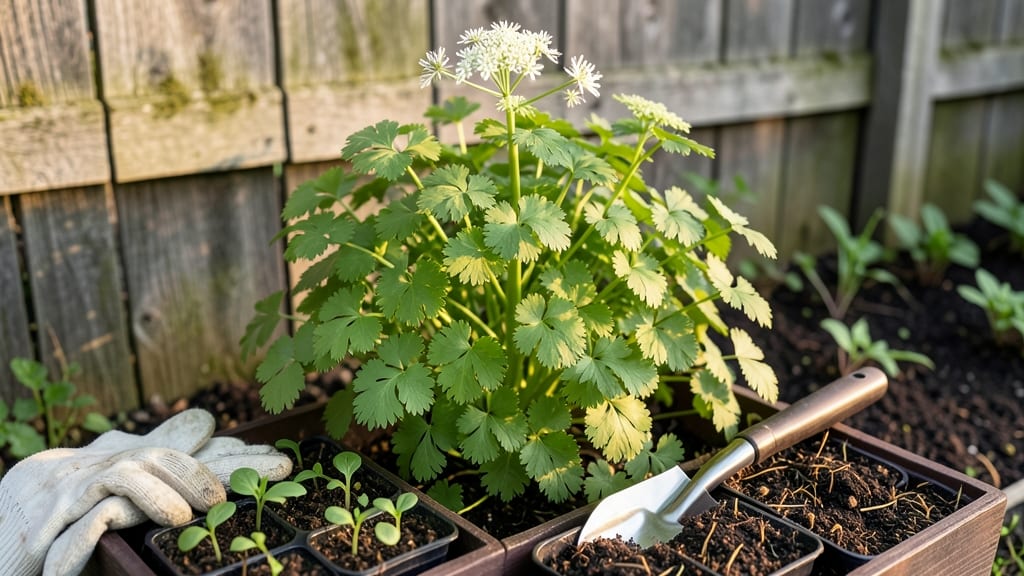
Planting cilantro in Georgia at the wrong time means watching your 🌿 bolt into flower before you even get a handful of leaves. The key to success?
Timing your seeds precisely—between March and April for spring, or August to September for fall—when temperatures stay mild and the heat hasn’t arrived to turn your crop bitter.
Most gardeners in zones 7b-8b struggle with cilantro’s short-lived nature, but with the right approach, you can enjoy fresh harvests from May to June in spring and again in October to November in fall.
The secret lies in understanding your microclimate—coastal areas stay cooler longer, while Piedmont regions need earlier starts to avoid summer’s scorching temperatures.
I’ve learned that cilantro thrives as a cool-season crop, but heat-resistant varieties can stretch your growing window. Whether you’re a seasoned gardener or just starting, these exact planting dates and pro tips will help you avoid the common pitfalls—like bolting or leggy growth—that turn cilantro into a frustrating experiment.
Ready to grow cilantro that actually lasts? Let’s dive into the best planting windows, variety recommendations, and simple tricks to keep your cilantro lush and flavorful all season long—no matter where you are in Georgia.
Best planting windows for cilantro in Georgia’s climate zones
Georgia’s USDA zones 7b-8a create a unique challenge for cilantro lovers—hot summers and mild winters demand precise timing. The key is planting during cool-season windows when temperatures stay below 75°F to prevent bolting (flowering).
Most gardeners in Georgia focus on two primary planting windows: early spring and fall, with occasional winter success in protected microclimates.
For spring planting, aim for late February to early April, right after the average last frost date (March 15). This gives cilantro 6-8 weeks of cool weather before summer heat arrives.
In fall, plant mid-August to early September to harvest before the first frost (November 15). Coastal areas like Savannah may extend fall planting into early October thanks to milder temperatures.
Here’s how Georgia’s microclimates affect timing: Piedmont regions (e.g., Athens) have shorter frost-free seasons (200 days), while coastal areas (e.g., Brunswick) enjoy 220+ days. Adjust your schedule accordingly—coastal gardeners can push spring planting into early March and fall planting into late September.
Always check your local frost dates using the Georgia Climate Project maps for precision.
Bolting is cilantro’s arch-nemesis in Georgia’s heat. Even heat-resistant varieties will bolt if daytime temps exceed 80°F for more than a few days. That’s why fall planting is often more reliable—it avoids the brutal July-August heat.
If you’re tempted to try summer cilantro, use shade cloth (30-50%) and plant in partial shade to buy extra time.
🌱 Georgia Cilantro Planting Timeline
| Season | Planting Window | Key Considerations | Harvest Window |
|---|---|---|---|
| Spring | Late Feb–Early Apr | Soil temps <60°F; avoid frost | May–June |
| Summer | Not recommended | Bolting risk >90%; use shade cloth only | Minimal yield |
| Fall | Mid-Aug–Early Sep | Daytime temps <80°F; protect from frost | Oct–Nov |
| Winter | Dec (coastal only) | Use row covers; soil must drain well | Jan–Feb |
⚠️ Note: Piedmont regions lose 1-2 weeks of growing time vs. coastal areas.
Succession planting is your secret weapon for continuous cilantro harvests in Georgia. In spring, sow new seeds every 2-3 weeks from March through May to stagger maturity. For fall, plant every 3 weeks from August through September.
This ensures you always have fresh leaves without waiting for a full regrowth cycle. Pro tip: Use small containers (6-8 inches deep) for succession planting—they’re easier to manage in tight spaces.
Don’t overlook soil preparation—cilantro thrives in well-draining, slightly acidic soil (pH 6.2-6.8). Before planting, amend your beds with 2-3 inches of compost and mix in a 5-10-10 fertilizer for a gentle nutrient boost.
In Georgia’s clay-heavy soils (common in the Piedmont), add sand or peat moss to improve drainage. Test your soil’s pH using a home test kit—cilantro hates alkaline soil, which can cause yellowing leaves and stunted growth.
If you’re in Zone 8a (e.g., Macon, Columbus), you can experiment with winter cilantro under row covers or cold frames. Start seeds indoors in late October and transplant outdoors in December, protecting them with floating row covers until late January.
This extends your harvest into early spring before the heat sets in. Just be prepared for slower growth in winter’s cooler temps.
For container gardening, choose 5-gallon pots with drainage holes and plant 3-4 seeds per container. Containers warm up faster than garden beds, so move them to shadier spots when temps rise above 75°F.
This method works well for balconies or patios in urban areas like Atlanta, where space is limited. Water containers daily in summer and every other day in fall to prevent drying out.
Remember: Patience is key with cilantro. It takes 21-45 days to reach harvest size, depending on variety and conditions. In Georgia’s spring, you’ll see faster growth (3-4 weeks), while fall plants may take 5-6 weeks due to shorter daylight.
Harvest outer leaves first to encourage bushier growth, and always snip with clean scissors to avoid damaging stems.
Best planting windows for cilantro in Georgia’s climate zones
Georgia’s USDA zones 7b-8a create unique challenges for growing cilantro. The key to success lies in timing—plant too early, and you’ll face spring heat waves that trigger bolting.
Plant too late, and winter frosts will kill your crop before harvest. My exact planting windows balance these risks for lush, flavorful cilantro year-round.
For spring planting, aim for mid-March to early April—after the last average frost date of March 15. This gives your cilantro 6-8 weeks of cool weather before summer heat arrives.
In northern Georgia (zone 7b), you might squeeze in a February planting under row covers, but be prepared to harvest quickly.
Fall is your best bet for continuous harvests. Start seeds indoors in late July and transplant outdoors mid-August to early September. This timing ensures your cilantro matures before first frost (November 15) while avoiding the dog days of summer heat that cause bolting.
🌱 Georgia Cilantro Planting Timeline
| Season | Planting Window | Key Considerations |
|---|---|---|
| Spring | March 15–April 15 | Avoid April heat waves; use shade cloth if temps exceed 80°F |
| Fall | August 1–September 15 | Transplant 4-6 weeks before first frost; protect with row covers in October |
| Winter (Coastal) | October 15–November 1 (Zone 8a only) | Use heated greenhouse or containers for mild winters; harvest before hard frosts |
⚠️ Pro Tip: In Piedmont vs. Coastal Georgia, adjust dates by 1-2 weeks—coastal areas stay cooler longer.
For continuous harvests, practice succession planting every 2-3 weeks during your ideal windows. This ensures fresh cilantro for 6-8 weeks in spring and 8-10 weeks in fall. In zone 8a (southern GA), you can even try a winter crop under protective covers, though growth slows dramatically.
Watch for bolting signs like elongated stems or yellowing leaves—these mean it’s too hot. If this happens, harvest immediately or harvest the roots for coriander seeds instead. My go-to solution? Plant heat-resistant varieties like ‘Santo’ or ‘Calypso’ and use 30% shade cloth during peak afternoon heat.
Remember: Soil temperature matters more than air temperature. Keep seeds in soil below 75°F to prevent bolting. Use a soil thermometer and mulch with straw or leaves to maintain cool roots during spring’s warm-up.