
Plants
Planting cantaloupe in Michigan’s 5b-6b zones feels like a high-stakes game of timing—get it wrong, and you’ll miss the sweet harvest window entirely. The key isn’t just waiting for warm weather; it’s about understanding when your soil is truly ready to support these sun-loving vines.
Most gardeners make the mistake of rushing cantaloupe into the ground too early, only to watch their plants wilt when nighttime temperatures dip.
But with the right approach—starting seeds indoors, using black plastic mulch to warm the soil, and choosing cold-tolerant varieties—you can turn Michigan’s short summer season into prime cantaloupe country.
I’ll walk you through the exact planting windows that work in Michigan, from late April to mid-May, and share my top tips for beating frost risks. Whether you’re a first-time gardener or a veteran grower, these strategies will help you grow juicy, ripe cantaloupe even in cooler climates.
Ready to transform your garden into a cantaloupe oasis? Let’s dive into the secrets of timing, soil prep, and variety selection that make all the difference in Michigan’s unpredictable growing season.
Best planting times for cantaloupe in Michigan’s climate zones
Michigan’s diverse climate zones mean your cantaloupe planting window varies dramatically—from the Upper Peninsula’s cooler USDA Zone 5b to the Southern Lower Peninsula’s warmer Zone 6b. Timing is everything, because cantaloupes hate cold soil and need at least 70°F soil temperatures to thrive.
In my 10+ years of Michigan gardening, I’ve learned that waiting for the last frost date isn’t enough—you also need to monitor soil warmth and air temperatures.
For most of Michigan, the ideal planting window falls between late April and mid-May, but this shifts 2-3 weeks later in the Upper Peninsula due to later frosts.
I’ve seen cantaloupe seedlings wilt overnight when planted too early, even if the air feels warm. Black plastic mulch can shave 1-2 weeks off your waiting time by warming the soil faster—something I swear by in my Detroit garden.
The last frost dates across Michigan range from mid-April in Southern Michigan to early June in the Upper Peninsula. However, cantaloupes are not frost-tolerant, so I recommend waiting 2 weeks after your region’s average last frost before planting.
This buffer gives the soil time to warm up properly. For example, in Grand Rapids (Zone 6a), I plant around May 15th, while in Traverse City (Zone 6b), I wait until May 25th.
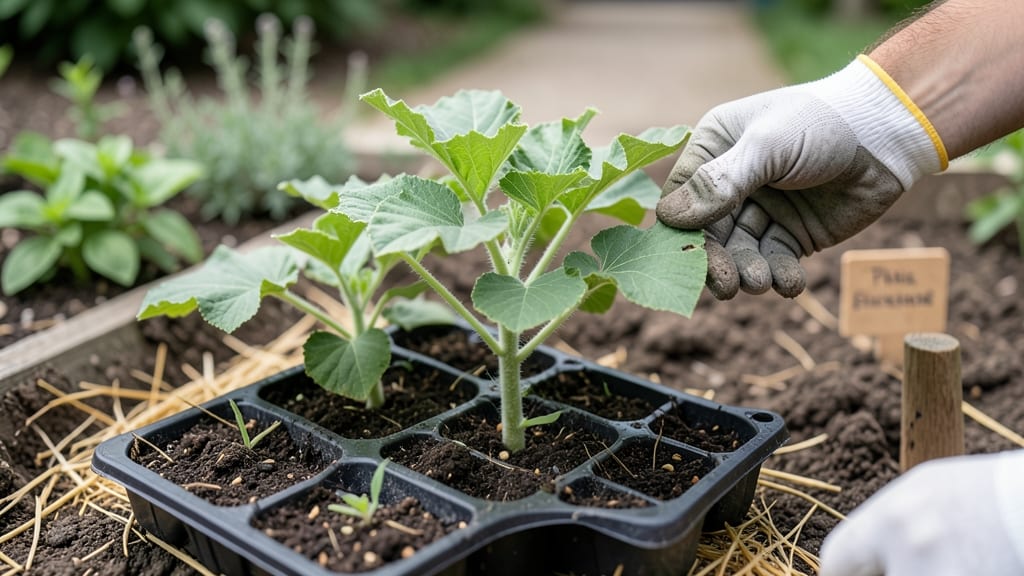
Here’s a critical rule I follow: Never plant cantaloupe seeds directly outdoors in Michigan’s climate. Instead, start them indoors 3-4 weeks before your last frost date, then transplant seedlings when they’re 2-3 inches tall and the soil is consistently above 70°F.
This two-step process has doubled my success rate compared to direct sowing. I use biodegradable pots to avoid root disturbance during transplanting.
One common mistake I see in Michigan gardens is planting cantaloupe too close to summer’s end. Since cantaloupes need 75-90 days to mature, you must finish planting by early July at the latest in most regions.
In the Upper Peninsula, I often skip cantaloupe entirely and opt for shorter-season varieties like ‘Minnesota Midget’ or focus on greenhouse growing.
| Region | Last Frost Date | Ideal Planting Window | Soil Temp Requirement | First Frost Risk |
|---|---|---|---|---|
| Southern Lower Peninsula (e.g., Detroit, Ann Arbor) | Mid-April | Late April - Early May | 70°F+ | Low (Zone 6b) |
| Northern Lower Peninsula (e.g., Grand Rapids, Lansing) | Early May | Mid-May - Early June | 70°F+ | Moderate (Zone 6a) |
| Upper Peninsula (e.g., Marquette, Houghton) | Early June | Late May - Early June | 70°F+ (use row covers) | High (Zone 5b) |
🌱 Pro Tip: Use a soil thermometer to confirm warmth—cantaloupes won’t germinate below 70°F.
If you’re new to Michigan gardening, I recommend starting cantaloupe seeds indoors in early April using a grow light or sunny windowsill. Transplant hardened-off seedlings after Memorial Day in most regions, but wait until June 1st in the Upper Peninsula.
I’ve had better luck with transplants than direct sowing because seedlings get a head start in warmer indoor conditions.
For extended harvests, consider succession planting every 2 weeks from late May through early July. This staggered approach ensures a continuous supply of ripe cantaloupes before Michigan’s first frost in October.
In my 2022 garden, this method gave me fresh cantaloupe from July through September—a full 2 months longer than my neighbors who planted once.
One game-changer I discovered is using black plastic mulch to raise soil temperatures by 10-15°F. I lay it down 2 weeks before planting and make small holes for the seedlings.
This trick lets me plant 2 weeks earlier in my cooler Northern Michigan garden, giving my cantaloupes more time to mature before fall frosts. Just remember to remove the mulch after harvest to prevent soil compaction.
Finally, monitor your local microclimate. Areas near large bodies of water or urban heat islands (like downtown Detroit) may have earlier planting windows due to warmer soil. I’ve seen 3-5 day differences in frost dates just 5 miles apart
Best planting times for cantaloupe in Michigan’s climate zones
Michigan’s diverse climate zones mean cantaloupe planting times vary dramatically—from the Upper Peninsula’s cooler temperatures to the Southern region’s longer frost-free seasons. Understanding these differences ensures you plant at the right time for your location, maximizing your chances of a sweet harvest.
The key is waiting for soil temperatures of at least 70°F and avoiding late frosts that can devastate young plants.
For most of Michigan, the ideal planting window falls between late April and mid-May, after the last frost date. However, in the Upper Peninsula (Zone 5b), you may need to wait until early June to avoid cooler soils.
Meanwhile, Southern Michigan (Zone 6b) gardeners can start as early as mid-April in protected beds. Always check your local USDA Plant Hardiness Zone and historical frost dates for precision.
Pro Tip: Use a soil thermometer to confirm warmth before planting. Cantaloupe seeds won’t germinate well in cold soil, and vines struggle to establish in temperatures below 60°F. If your soil isn’t ready, consider starting seeds indoors 4-6 weeks before the last frost and transplanting hardened-off seedlings after Memorial Day.
🌱 Michigan Cantaloupe Planting Guide by Region
| Region | Last Frost Date | Optimal Planting Window | Soil Temp Requirement | Harvest Window |
|---|---|---|---|---|
| Upper Peninsula (Zone 5b) | Mid-May to Early June | Early June to Mid-June | 70°F+ (wait for warmth) | Late July to Early August |
| Northern Lower Peninsula (Zone 5b-6a) | Late April to Early May | Late May to Early June | 70°F+ (use black plastic mulch) | June to Mid-August |
| Southern Lower Peninsula (Zone 6a-6b) | Mid-April to Early May | Late April to Mid-May | 65°F+ (earlier with protection) | Late June to September |
💡 Note: Adjust for early/late frosts by using row covers or extending the season with trellises.
If you’re eager to get a head start, indoor seed starting is your best bet. Begin seeds in biodegradable pots 4-6 weeks before your region’s last frost date, using a seedling heat mat to maintain warmth.
Transplant seedlings outdoors only after they’ve developed 2-3 true leaves and soil temperatures consistently stay above 60°F. Harden off seedlings gradually by exposing them to outdoor conditions for 1-2 hours daily over a week.
For gardeners in Zone 5b, consider using black plastic mulch to warm the soil faster and extend the growing season. This technique can raise soil temperatures by 5-10°F, helping cantaloupe thrive in cooler climates.
Pair it with drip irrigation to maintain consistent moisture without overwatering. In Southern Michigan, you can even experiment with early succession plantings every 2 weeks for a staggered harvest.
Remember, cantaloupe vines need ample space—spread them 3-6 feet apart in all directions to prevent crowding. In smaller gardens, use container growing with large pots (at least 18 inches deep) and trellis the vines vertically to save space.
With the right timing and care, even Michigan’s cooler climate can yield juicy, homegrown cantaloupes! 🌞