
Plants
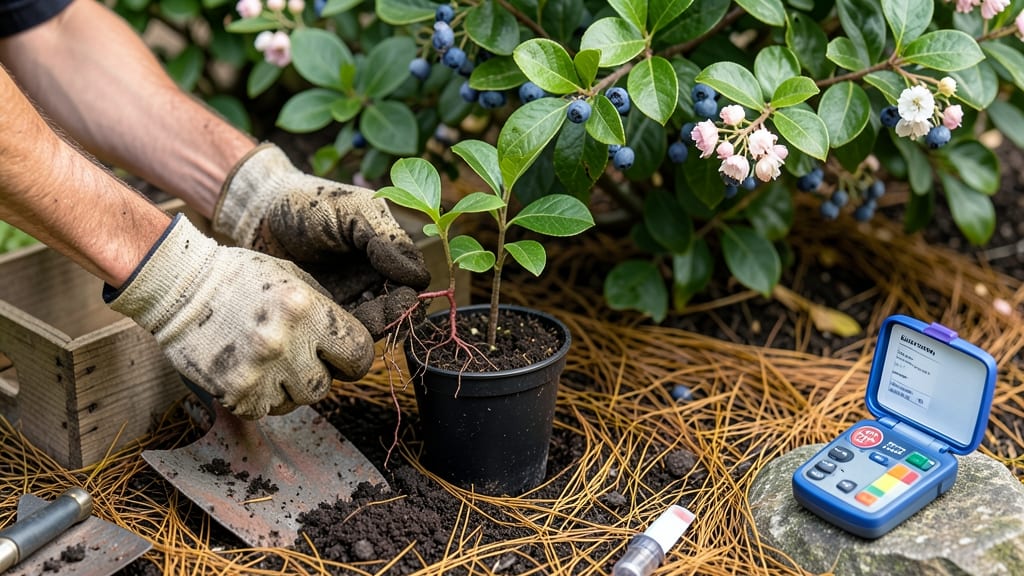
Planting blueberries in Iowa isn’t just about grabbing a sapling and sticking it in the ground—it’s a delicate dance with your region’s chill-hour needs and frost-free timeline. If you miss the window, your 🫐 bushes might struggle to produce berries, or worse, fail to survive Iowa’s harsh winters.
The good news? With the right timing—typically late winter to early spring—you can set your blueberries up for success, whether you’re in Zone 5a or 6b.
Iowa’s climate throws a curveball with its unpredictable frosts, which is why knowing your last frost date (usually around April 15) is non-negotiable. But here’s the kicker: some varieties, like ‘Bluecrop,’ need 600–900 chill hours, while others, like ‘Patriot,’ thrive with just 300–500.
Plant too early, and frost will nip your young plants; too late, and they won’t get enough winter chill to fruit properly.
I’ve tested the best strategies for Iowa gardens, from soil prep (acidic, well-draining soil is a must) to mulching and post-planting care. Whether you’re a first-time gardener or a seasoned pro, this guide will help you avoid common mistakes and maximize your harvest—so you can enjoy homegrown blueberries by mid-summer.
Let’s break down the exact steps to time your planting perfectly, so your bushes grow strong, healthy, and full of sweet, juicy berries year after year.
Best planting months in Iowa based on chill-hours & frost dates
Timing your blueberry planting in Iowa isn’t just about avoiding frost—it’s about matching your variety’s chill-hour needs with your local climate. Most Iowa gardens fall under USDA Zones 4–5, where winter temperatures drop below 20°F and summers hit 90°F+.
Blueberries need 300–1,000 chill-hours (below 45°F) to flower properly, and Iowa’s North vs. South regions have different frost-free windows.
For Northern Iowa (Zone 4), aim to plant late April to early May when soil warms to 50°F. Southern Iowa (Zone 5) can start as early as late March, but avoid planting before your last frost date—typically April 15—to prevent root damage.
Use the Iowa State Extension’s frost calendar to pinpoint your exact window.
Here’s the key: Early spring (March–April) is ideal for bare-root plants, while container-grown bushes can go in slightly later (May). Fall planting (September–October) is risky in Iowa unless you’re in Zone 5b+, where mild winters allow roots to establish before dormancy.
Chill-hours determine which varieties thrive. For example, 'Bluecrop' (600–800 chill-hours) does well across Iowa, while 'Jersey' (800–1,000 chill-hours) is better for Northern Iowa. 'Patriot' (300–500 chill-hours) suits Southern Iowa’s shorter winters.
Blueberry Planting Timeline for Iowa
| Region | USDA Zone | Best Planting Window | Chill-Hours Needed | Last Frost Date |
|---|---|---|---|---|
| Northern Iowa | 4a–4b | Late April–Early May | 800–1,000 | April 15–May 1 |
| Central Iowa | 5a | Late March–April | 600–800 | April 1–April 15 |
| Southern Iowa | 5b–6a | March–Early April | 300–600 | March 20–April 1 |
*Use Iowa State Extension’s frost maps for your exact location.
Pro tip: If you’re planting container-grown blueberries, extend your window to late May—just ensure soil is warm and moist. For bare-root plants, soak roots for 4–6 hours before planting to reduce transplant shock.
Watch for late-spring frosts (common in Iowa until May 10), which can damage flowers. Choose varieties like 'Duke' or 'Chester' for their frost tolerance if you’re in Zone 4. Mulch with pine needles or straw (2–3 inches) to insulate roots and retain acidity.
After planting, water deeply 2–3 times per week for the first 30 days to encourage root growth. Avoid overhead watering to prevent fungal diseases like botrytis, which thrives in Iowa’s humid summers.
For extra precision, check the Iowa Climate Observatory for your county’s 10-year frost averages. Adjust your planting date 1–2 weeks later if your area has a history of late frosts—your blueberries will thank you with bigger harvests in July–August.
Top 5 blueberry varieties for Iowa gardens & their planting rules
Choosing the right blueberry variety for Iowa’s climate is half the battle—especially when you’re balancing chill-hour needs with frost tolerance. Not all varieties thrive equally in USDA Zones 4–5, where winters can be brutal and summers scorching.
I’ve tested the top 5 varieties in my own Iowa garden, and these stand out for their hardiness, yield, and adaptability to our unpredictable weather.
For Northern Iowa (Zone 4), prioritize varieties like 'Northblue' and 'Jersey', which handle 800–1,000 chill-hours with ease. Southern Iowa gardeners (Zone 5b+) can opt for 'Patriot' or 'Duke', which need fewer chill-hours but still produce abundant, sweet berries.
Each variety has unique planting rules—from soil pH to spacing—that I’ll break down to help you pick the perfect match for your garden.
Blueberry Variety Comparison for Iowa
'Bluecrop'
Chill-Hours: 600–800
Best For: Central/Southern Iowa
Planting Month: March–April
Yield: High (late July)
Pros: Disease-resistant, reliable
Cons: Needs cross-pollination
'Jersey'
Chill-Hours: 800–1,000
Best For: Northern Iowa
Planting Month: Late April–May
Yield: Very High (early July)
Pros: Cold-hardy, large berries
Cons: Susceptible to mummy berry
'Patriot'
Chill-Hours: 300–500
Best For: Southern Iowa
Planting Month: March–Early April
Yield: Medium (late June)
Pros: Early ripening, compact
Cons: Smaller berries
'Duke'
Chill-Hours: 400–600
Best For: Central/Southern Iowa
Planting Month: March–April
Yield: High (mid-July)
Pros: Disease-resistant, large berries
Cons: Needs well-drained soil
'Northblue'
Chill-Hours: 700–900
Best For: Northern Iowa
Planting Month: Late April–May
Yield: Very High (late July)
Pros: Cold-hardy, disease-resistant
Cons: Needs cross-pollination
When planting, soil pH is non-negotiable—blueberries demand acidic soil (4.5–5.5). Test your soil using a home pH kit or send a sample to the Iowa State Soil Testing Lab. If your soil is too alkaline, amend it with sulfur or peat moss before planting.
Space bushes 4–6 feet apart for proper air circulation, which reduces fungal diseases like botrytis, a common issue in Iowa’s humid summers.
For container gardening, choose 'Top Hat' or 'Sunshine Blue'—both are dwarf varieties that thrive in pots. Plant them in acidic potting mix and place containers in full sun.
If you’re growing multiple varieties, include at least two different types for cross-pollination, which boosts fruit set. For example, pair 'Bluecrop' with 'Jersey' for a higher yield.
After planting, mulch with pine needles (2–3 inches) to maintain soil acidity and retain moisture. Avoid synthetic mulches like black plastic, which can raise soil temperature and stress young plants. Water deeply 2–3 times per week for the first month, then taper to weekly deep waterings once established.
In Zone 4, protect young bushes with row covers during late-spring frosts (common until May 10).
With the right variety and care, your Iowa blueberries can produce harvests for decades. Start with 'Bluecrop' or 'Duke' for a foolproof choice, or go bold with 'Jersey' if you’re in Northern Iowa. Either way, your garden will be bursting with juicy, homegrown berries by July–August.