
Plants
Planting blackberries in Tennessee at the wrong time can turn your dream harvest into a frustrating gamble—especially with our humid climate and unpredictable frost dates. Whether you're a first-time gardener or a seasoned grower, getting the timing right is the key to thriving plants and sweet, juicy berries by summer.
In Tennessee's 6a-7b zones, the best windows are late winter to early spring (February–April) or fall (September–October). But here's the catch: fall planting gives roots time to establish before winter, while spring planting lets you take advantage of warmer soil.
I'll break down which option works best for your location and variety—thornless or traditional—and how to avoid common pitfalls that ruin Tennessee gardens.
You might think all blackberries are the same, but the planting window actually depends on whether your variety produces fruit on new wood (primocanes) or old wood (floricanes). Discover how to match your variety to the perfect timing, plus soil prep secrets that make all the difference in our clay-heavy soils.
Ready to grow blackberries that produce bountiful harvests year after year? Let's dive into the exact steps for planting in Tennessee's climate—so you can enjoy fresh 🫐 berries from June through August without the guesswork.
Best planting seasons for blackberries in Tennessee: spring vs fall breakdown
Tennessee’s humid subtropical climate (USDA zones 6a-7b) creates two ideal windows for planting blackberries: early spring and fall. Each season offers unique advantages, and choosing the right one depends on your blackberry variety and local microclimate. Let’s break down the pros, cons, and best practices for each.
Spring planting (typically February to April) gives blackberries a full growing season to establish roots before summer heat arrives. However, Tennessee’s late frosts (often until mid-March) can delay planting if you’re not careful.
Fall planting (usually September to October) allows roots to settle before winter, but timing must avoid early first frosts (around mid-November).
Thornless varieties like ‘Natchez’ or ‘Arapaho’ thrive in both seasons, while traditional varieties such as ‘Cheyenne’ or ‘Ouachita’ may need slightly adjusted timing. In East Tennessee’s cooler zones (6a), spring planting is often safer, while West Tennessee’s warmer zones (7b) can handle fall planting later into October.
Here’s how the two seasons stack up for Tennessee gardeners:
For East Tennessee gardeners in zones 6a, I recommend spring planting in late March to early April to avoid late frosts. In Middle and West Tennessee (zones 7a-7b), fall planting in September gives roots time to establish before winter.
Always check your local frost dates—the Tennessee State Climatology Office provides updated forecasts.
If you’re growing thornless blackberries, spring planting gives them a head start, but fall planting can work if you use row covers for winter protection. Traditional varieties often perform better with fall planting, as their floricanes (fruit-bearing canes) establish more reliably in cooler soil.
Pro tip: If you miss the ideal window, container growing extends your planting flexibility. Containers warm up faster in spring and can be moved to sheltered spots in fall. Just ensure they have drainage holes to prevent root rot in Tennessee’s humid summers.
🌱
Critical factors that determine your perfect planting window in Tennessee
Timing your blackberry planting in Tennessee isn’t just about months—it’s about soil temperature, frost dates, and even humidity levels. The wrong timing can lead to poor root growth, fungal diseases, or weak canes that struggle in our hot summers.
Let’s explore the key factors that help you pinpoint the perfect window for your location and variety.
First, soil temperature is non-negotiable. Blackberries need soil that’s at least 50°F (10°C) for spring planting and 60-70°F (15-21°C) for fall. In Tennessee’s clay-heavy soils, warmth penetrates slowly, so use a soil thermometer to check before planting.
Cool, wet soil in spring can delay root establishment, while fall planting in warm soil may stress young plants.
Next, frost dates are your gardening GPS. Tennessee’s last spring frost typically hits March 15, but this varies by region—East Tennessee can see frosts until April 1, while West Tennessee warms earlier.
For fall planting, aim to finish 4-6 weeks before the first frost (usually mid-November). Miss this window, and your plants won’t have time to harden off for winter.
⚠️ Tennessee-Specific Pitfalls to Avoid
- Planting too early in spring: Cool soil + frost = rotting roots. Wait until soil warms to 50°F.
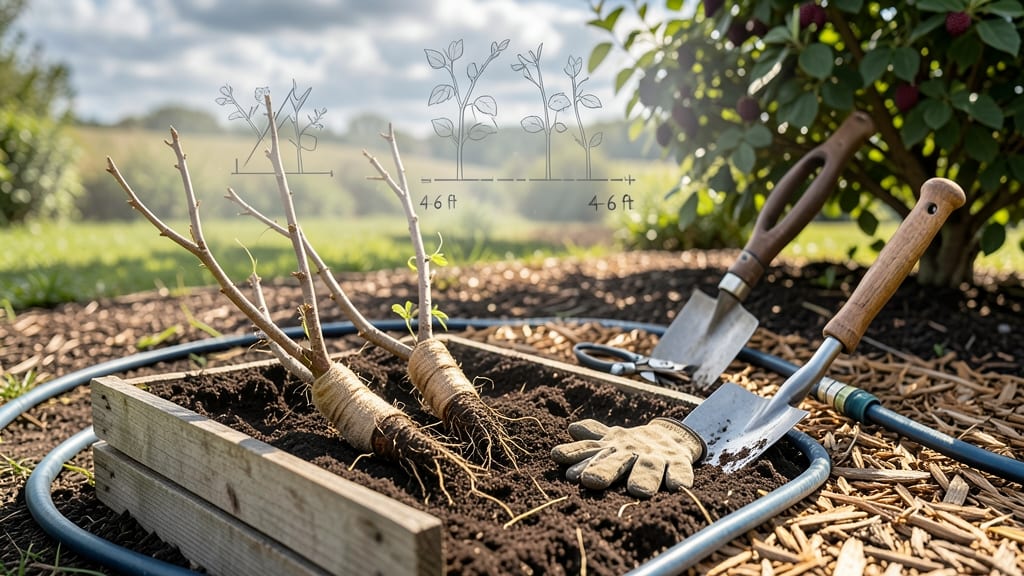
- Ignoring humidity: Tennessee’s summer humidity fuels fungal diseases like botrytis. Space plants 4-6 feet apart for airflow.
- Skipping soil prep: Our clay soils compact easily. Amend with compost and sand for drainage.
- Using diseased canes: Buy certified disease-free plants from reputable nurseries to avoid bringing in pathogens.
Your blackberry variety type also dictates timing. Primocane varieties (like ‘Prime-Ark Freedom’) produce fruit on new growth and thrive with fall planting, while floricane varieties (like ‘Navaho’) need spring planting to establish their fruiting canes.
Thornless varieties generally adapt better to both seasons but require sturdy trellising to support their weight in Tennessee’s humidity.
Don’t overlook microclimates. A backyard in Nashville (zone 7a) may have 10°F warmer soil than one in Knoxville (zone 6b). Observe your garden’s sun exposure—south-facing slopes warm faster in spring, while north-facing areas stay cooler longer.
Use these microclimates to your advantage by planting heat-loving varieties in warmer spots.
Finally, container growing offers flexibility if your timing is off. Containers warm up 3-5 days faster than ground soil in spring and can be moved to protected areas in fall.
Just ensure they’re at least 18 inches deep and use a well-draining potting mix to prevent root rot in Tennessee’s rainy summers.
🌿