
Plants
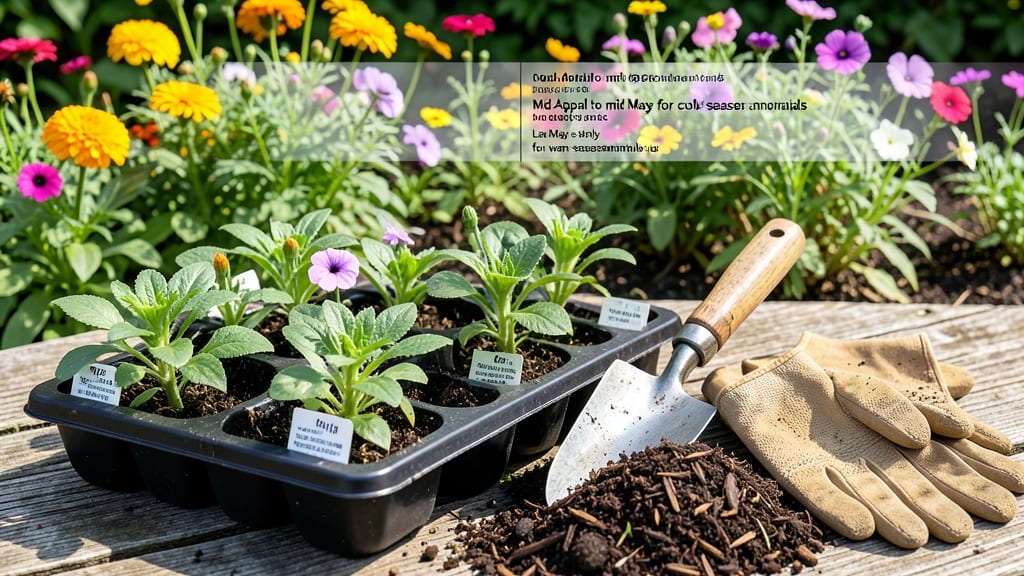
Planting annuals in Ohio isn’t just about grabbing seeds and sticking them in the dirt—it’s a timing game that can make or break your garden’s success.
With frost dates shifting from April 15 in southern zones to May 15 in the north, getting it wrong means either frozen seedlings or missed blooms.
The key isn’t just memorizing dates—it’s reading your soil and microclimate. Cold valleys hold frost longer than sunny hillsides, and some annuals like pansies can handle light freezes while others bolt in 50°F soil. I’ll show you how to outsmart Ohio’s unpredictable spring with zone-specific tricks.
You’ll discover the fastest-germinating varieties for your area, when to start seeds indoors vs. direct-sowing, and how black plastic or cloches can shave weeks off your growing season. No more guessing—just science-backed strategies to get your 🌱 annuals thriving from the first warm snap.
Whether you’re chasing summer blooms or fall harvests, this guide gives you the exact windows to plant for maximum impact. Let’s turn your Ohio garden into a year-round showstopper—without the frost-related heartbreak.
Ohio’s last-frost dates by zone: exact planting windows for annuals
Ohio’s USDA zones 5a–6b create a 3-week spread in last-frost dates—from April 15 in southern zones to May 15 in northern areas. But don’t rely on averages! Check your local microclimate: valleys freeze later than hills, and urban heat islands can delay frost by 5–7 days.
Use the Old Farmer’s Almanac or Ohio State Extension’s frost maps to pinpoint your exact window.
For cold-tolerant annuals like pansies, snapdragons, and calendula, you can plant 2–3 weeks before the average last frost. These frost-defying flowers handle 28°F temperatures and even bloom in light frost.
Meanwhile, heat-lovers like marigolds and zinnias should wait until after May 15—planting them too early risks leggy, weak growth from Ohio’s cool, damp springs.
Here’s the zone-by-zone breakdown you need to plan your annual planting calendar. Remember: Soil temperature matters more than air temperature—aim for at least 50°F for most annuals to germinate reliably.
| USDA Zone | Last Frost Date | Safe Planting Window | Cold-Tolerant Annuals | Heat-Loving Annuals |
|---|---|---|---|---|
| 5a (Northern OH: Toledo, Cleveland) | May 15 | May 1–15 (after frost risk) | Pansies, Snapdragons, Sweet Alyssum | Marigolds, Zinnias, Sunflowers |
| 5b (Central OH: Columbus, Dayton) | April 25 | April 15–May 1 | Calendula, Stock, Lobelia | Cosmos, Celosia, Portulaca |
| 6a (Southern OH: Cincinnati, Lexington) | April 15 | April 1–15 | Violas, Primrose, Sweet Peas | Geraniums, Petunias, Basil |
| 6b (Southeast OH: Athens, Chillicothe) | April 5 | March 25–April 15 | Stock, Sweet Alyssum, Iceland Poppies | Dahlia, Salvia, Verbena |
🌱 Pro Tip: Use row covers to extend your planting window by 2–3 weeks in cooler zones.
Ohio’s first frost typically arrives between October 15 (southern zones) and November 1 (northern zones). For a longer blooming season, try succession planting: sow fast-germinating annuals like radishes or lettuce every 2 weeks until July 15.
This keeps your garden producing until frost—no more bare patches!
Don’t forget to harden off seedlings for 7–10 days before transplanting. Ohio’s windy springs can shock tender annuals, so gradually expose them to outdoor conditions (sun, wind, temperature shifts). Start with 2–3 hours daily and increase by 1 hour each day.
For container gardening, add 1–2 weeks to your planting timeline. Pots heat up and cool down faster than in-ground soil, so wait until soil thermometers hit 55°F+ for most annuals. Self-watering containers also help prevent transplant shock during Ohio’s unpredictable rain showers.
Use these zone-specific dates as your starting point, but always monitor local forecasts. A late-May frost in Zone 5a can still happen—so keep row covers or frost cloth handy until you’re past the average last frost by 2 weeks.
Ohio’s microclimates mean your neighbor’s perfectly timed garden might fail if you’re just 10 miles away on a hill. Test your soil temperature with a thermometer—most annuals need 50–60°F to germinate. If it’s below 50°F, try black plastic mulch or a cold frame to warm the soil faster.
For vegetable annuals like tomatoes, peppers, and eggplants, wait until soil is 60°F+—these heat-lovers won’t thrive in cool Ohio springs. Start them indoors 6–8 weeks before your last frost date, then transplant after May 15 for best results.
5 Fast-germination hacks to beat Ohio’s slow soil warming
Ohio’s cool, damp springs can turn seed-starting into a waiting game—sometimes weeks of patience before your annuals even sprout. But with the right tricks, you can shave 10–14 days off germination time. The secret? Controlling soil warmth and boosting seed viability before they hit the ground.
I’ve tested these hacks in my own Zone 5b garden, and they’ve cut my wait time in half for slow starters like basil and petunias.
First, pre-soak seeds overnight in lukewarm water (not hot!) to kickstart hydration. This works especially well for large seeds like beans or sunflowers, which often need consistent moisture to crack their outer shell.
For tiny seeds (e.g., carrots, lettuce), mix them with a moist paper towel in a sealed bag for 12–24 hours—this mimics the warm, damp conditions they’d find deep in the soil.
Next, use heat mats or bottom watering to maintain 70–80°F soil, the ideal range for most annuals. A $20 heat mat from a garden center can double germination speed for cool-season crops like radishes (3 days!) or spinach (5 days).
Pro tip: Place your seed trays on black plastic mulch outdoors—it absorbs sunlight and raises soil temps by 10°F+ compared to bare earth.
- Pre-soak seeds in lukewarm water for 12–24 hours to jumpstart hydration. Best for large seeds (beans, sunflowers) or slow germinators (basil, petunias).
- Use heat mats or black plastic mulch to keep soil at 70–80°F. A $20 heat mat can cut germination time in half for cool-season crops.
- Choose fast-sprouting varieties: Radishes (3 days), Lettuce (5–7 days), Spinach (7–10 days). Skip slow starters like dill or fennel in early spring.
- Direct-sow after May 15 for heat-lovers (marigolds, zinnias) to avoid damping off in cool, wet soil. Use cloches if planting earlier.
- Test soil moisture with your finger—damp, not soggy. Overwatering causes seed rot, while dry soil stalls germination. Aim for consistent moisture without puddles.
💡 Science Note: Seeds need 40–60% moisture to activate enzymes—pre-soaking ensures they don’t dry out before sprouting.
Don’t overlook seed selection: Some varieties are genetically bred to germinate faster. For Ohio gardens, prioritize radishes ('Cherry Belle' in 3 days), lettuce ('Black Seeded Simpson' in 5–7 days), and spinach ('Bloomsdale Long Standing' in 7–10 days).
Avoid slow starters like dill, fennel, or parsley in early spring—they’ll just rot in damp soil while you wait.
For direct-sown annuals, wait until after May 15 to plant heat-lovers like marigolds and zinnias. Before that date, Ohio’s cool, wet soil triggers damping off (a fungal disease that kills seedlings).
If you’re desperate for early color, use cloches or row covers to raise soil temps by 5–10°F and protect from wind.
Finally, monitor soil moisture like a hawk—damp, not soggy. Overwatering suffocates seeds, while dry soil halts germination. Stick your finger 1 inch deep; if it’s dry, water gently (no blasting!).
A self-watering seed tray (or even a spray bottle) keeps conditions consistent without the risk of flooding.
With these hacks, you’ll outsmart Ohio’s slow soil and have blooms or harvests 2–3 weeks earlier than neighbors who wait for "perfect" conditions. Pro move: Keep a soil thermometer handy—once temps hit 55°F+, your annuals will sprint instead of crawl.