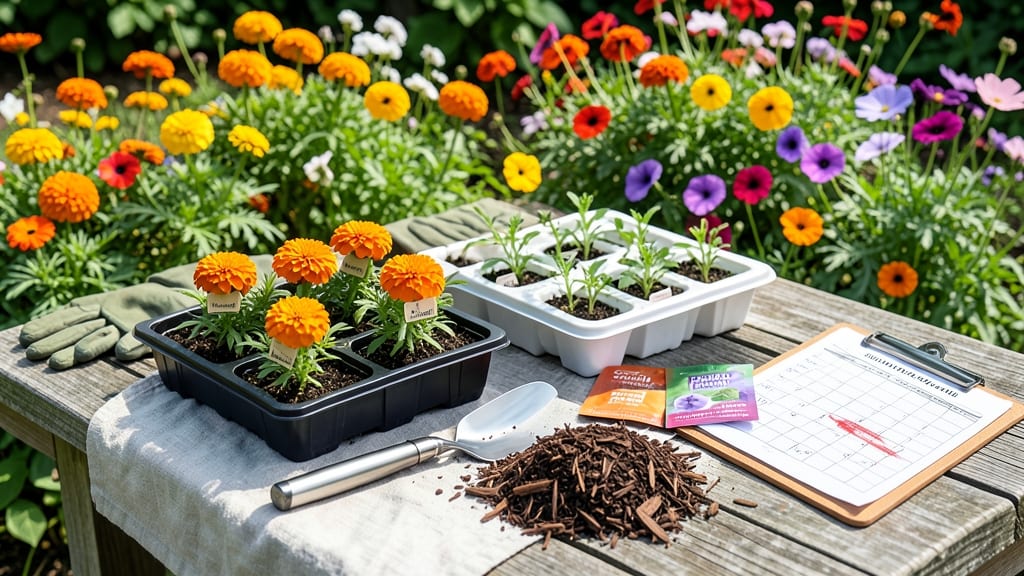
When to plant annuals in Pennsylvania is all about timing your garden to bloom from May through October—without falling victim to late frosts or missing the sweet spot for heat-loving tomatoes and marigolds.
Too early, and a surprise frost will erase your hard work; too late, and you’ll miss the prime growing window for vibrant, thriving plants. The key lies in understanding USDA Zone 6b’s frost-free averages and adjusting for your specific corner of the state.
I've spent years watching my 🌱 annuals thrive (and fail) based on when I planted them, and the difference between a 5-minute decision and a well-researched schedule is night and day.
Whether you're in Pittsburgh's cooler microclimate or Philadelphia's slightly warmer urban pockets, knowing the right window for warm-season starters versus cool-season heroes makes all the difference.
What if you could extend your planting season by weeks, even in unpredictable years? The secret isn't complicated—it's about strategic soil prep, protective covers, and choosing varieties that match your local growing conditions.
Let me show you exactly when to plant for maximum success, plus how to handle those tricky late frosts without losing your garden's potential.
From pansies that brave early spring to sunflowers that reach for summer skies, we'll cover everything you need to know to make this your most vibrant growing season yet. Ready to turn your Pennsylvania garden into a year-round showstopper?
🌱
When to Plant Annuals
Jan
❄️
Feb
❄️
Mar
🌱
Apr
🌱
May
🌱
Jun
🌱
Jul
☀️
Aug
☀️
Sep
🍂
Oct
🍂
Nov
🍂
Dec
❄️
Pennsylvania annual planting timeline by last frost date
Pennsylvania’s USDA Zone 6b climate means your last spring frost typically arrives between April 15–May 15, while the first fall frost hits around October 1–November 1. These dates vary by region—Pittsburgh’s frost-free window is shorter than Philadelphia’s—so knowing your local averages is key to planting annuals successfully.
For example, marigolds and petunias thrive when soil temps hit 60°F+, while lettuce and pansies can handle cooler 50°F soil.
To simplify, I’ve broken down planting windows into two categories: cool-season annuals (like spinach and snapdragons) and warm-season annuals (tomatoes, basil, and zinnias). Cool-season varieties can often tolerate light frosts, while warm-season plants need consistent warmth to germinate.
For instance, tomato seeds planted too early in cold soil may rot, so wait until after May 1 in most of PA.
Here’s the visual timeline you’ll want to bookmark—it includes monthly planting windows, soil temperature requirements, and hardy annuals for each season. Pro tip: Use a soil thermometer to confirm readiness, especially for warm-season crops like peppers, which need 70°F+ soil.
| Season |
Planting Window |
Soil Temp (°F) |
Annuals to Plant |
Notes |
| Early Spring |
March 15–April 15 |
40–50°F |
Pansies, Lettuce, Spinach, Snapdragons |
Use row covers for frost protection |
| Late Spring |
April 30–May 15 |
50–60°F |
Calendula, Marigolds, Nasturtiums, Radishes |
Hardy annuals tolerate light frost |
| Early Summer |
May 20–June 15 |
60–70°F |
Tomatoes, Peppers, Petunias, Basil |
Wait until after last frost |
| Mid-Summer |
June 20–July 15 |
70°F+ |
Zinnias, Sunflowers, Cucumbers, Okra |
Succession plant for continuous blooms |
| Late Summer |
August 1–September 1 |
55–65°F |
How to extend your Pennsylvania planting season for annuals
Pennsylvania’s USDA Zone 6b climate means we get 150-180 frost-free days, but that doesn’t stop savvy gardeners from squeezing every possible growing day.
I’ve learned that with the right strategies, you can start 4-6 weeks earlier in spring and extend fall planting by 30 days—without losing plants to frost. The key? Cold protection and succession planting.
For early starts, I swear by row covers and mini greenhouses. These let me plant cool-season annuals like lettuce and pansies as early as late March, when soil temps hit 40°F.
Without protection, those same plants would rot in the ground until May. The secret is choosing lightweight frost cloth that lets sunlight through while trapping warmth.
Here’s my proven season-extending checklist:
1
Use cold frames for hardy annuals like calendula and snapdragons—plant them 6 weeks before last frost (typically mid-April in most of PA).
2
Try row covers over warm-season plants like marigolds and basil to plant 2-3 weeks earlier than your zone’s average.
3
Plant succession crops every 2-3 weeks through mid-July to ensure continuous blooms or harvests—think bush beans and zinnia seeds.
4
Choose late-season varieties like ‘Autumn Joy’ sedum or ‘Winterbor’ kale that tolerate light frosts and keep producing.
5
Monitor microclimates: South-facing beds warm up 1-2 weeks earlier than north-facing spots—use this to your advantage for heat-loving annuals.
Don’t forget that late frosts (which happen after April 15 in PA about 30% of years) can still catch you off guard. I always keep frost blankets handy for tender annuals like petunias and geraniums. A quick cover at night can save your entire planting!
For fall extensions, I focus on cool-season annuals that thrive in 50-60°F soil. Plant pansies and stock as late as mid-September—they’ll bloom until hard frosts in November. Just remember: water deeply before the ground freezes to keep roots hydrated.
With these tricks, my garden stays vibrant from April to November—and so can yours! The key is starting small, testing what works in your yard, and adjusting each year. Happy planting! 🌱
★★★★★4.7(15 reviews)
|