
Watering
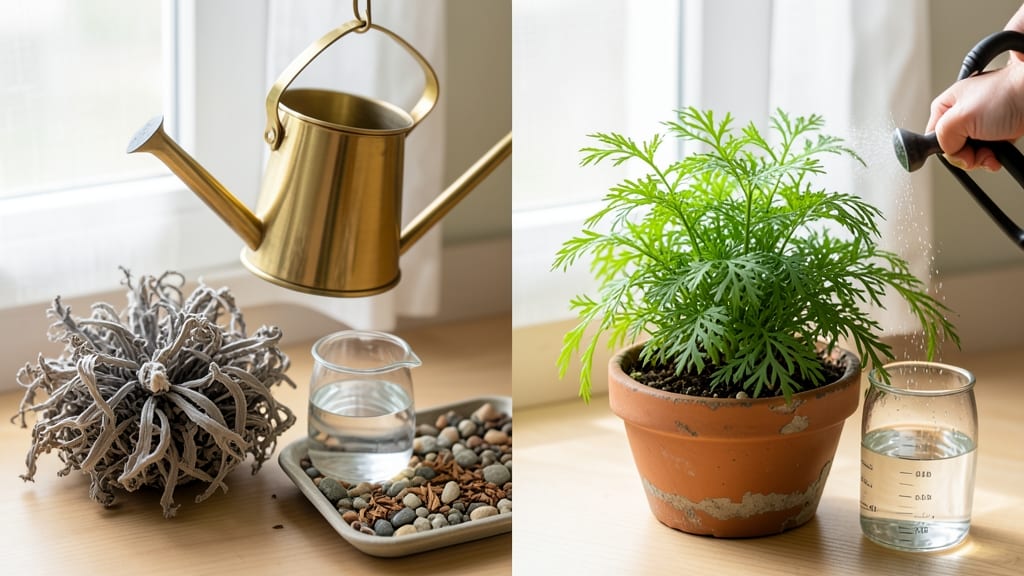
To revive your resurrection plant with how much water it truly needs, you don’t need to drown it—just a whisper of moisture is all it takes.
This remarkable succulent can survive years without water, then spring back to life in hours, but figuring out how much water triggers its revival without overdoing it is the real trick.
Most growers make the mistake of treating it like a typical houseplant, but the resurrection plant thrives on neglect—literally. A light misting every 2-4 weeks is often enough to keep it happy, but when it’s completely dried out, a single soak can bring it roaring back.
The key is understanding its drought tolerance limits and when to step in.
In this guide, I’ll break down exactly how much water your resurrection plant needs to revive, how to spot the signs of over- or under-watering, and why seasonal adjustments make all the difference.
Whether you’re a beginner or a seasoned plant parent, these insights will help you keep your 🌵 thriving without the guesswork.
Ready to master the art of minimal watering? Let’s dive into the science and secrets behind this drought-resistant wonder—and how to avoid the common pitfalls that turn revival into ruin.
How much water does a resurrection plant need for revival?
The resurrection plant (Selaginella lepidophylla) thrives on minimal water—just enough to trigger its revival from dormancy without drowning its delicate roots. Unlike most plants, it enters a cryptobiotic state during drought, curling into a brown, brittle ball that can survive years without moisture.
When you reintroduce water, it unfurls in 24-72 hours like a living miracle. But how much water does it truly need?
For revival, aim for 20-50ml of water every 2-4 weeks in ideal conditions. This tiny amount is enough to rehydrate the plant without causing root rot or fungal issues. Think of it as a light misting rather than a soaking—just enough to wake it up from dormancy.
Overwatering is the #1 killer of resurrection plants, so less is always better.
Here’s the key: Wait until the soil is completely dry before watering again. Stick your finger 1 inch deep into the soil—if it feels bone-dry, it’s time to water. In humid climates, you might stretch this to 6-8 weeks between waterings, while arid conditions may require a monthly check.
The plant’s natural survival instincts make it incredibly forgiving, but consistency is critical.
🌱
The resurrection plant’s watering needs shift dramatically based on its life stage. A fully revived plant (green and plump) can handle slightly more frequent watering—every 3-4 weeks—while a dormant specimen (brown and curled) might survive 6 months or more without a drop.
This adaptability is why it’s perfect for forgetful gardeners or those who travel often.
Pro tip: Use a spray bottle for revival watering to mimic natural rainfall. Directly pouring water onto the soil can dislodge the delicate fronds or cause compaction. Aim for the soil surface only, and avoid wetting the plant itself.
If you’re reviving a severely dried-out specimen, place it in a shallow tray of water for 10-15 minutes, then let it drain completely before returning it to its pot.
One common mistake is assuming that because the plant is "revived," it needs constant moisture. In reality, once it’s fully green, you can reduce watering back to monthly to prevent stress.
The goal is to mimic its natural desert habitat, where water is scarce but not absent. Think of your watering schedule as a delicate balance between revival and survival.
💧
Monitor your resurrection plant’s color and texture to fine-tune its watering needs. A healthy, revived plant should have bright green fronds that are slightly crisp to the touch. If the leaves turn yellow or mushy, you’re overwatering.
If it stays brown and brittle despite watering, it may need more light or a longer dry period. Remember, this plant is a master of drought, not a thirsty houseplant. Treat it like a desert cactus with a superpower: it can bounce back from extreme conditions.
For container-grown resurrection plants, choose a terracotta pot with drainage holes—these materials wick away excess moisture faster than plastic. If you’re growing it in a hanging basket or terrarium, reduce watering by 50% since humidity levels are higher.
Always water in the morning to allow excess moisture to evaporate during the day, reducing the risk of fungal infections.
Resurrection plant drought tolerance limits: what’s too little?
The resurrection plant’s drought tolerance is nothing short of extraordinary—it can survive years without water in its dormant state, making it one of nature’s most resilient plants. But even this hardy specimen has its limits. Understanding these boundaries is crucial to avoiding permanent damage while still allowing it to thrive.
In the wild, resurrection plants endure months without rain in arid deserts, but cultivated specimens need slightly more care to maintain their revival capabilities.
For a fully revived resurrection plant, the absolute minimum watering threshold is once every 4-6 weeks during active growth (spring/fall). In dormancy (winter), you can stretch this to every 8-12 weeks—or even longer if the plant is already curled and brittle.
The key is recognizing when the plant is truly dehydrated versus when it’s simply entering its natural survival mode. A deep brown color and crisp texture signal dormancy, while soft or yellowing indicates stress from too much moisture.
🌵
| Condition | Watering Frequency | Signs of Plant | Action Needed |
|---|---|---|---|
| Active Growth (Spring/Fall) | Every 3-4 weeks | Bright green fronds | Maintain current schedule |
| Dormancy (Winter) | Every 8-12 weeks | Brown, curled fronds | No water needed; monitor |
| Severe Drought (Wild Conditions) | Years without water | Completely dry, brittle | Revive with 10-min soak |
| Overwatering Risk | More than monthly | Yellow leaves, soft stems | Reduce watering immediately |
The resurrection plant’s drought tolerance is tied to its ability to enter cryptobiosis, a state where metabolic activity nearly stops. In the wild, this allows it to survive decades without water, but cultivated plants may not have the same resilience.
If you notice your plant failing to revive after watering, it could be a sign of permanent damage from prolonged neglect or poor soil conditions. Always use a well-draining cactus/succulent mix to prevent root rot, even during drought periods.
One critical threshold to watch is the soil moisture balance. While the plant can handle bone-dry soil, compacted or waterlogged conditions will kill it faster than dehydration.
If you’re unsure whether your plant is truly dormant or permanently damaged, try the revival test: place the dried plant in a shallow tray of water for 10 minutes. If it revives within 48 hours, it’s still viable.
If not, it may have suffered irreversible root damage.
💧
Seasonal adjustments are key to balancing drought tolerance with revival needs. In summer heat, reduce watering to monthly or less—the plant’s natural survival instincts kick in, and it will curl up to conserve moisture.
In spring and fall, when growth is active, you can water every 3-4 weeks to encourage lush fronds. During winter dormancy, the plant may not need water at all unless the air is extremely dry.
Always prioritize soil dryness over a rigid schedule—this plant’s resilience is its greatest teacher.
For container growers, pot size matters. Smaller pots dry out faster, so a 4-inch pot may need watering every 2-3 weeks, while a 6-inch pot can go 4-6 weeks between waterings.
If you’re growing multiple resurrection plants, group them together to create a microclimate with higher humidity, reducing the need for frequent watering. Just remember: this plant’s superpower is survival, not constant growth.