
Trees
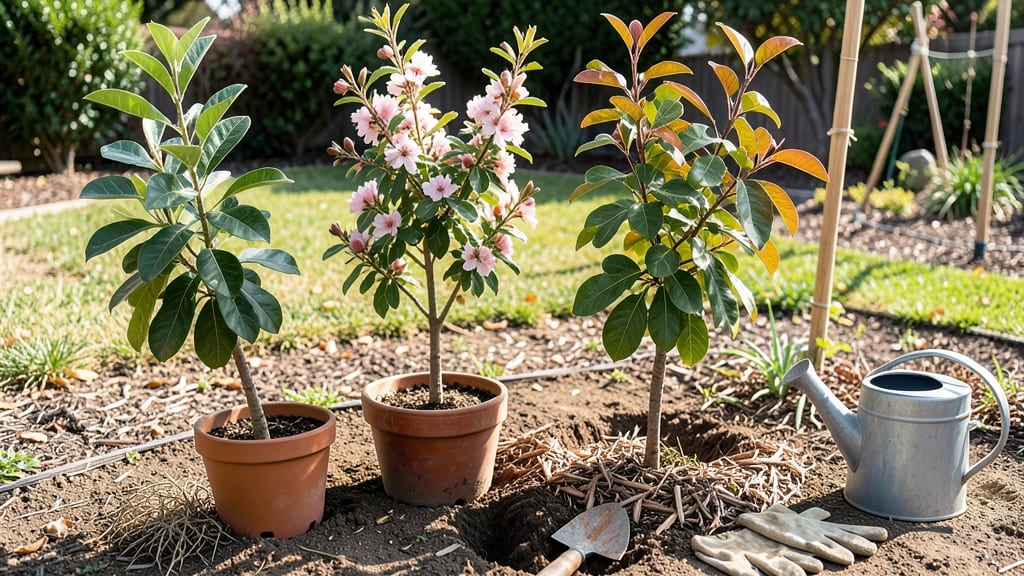
Planting fruit trees at the wrong time in Southern California can mean the difference between a bountiful harvest and years of disappointment—especially when chill-hour needs clash with our mild winters.
Whether you're dreaming of juicy citrus or sweet stone fruits, timing is everything to ensure your trees bloom reliably and bear fruit.
I've seen firsthand how a single misstep—like planting peach trees too early—can leave them struggling to meet their chill-hour requirements for proper flowering. The key is understanding your microclimate, whether you're in coastal areas with cooler nights or inland zones where heat arrives early.
Let me walk you through the exact months to plant each variety for maximum success.
Citrus thrives when soil warms in late winter or early spring, while avocados prefer the cooler transition into fall planting. Stone fruits like plums and cherries need that perfect balance of warmth and chill—so we'll break down the science behind matching trees to your specific zone.
No more guesswork, just reliable blooms and harvests.
Ready to transform your backyard into a fruit-filled paradise? I'll share proven tips for soil prep, watering schedules, and post-planting care tailored to Southern California's unique climate. Let's get those trees in the ground at the right time for a fruitful future.
Best planting months for Southern California fruit trees by chill-hour requirements
Southern California’s mild winters and long growing seasons create perfect conditions for fruit trees—but timing is everything. Unlike colder climates, our chill-hour needs vary dramatically between citrus varieties (0-300 hours) and stone fruits (300-1,000+ hours).
Planting outside these windows risks stunted growth, poor blooming, or even tree death from heat stress.
My first rule? Never plant in summer—the heat shocks young roots. Instead, focus on late winter through early spring when soil temperatures rise and frost risks fade.
For low-chill varieties like lemons or oranges, I start as early as January in coastal areas, while high-chill peaches or apples need to wait until February-March in inland zones.
Here’s the key: Citrus thrives with minimal chill (0-300 hours), while stone fruits need 400-800 hours. Avocados fall in between (200-400 hours). Matching your tree to your microclimate’s chill accumulation is the secret to reliable harvests—more on that in our next section!
| Fruit Type | Chill-Hour Needs | Best Planting Window | Soil Prep Tip | Climate Notes |
|---|---|---|---|---|
| Citrus (Lemons, Oranges, Limes) | 0-300 hrs | Jan-Feb (Coastal) Feb-Mar (Inland) |
Amend with compost + sand for drainage | Avoid low-lying areas (frost pockets) |
| Avocados | 200-400 hrs | Feb-Mar (All zones) | Test pH 6.0-7.0; add sulfur if needed | Use drip irrigation to prevent root rot |
| Stone Fruits (Peaches, Plums, Cherries) | 400-800 hrs | Feb-Mar (Coastal) Mar-Apr (Inland) |
Plant in well-drained slopes for airflow | Mulch with wood chips to retain moisture |
| Pome Fruits (Apples, Pears) | 600-1,000+ hrs | Mar-Apr (High-elevation only) | Add organic matter for cold tolerance | Limit to foothill zones (above 1,000 ft) |
| Nuts (Almonds, Pecans) | 300-600 hrs | Feb-Mar (All zones) | Avoid compacted clay; amend with gypsum | Deep water 1-2x/week after planting |
When I plant, I always check the USDA Zone 9b-11 guidelines, but remember: elevation matters more than latitude. A San Diego backyard at 500 feet might have 200 chill hours, while a Fontana garden at 1,200 feet could see 600+ hours.
Use a chill-hour calculator (like the one from UC Davis) to avoid costly mistakes.
Soil prep is just as critical as timing. For citrus and avocados, I mix in coarse sand to prevent root rot—our clay-heavy soils can suffocate young roots. For stone fruits, I focus on organic matter to improve water retention during our summer droughts.
Always water deeply after planting to eliminate air pockets around roots.
One common mistake? Planting bare-root trees in summer. The heat causes transplant shock, and young trees can’t establish before heat stress sets in. If you must plant in summer, choose container-grown trees with established root balls and provide shade cloth for
Best planting months for Southern California fruit trees by chill-hour requirements
Southern California’s diverse microclimates mean citrus trees and avocados can thrive year-round, while stone fruits and pome trees need precise timing to meet their chill-hour needs. The general rule?
Plant when soil temperatures hit 60°F (15°C) and stay consistent—typically between February and April for most varieties. But let’s break it down by tree type to avoid common mistakes.
Citrus and subtropical trees like lemon, orange, and avocado are the easiest to plant year-round, but they perform best when soil warms in late winter (February-March). This timing gives roots time to establish before summer’s heat stress.
Meanwhile, peaches and plums—which need 300-700 chill hours—must go in the ground by late winter (January-February) to avoid heat stress before flowering.
Here’s the key difference: Low-chill varieties (like meyer lemon or satsuma mandarin) can handle 0-300 chill hours and plant anytime soil is workable. High-chill varieties (like apricots or cherries) need 400+ chill hours and must be planted by mid-February in inland areas to ensure proper dormancy.
| Tree Type | Chill Hours Needed | Best Planting Month | Soil Temp Requirement | Key Tip |
|---|---|---|---|---|
| Citrus (Lemon, Orange) | 0-300 | February-March | 60°F+ (15°C+) | Avoid summer planting—heat stress kills roots. |
| Avocado | 150-300 | February-April | 55°F+ (13°C+) | Fall planting works for cooler inland zones. |
| Peach/Plum | 300-700 | January-February | 50°F+ (10°C+) | Plant early to avoid heat stress before dormancy. |
| Apple/Pear | 400-800 | November-December | 45°F+ (7°C+) | Cooler coastal areas only—avoid inland heat. |
Pro tip: Test your soil’s chill accumulation using a chill-hour calculator (available from UC Master Gardeners). Coastal areas like Santa Barbara may get enough chill for apricots, while inland Riverside can support peaches with proper timing. Always plant bare-root trees in winter (November-March) for best root establishment.
After planting, mulch heavily with 3-4 inches of wood chips to retain moisture and regulate soil temperature. Water deeply 2-3 times per week for the first year, then taper to weekly deep waterings once established. The goal? Mimic Southern California’s natural rainfall patterns without over-saturating roots.
One mistake I see often? Planting stone fruits too late in spring. By April, soil temperatures rise too quickly, and young trees can’t handle the stress. Stick to the January-March window for high-chill varieties, and you’ll see blooms—and fruit—in just 2-3 years. 🌱