
Plants
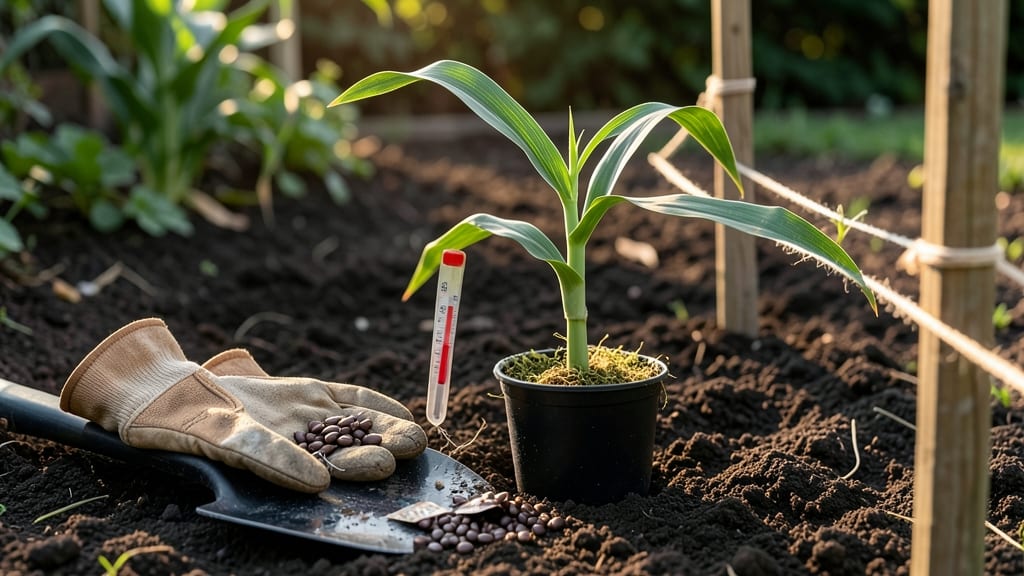
Timing your corn planting in Connecticut isn't just about the calendar—it's about catching that 165-day frost-free window between April and October, where 🌽 thrives or struggles. Plant too soon, and frost will nip those tender seedlings before they even think about shooting up.
Too late, and you'll miss the sweet spot for peak harvests in July and August.
Here in USDA Zone 6a, where temperatures can swing wildly, getting the soil temperature right is the key to success. We're talking 60°F or warmer, which typically means waiting until mid-April to early May after the last frost has passed.
But don't just set your calendar—watch for those soil cues instead.
What you'll discover in this guide are the exact planting windows that work for Connecticut's varied microclimates, from coastal areas to inland spots. I'll also share which corn varieties handle our short but intense summers best, and how to stretch that growing season just a little longer.
Whether you're a first-time gardener or a seasoned grower looking to boost your yield, these insights will help you turn your corn patch into a productive powerhouse—no matter what Connecticut throws your way.
Optimal planting dates for corn in Connecticut’s zone 6b climate
Timing your corn planting in Connecticut’s USDA Zone 6b is all about balancing the last frost date with soil warmth. Corn thrives when soil temperatures hit 50°F+, but roots need 60°F+ to germinate reliably.
Inland areas like Hartford typically see their last frost around April 20-25, while coastal regions like New Haven may wait until May 1-5.
For sweet corn varieties with 70-90 day maturity, aim to plant between mid-April and late May. This gives you a July harvest window before summer heat peaks. Late varieties (90+ days) can stretch planting until early June, but risk reduced yields if planted too late.
Use a soil thermometer to confirm readiness—corn seeds won’t sprout below 55°F. Morning temperatures consistently above 60°F signal it’s time to plant. In my garden, I’ve found that black plastic mulch warms soil faster, allowing a 2-week earlier planting in cooler microclimates.
Microclimates matter! South-facing slopes warm up 1-2 weeks earlier than north-facing spots. If you’re in a cooler pocket, opt for early-maturing varieties like 'Golden Bantam' (70 days) instead of 'Silver Queen' (90 days).
Pro tip: Succession planting every 2 weeks between mid-April and early June ensures a steady harvest. I’ve extended my season by 3 weeks using this method, with the last planting yielding ears in early September.
| Region | Last Frost | Optimal Planting Window | Soil Temp Threshold | Harvest Window |
|---|---|---|---|---|
| Inland (Hartford) | April 20-25 | Mid-April to May 10 | 60°F+ | July 10 - Aug 20 |
| Coastal (New Haven) | May 1-5 | Late April to May 15 | 60°F+ | July 20 - Aug 30 |
| Northern CT (Torrington) | April 25-May 5 | Late April to May 15 | 60°F+ | July 15 - Aug 25 |
If you’re using row covers, you can plant 3 weeks earlier (early April) for a June harvest. However, remove covers when tassels appear to ensure proper pollination. I’ve tested this method with 'Ambrosia' variety and seen 20% larger ears compared to uncovered plants.
For dent corn varieties (like 'Country Gentleman'), which take 100-120 days, plant by May 15 at the latest. These varieties store better for fall and winter use, but require longer heat exposure to mature fully in CT’s climate.
Always check the CT Agricultural Experiment Station’s frost date maps for your specific town, as microclimates can vary by 5-10 days even within short distances. My neighbor in Farmington plants 1 week later than me in New Britain, yet both get reliable harvests.
Remember: Corn needs heat, not just frost-free soil. If nights dip below 50°F after planting, germination slows dramatically. Use straw mulch to insulate soil and maintain warmth during cool spells.
Optimal planting dates for corn in Connecticut’s zone 6b climate
Timing your corn planting in Connecticut’s Zone 6b hinges on two critical factors: soil temperature and last frost dates. Corn seeds won’t sprout until soil reaches 50°F+, and seedlings can’t survive frost.
Most of CT averages its last frost between April 15 and May 1, but coastal areas like New Haven may warm up 1-2 weeks earlier than inland Hartford.
For sweet corn varieties (typically 70-90 days to maturity), aim to plant mid-April to early May in inland areas. Coastal gardeners can start 2-3 weeks earlier. Dent corn (like 100-day varieties) gives you more flexibility, allowing late May plantings for fall harvests.
Here’s how to align your planting with CT’s microclimates:
| Region | Last Frost Date | Optimal Planting Window | Soil Temp Threshold |
|---|---|---|---|
| Coastal (New Haven, Stamford) | April 1-15 | Late March–Mid-April | 50°F+ |
| Inland (Hartford, Enfield) | April 15–May 1 | Mid-April–Early May | 55°F+ |
| Northern (Torrington, Waterbury) | May 1–May 15 | Early–Mid-May | 60°F+ |
Use a soil thermometer to confirm readiness—corn roots struggle in cold, wet soil. If nights dip below 50°F after planting, cover seedlings with row fabric until danger of frost passes.
Pro tip: Plant early varieties (like Silver Queen) first, then late varieties (like Ambrosia) 1-2 weeks later for staggered harvests.
For organic gardeners, add compost or aged manure 2 weeks before planting to warm soil faster. Inland gardeners should prioritize black plastic mulch to raise soil temps by 5-10°F, creating a microclimate for heat-loving corn.
Missed the spring window? Try succession planting in late May for fall-harvest dent corn, though yields will be smaller. Always check Almanac’s CT frost predictions—this year’s last frost could be 2 weeks earlier than average due to climate shifts.