
Companion Plants
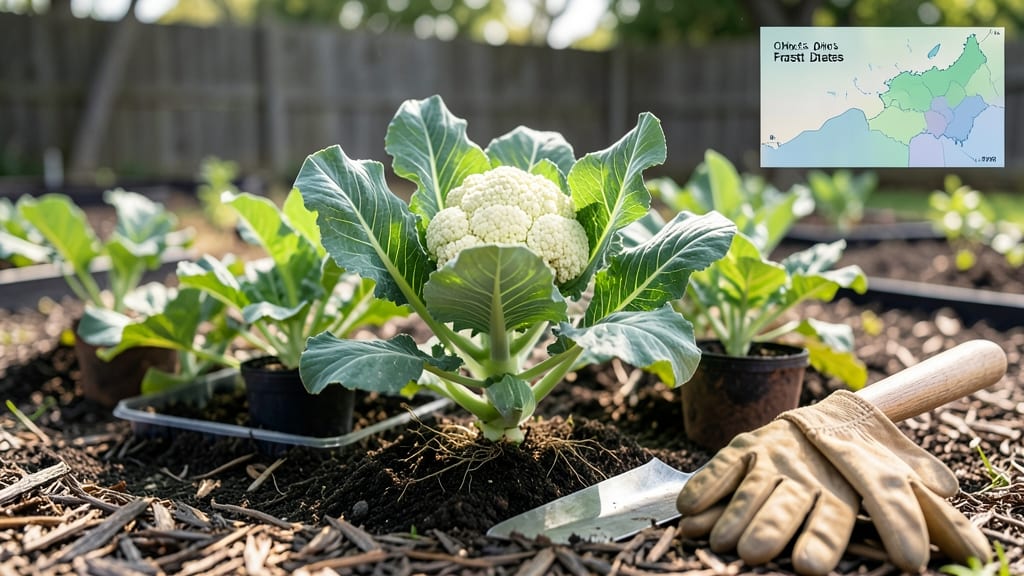
Planting cauliflower 🥬 in Ohio isn’t just about throwing seeds in the dirt—it’s about timing it just right to dodge frost, heat stress, and those pesky late-spring surprises that turn your crop into a sad, bolted mess.
If you’ve ever watched your cauliflower heads turn bitter or wilt before harvest, you know the stakes. Ohio’s 6a zone means you’ve got a tight window—March 15 to April 30 for spring and August 15 to September 15 for fall—to get it right.
Miss the mark, and you’ll either freeze your plants or watch them race toward flowering before they’re ready.
Here’s the good news: with the right variety and a few smart adjustments, you can outsmart Ohio’s unpredictable weather. I’ll break down the exact frost-date cheat sheet by variety type—whether you’re growing the cold-hardy ‘Snowball Y Improved’ or the heat-tolerant ‘Cheddar’—so you can plan for success, not disappointment.
Ready to turn your garden into a cauliflower powerhouse? Let’s dive into the strategies that’ll keep your plants thriving from seed to harvest, no matter what Ohio throws your way.
Ohio cauliflower planting dates by frost zone and variety type
Ohio’s diverse frost zones (5-9) mean your cauliflower planting window varies by region. Northern Ohio (zones 5-6) has earlier last frosts, while southern Ohio (zones 7-9) enjoys longer growing seasons.
To simplify, I’ve broken down ideal planting dates by variety type—whether you’re growing early-season ‘Snowball Y’ or heat-tolerant ‘Romanesco’.
For spring plantings, start seeds indoors 4-6 weeks before your last frost date (typically March 15–April 1 in most of Ohio). Transplant seedlings outdoors 2-3 weeks before the last frost, but only if soil temps stay above 40°F (4°C).
In fall, begin seeds indoors 10-12 weeks before the first frost (usually August 1–15), with transplants going in by September 1.
Here’s the frost-date cheat sheet for Ohio’s zones, including transplant vs. direct-sow timing by variety:
| Zone | Variety Type | Indoor Start (Seeds) | Outdoor Transplant | Direct Sow | Harvest Window |
|---|---|---|---|---|---|
| 5-6 (North) | Early (e.g., Snowball Y) | March 1–15 | April 15–May 1 | April 1–15 | June–July |
| 5-6 (North) | Mid-Season (e.g., Purple of Sicily) | March 15–April 1 | April 30–May 15 | May 1–15 | July–August |
| 7-9 (South) | Late (e.g., Romanesco) | August 15–31 | September 15–October 1 | September 1–15 | October–November |
| 7-9 (South) | Heat-Tolerant (e.g., Cheddar) | July 15–August 1 | August 15–September 1 | August 1–15 | September–October |
Pro tip: Use row covers to extend your spring planting window by 2-3 weeks if frost threatens. For fall plantings, prioritize heat-tolerant varieties like ‘Cheddar’ to avoid bolting in Ohio’s late-summer heat. Always harden off seedlings for 7–10 days before transplanting to prevent shock.
Ohio’s unpredictable weather can throw off even the best-laid plans. For example, a late-May frost in northern Ohio (like in 2020) can wipe out unprotected seedlings. That’s why I recommend succession planting every 2 weeks in spring and fall
How to adjust planting for Ohio’s unpredictable weather patterns
Ohio’s weather can be as unpredictable as a toddler’s mood—one day it’s 60°F and sunny, the next it’s a flash frost or a 90°F heatwave. Cauliflower, being the diva it is, demands consistency.
The key? Flexibility. I’ve learned to adapt planting strategies to Ohio’s quirks, and here’s how you can too.
First, row covers are your best friend. They act like a cozy blanket for your plants, protecting them from late spring frosts (which Ohio loves to throw at you in April).
Use them until the nighttime temps stay above 40°F. For fall plantings, row covers can also extend your harvest window by shielding tender heads from early October chills.
✅ Pro Tips for Ohio’s Weather
- Use black plastic mulch in spring to warm soil 2-3 weeks faster than bare earth.
- Plant heat-tolerant varieties like ‘Cheddar’ in late August to avoid bolting.
- Set up a succession planting schedule every 2 weeks for continuous harvests.
- Monitor weekly frost forecasts and adjust row covers accordingly.
Next, soil warming tricks can give your cauliflower a head start. In Zone 6a (most of Ohio), soil often stays cold well into April. I’ve had success using clear plastic tunnels over seed beds in March to trap heat.
Even a 5°F warmer soil can mean the difference between germination success and a sad, moldy seed packet.
Don’t underestimate succession planting. Ohio’s growing season is short—only about 165 frost-free days in most areas. By staggering plantings every 2-3 weeks from March to April, you’ll ensure a steady supply. For fall, start seeds indoors in mid-July and transplant in early August for a late-season harvest before frost.
Finally, shade cloth can save your cauliflower from Ohio’s summer heat stress. If temps creep above 85°F, throw a 30-50% shade cloth over your plants for a few hours a day.
This prevents bolting and keeps those tight, snow-white heads forming properly. It’s like giving your plants a cooling break at the spa!
Ohio’s weather might be chaotic, but with these adjustments, you’ll outsmart Mother Nature and harvest cauliflower like a pro. The secret? Stay ahead of the forecast and give your plants the support they need—whether that’s warmth, shade, or protection.
Your future self (and your dinner table) will thank you! 🌱