
Plants
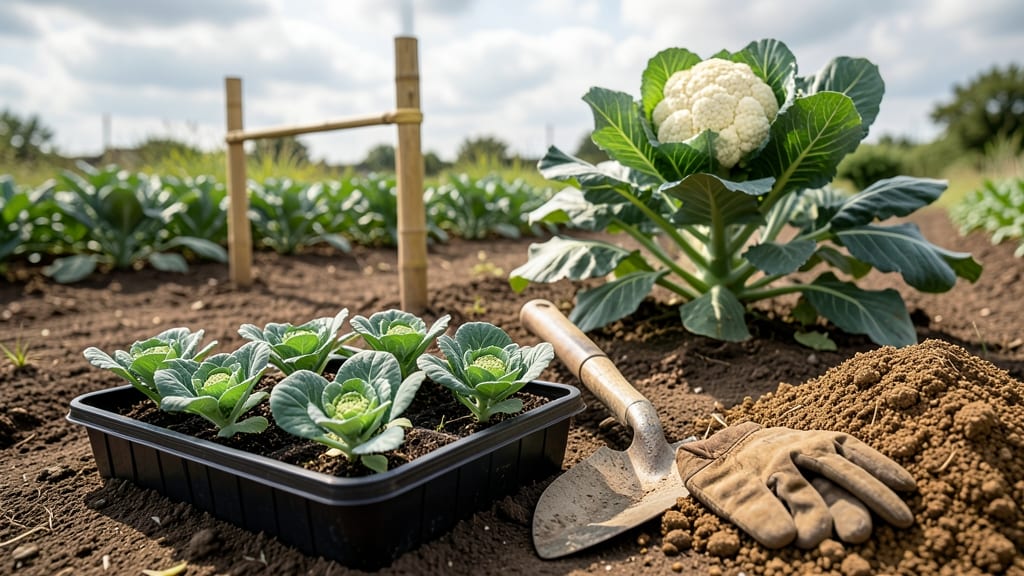
Timing your cauliflower 🥬 planting in Missouri isn't just about throwing seeds in the dirt—it's the difference between a bountiful harvest and a sad, bolting disappointment.
The exact weeks before your last frost date matter more than you might think, especially in zones 5b-6b where temperature swings can play havoc on your plants.
If you plant too early, your cauliflower might bolt before forming heads. Too late, and you’ll miss the ideal growing window. I’ve learned the hard way that Missouri’s spring frost dates (usually mid-April) and fall frosts (mid-October) are your best friends for planning.
The key is starting seeds indoors 6-8 weeks before transplanting them outside—just as the soil warms up.
But here’s the thing: even with perfect timing, soil prep and variety choice can make or break your harvest. Whether you’re aiming for a June-July spring crop or pushing for a fall harvest in October, the right techniques will give you crisp, flavorful heads instead of bitter disappointment.
Let me walk you through the exact steps—from calculating your frost dates to picking the best varieties for Missouri’s climate. By the end, you’ll know precisely when to plant for zero-bolting success, no guesswork needed.
Missouri cauliflower planting calendar: exact weeks before last frost to avoid bolting
Missouri’s USDA Zones 5b-7a create a unique challenge for growing cauliflower—cool springs and hot summers demand precise timing. Plant too early, and your crop bolts from temperature fluctuations; too late, and summer heat stunts head formation.
The key lies in frost dates and microclimates that vary by just 2-3 weeks across the state.
For spring harvests, aim to transplant 4-6 weeks before your last frost date, which typically falls between mid-April (southern MO) and early May (northern MO). This ensures heads mature before summer heat sets in.
Meanwhile, fall plantings require a 100-120 day window before the first frost (usually mid-October), allowing time for cool weather head formation.
Missouri’s average frost-free season spans 180-210 days, but your exact schedule depends on your county. Use the table below to pinpoint your ideal transplant windows based on local data, then adjust for microclimates like urban heat islands or sheltered valleys.
| Region | Last Frost Date | Spring Planting Window | Fall Planting Window |
|---|---|---|---|
| Southern MO (St. Louis, Springfield) | Mid-April | March 15–April 1 | August 1–August 15 |
| Central MO (Columbia, Jefferson City) | Early April | March 20–April 5 | July 25–August 10 |
| Northern MO (Kansas City, St. Joseph) | Early May | April 10–April 25 | July 15–July 30 |
*Adjust 1–2 weeks earlier for urban areas or later for rural microclimates
To calculate your exact planting schedule, start with your last frost date (check the Missouri Climate Center for your county) and count backward. For spring, plant 4-6 weeks before frost; for fall, plant 100-120 days before frost.
For example, if your last frost is April 15, transplant March 1–15 for spring. If first frost is October 15, plant July 15–August 1 for fall.
Missouri gardeners often start cauliflower indoors to gain a 2-3 week head start. Sow seeds 6-8 weeks before transplanting under grow lights or in a sunny windowsill.
Use seed-starting trays with well-draining mix and maintain 60–65°F soil temps for germination. Harden off seedlings for 7–10 days before transplanting to avoid shock.
For direct sowing (less common for cauliflower), plant seeds 2–3 weeks earlier than your transplant window. However, this method risks slow germination in cool soils, so it’s best for heat-tolerant varieties like ‘Purple of Sicily’ in late summer plantings.
Missouri’s soil pH often needs adjustment—cauliflower thrives in pH 6.0–6.8. Test your soil in fall or early spring and amend with lime (to raise pH) or sulfur (to lower pH) as needed.
Add 2–3 inches of compost to improve fertility and drainage, which is critical in Missouri’s clay-heavy soils.
Protect young plants from cabbage moths and fleabeetles with row covers or neem oil sprays. These pests are more aggressive in Missouri’s humid summers, and early-season plantings are especially vulnerable. Monitor plants daily and act at the first sign of chewed leaves or tiny eggs on undersides.
Once transplanted, maintain consistent moisture—cauliflower heads need 1–2 inches of water weekly. Use drip irrigation or soaker hoses to keep foliage dry, reducing disease risk.
Mulch with straw or shredded leaves to retain moisture and suppress weeds, which compete for nutrients in Missouri’s rich but competitive soils.
Bolting is your biggest enemy in Missouri’s unpredictable springs. To prevent it, choose slow-bolting varieties like ‘Snowball Y Improved’ or ‘Chef’, which tolerate temperature swings better than standard types. If nights dip below 50°F, use row covers or move containers to a sheltered spot.
How to extend Missouri’s cauliflower growing season for fall harvests (with heat-tolerant varieties)
Fall harvests of cauliflower in Missouri are a hidden gem—many gardeners skip them, assuming summer heat ruins the crop. But with the right heat-tolerant varieties and smart timing, you can push harvests into October or even November.
The trick lies in late-summer transplants and shade protection to shield plants from Missouri’s 90°F+ afternoons, which trigger bolting.
For fall success, focus on transplanting between July 15 and August 15, depending on your region. Southern Missouri gardeners can plant as late as August 10, while northern areas should aim for July 20–30 to ensure heads mature before frost.
Choose slow-bolting, heat-resistant varieties like ‘Purple of Sicily’ (purple heads, thrives in heat) or ‘Snowball Y Improved’ (classic white, tolerates warmth better than standard types).
5 Key Steps to Extend Your Fall Cauliflower Season
- 🌡️ Time transplants for 100–120 days before your first frost (usually mid-October). Use the Missouri Climate Center to confirm your local date.
- ☀️ Use shade cloth (30–50%) during peak afternoon heat (12–4 PM) to keep soil temps below 85°F. Remove cloth by late afternoon to allow sunlight for head formation.
- 💧 Water deeply twice daily in August—once in the morning and again in the late afternoon. Mulch with straw or black plastic to retain moisture and cool roots.
- 🌱 Fertilize lightly in August with a low-nitrogen mix (e.g., 5-10-10) to avoid leafy growth at the expense of heads. Stop fertilizing 6 weeks before frost.
- 🛡️ Protect from pests like cabbage moths with row covers or Bt spray. Fleabeetles are especially aggressive in late summer—handpick eggs daily if possible.
💡 Pro Tip: Test soil pH in late July—fall crops need pH 6.0–6.8. Amend with lime or sulfur if needed, but avoid heavy applications close to transplanting.
Missouri’s humid summers can turn cauliflower leaves into a buffet for pests, so preventative care is critical. Start by trellising plants with lightweight stakes or cages to improve airflow and reduce disease risk.
If you notice yellowing leaves or black spots (signs of downy mildew), prune affected foliage immediately and spray with copper fungicide. For organic gardens, a baking soda spray (1 tsp baking soda + 1 quart water + few drops of soap) works well.
Harvesting fall cauliflower in Missouri is a rewarding race against time. Watch for heads that are firm, compact, and 6–8 inches wide, with tightly wrapped outer leaves.
If nights dip below 40°F, use row covers or move containers indoors to a garage or shed (with ventilation) to protect tender heads. Harvest before frost hits—frozen cauliflower becomes mushy and loses flavor.
For storage, wrap heads in damp paper towels and refrigerate; they’ll keep for 5–7 days.
Don’t overlook succession planting for a staggered fall harvest. Instead of one massive transplant in August, try two smaller batches: one in late July (for early October harvests) and another in early August (for November picks).
This spreads out your work and ensures a continuous supply of fresh cauliflower—just in time for holiday meals. Pair fall cauliflower with broccoli or kale in your garden for a cool-season powerhouse.
If you’re new to fall cauliflower in Missouri, start small with 3–5 plants of a heat-tolerant variety like ‘Graffiti’ (colorful purple-and-green heads) or ‘Cheddar’ (buttery yellow). These varieties are more forgiving of Missouri’s unpredictable late-summer weather and still deliver sweet, crisp heads even when temps flirt with 90°F.
With these techniques, you’ll prove that fall cauliflower isn’t just possible in Missouri—it’s delicious and reliable.