
Companion Plants
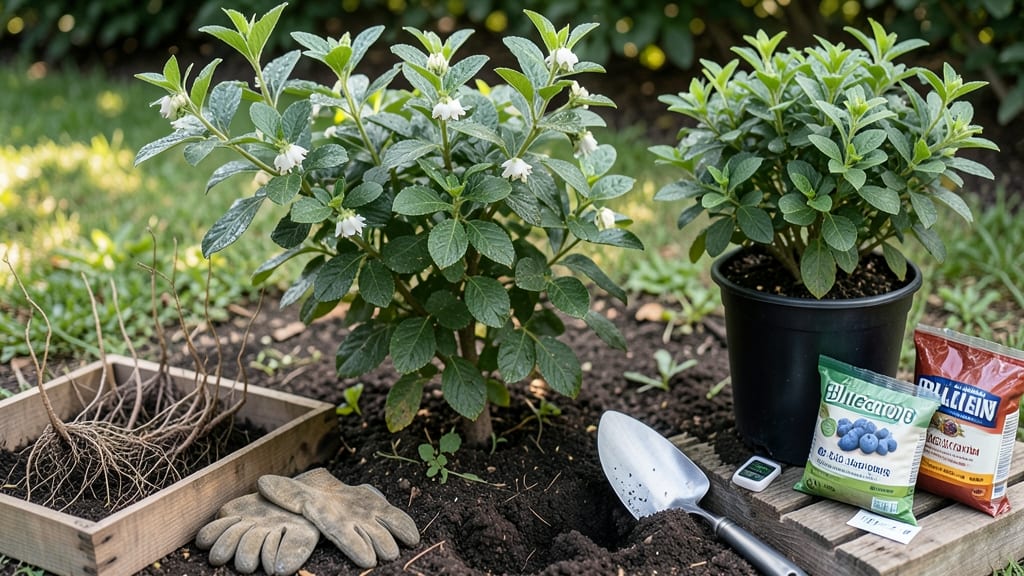
Planting blueberries in Wisconsin at the wrong time can mean wasted effort—or worse, losing your bushes to winter before they even bear fruit. The secret to success lies in matching your planting window to the chill-hour requirements of your chosen variety, which vary dramatically across the state’s 4b-6a zones.
Most gardeners in Wisconsin swear by fall planting—specifically September or October—when soil stays warm enough for roots to establish but temperatures drop just enough to signal dormancy.
But timing isn’t one-size-fits-all: Northern Highbush varieties need 800-1,000 chill hours, while Southern Highbush types thrive with 300-500 hours, making location critical.
I’ve tested both spring and fall planting in my Wisconsin garden, and the difference is night and day.
Bare-root plants in fall get a head start on root growth before winter, while spring plantings (after the last frost, around mid-April) give you more flexibility if you missed the fall window.
Ready to avoid the common mistakes? I’ll walk you through the exact planting schedule, soil prep tricks, and variety selection that’ll have you harvesting sweet, plump 🫐 berries by mid-summer—no matter where you are in the Badger State.
Best planting months in Wisconsin based on chill-hours
Wisconsin’s USDA zones 4b-6a create unique challenges for blueberry growers, but the chill-hour requirements of different varieties make timing everything. Northern Highbush varieties need 800-1,000 chill hours, while Southern Highbush types thrive with 500-800 hours.
In Wisconsin, this translates to two ideal planting windows: early spring (April) or fall (September-October).
Southern Wisconsin (zones 5-6) enjoys longer growing seasons with earlier last frost dates (mid-April), allowing for fall planting up to October 15. Meanwhile, northern Wisconsin (zones 4-5) has shorter windows—plant by September 30 to ensure roots establish before winter.
Microclimates near lakes or urban areas can extend these windows by 1-2 weeks.
Chill-hour matching is critical—planting a Southern Highbush in northern Wisconsin risks poor fruiting, while Northern Highbush varieties in southern Wisconsin may produce smaller berries. Always check your local chill-hour map (available from UW Extension) before selecting varieties.
Spring planting (April) gives bushes 6-8 weeks to establish roots before summer heat, while fall planting (September-October) allows roots to grow before dormancy. Both methods work, but fall planting is often preferred in Wisconsin for stronger winter survival.
For bare-root plants, dig holes twice as wide as the root ball and 2 inches shallower than the root system. Amend native soil with peat moss to lower pH to 4.5-5.5, the ideal range for blueberries.
Container-grown plants can be planted anytime soil isn’t frozen, but fall is still best.
🌱Pro Tip: Test your soil’s pH before planting. Wisconsin’s native soils are often too alkaline—amending with sulfur or pine needles is essential for success.
| Region | USDA Zone | Best Planting Window | Chill-Hour Needs | Recommended Varieties |
|---|---|---|---|---|
| Southern WI | 5-6a | April 15–May 15 or Sept 15–Oct 15 | 600–900 hours | Bluecrop, Jersey, Duke |
| Central WI | 4b-5a | April 1–May 10 or Sept 1–Sept 30 | 800–1,100 hours | Patriot, Bluegold, Legacy |
| Northern WI | 4a-4b | April 1–May 5 or Aug 15–Sept 15 | 1,000–1,300 hours | Northblue, Northsky, Chaleurs |
Avoid planting Lowbush varieties in Wisconsin—they require 1,500+ chill hours and struggle with our shorter winters. Instead, focus on Northern Highbush types like Patriot (disease-resistant) or Bluecrop (high-yielding). Always buy certified disease-free plants from reputable nurseries to prevent blueberry blight.
If you’re in zone 4b or colder, prioritize fall planting—roots establish before winter stress begins. In warmer microclimates (e.g., near Madison), spring planting works well, but water deeply during summer droughts to prevent transplant shock.
🌿Key Takeaway: Match your blueberry variety to your chill-hour zone—this single factor determines 90% of your harvest success in Wisconsin.
How to match blueberry varieties to Wisconsin’s chill-hour zones
Wisconsin’s chill-hour requirements (1000-2000 hours) determine which blueberry varieties thrive best in your region. Northern Wisconsin (USDA Zone 3-4) needs higher chill-hour varieties, while southern Wisconsin (Zone 5) can handle lower chill-hour types. Matching your bushes to your zone ensures healthy growth and abundant harvests.
For northern Wisconsin, prioritize Northern Highbush varieties like 'Bluecrop' (2000+ chill hours) or 'Patriot' (1500+ chill hours). These varieties survive harsh winters and produce sweet, disease-resistant berries.
Southern Wisconsin gardeners can opt for Southern Highbush or half-high varieties like 'Jersey' (800-1000 chill hours) or 'Top Hat' (500-700 chill hours).
Lowbush varieties (e.g., 'Purple Hills') are wild-type blueberries with high chill-hour needs (1500+ hours) and are best suited for northern Wisconsin’s colder climates. These hardy shrubs produce smaller but intensely flavorful berries, perfect for wildlife-friendly gardens.
🌱 Top Blueberry Varieties for Wisconsin
| Variety | Chill Hours | Best For | Yield | Disease Resistance |
|---|---|---|---|---|
| Bluecrop | 2000+ | Northern WI | High | Excellent |
| Patriot | 1500+ | Central/Northern WI | Very High | Good |
| Jersey | 800-1000 | Southern WI | Moderate | Fair |
| Top Hat | 500-700 | Southern WI (containers) | Moderate | Good |
| Purple Hills | 1500+ | Northern WI (wild-type) | Low-Moderate | Excellent |
When selecting varieties, consider pollination needs. Most blueberries are self-pollinating, but planting two compatible varieties (e.g., 'Bluecrop' + 'Patriot') boosts fruit set by 20-30%. For container gardening, choose dwarf varieties like 'Top Hat' or 'Sunshine Blue' (300-500 chill hours), ideal for patio gardens in urban areas.
Always check local nursery recommendations or UW-Madison Extension resources for region-specific advice. For example, Milwaukee’s warmer microclimates may support Southern Highbush varieties better than Green Bay’s colder zones. Adjust your planting timeline based on the variety’s chill-hour needs and your last frost date.
Pro tip: Test your soil’s acidity (pH 4.5-5.5) before planting. Use sulfur or peat moss to lower pH if needed. A healthy soil pH ensures optimal nutrient uptake and disease resistance for your chosen varieties. 🌱