
Plants
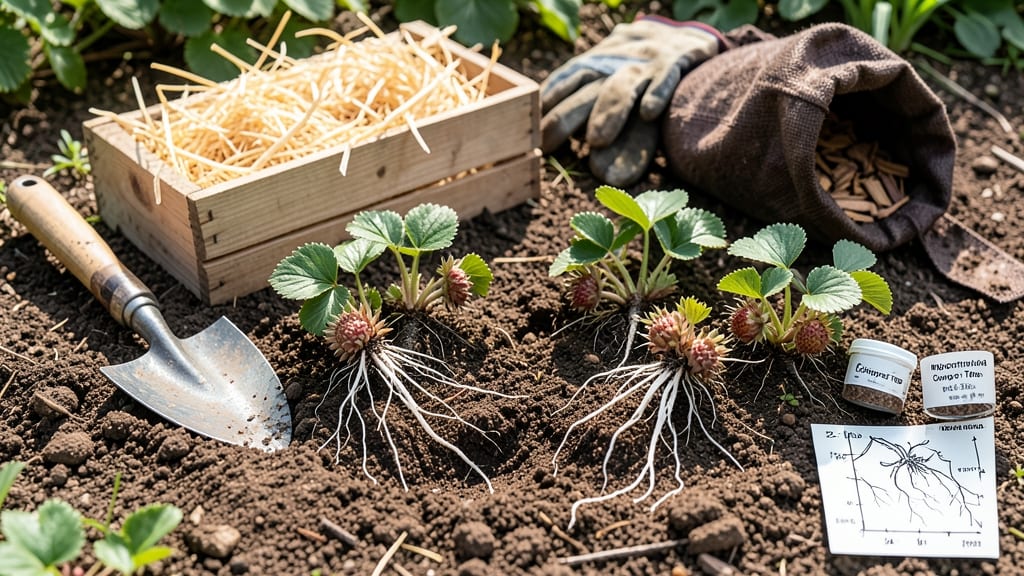
Planting bare root strawberries in Zone 8 isn't just about picking a month—it's about matching their chill-hour needs to your microclimate. Too early, and frost nibbles your tender roots; too late, and your harvest arrives late or weak.
The key is timing it right so your 🍓 plants establish strong roots before the heat of spring kicks in.
Most gardeners in Zone 8 plant their bare root strawberries between October and February, but the exact window depends on your location's chill hours. Southern California's mild winters mean you might plant as late as January, while Texas Hill Country could benefit from an earlier October start.
Understanding your local frost patterns is the game-changer.
I'll walk you through the exact chill-hour targets for June-bearing, everbearing, and day-neutral varieties, plus how to adjust for urban heat islands or coastal breezes. No more guessing—just reliable fruit production. Let's get your strawberries in the ground at the perfect moment.
We'll also cover soil prep, planting depth, and post-planting care to ensure your strawberries thrive. Whether you're a beginner or a seasoned gardener, these tips will help you avoid common mistakes and maximize your harvest. Ready to grow juicy, homegrown strawberries? Let's dive in.
Zone 8 bare root strawberry planting calendar by chill-hour needs
Planting bare root strawberries in Zone 8 isn't just about avoiding frost—it's about matching your chill-hour requirements to the variety you choose. Most Zone 8 areas accumulate 500–1,000 chill hours (32–45°F) between November and March, which determines whether June-bearing, everbearing, or day-neutral varieties thrive.
Get this wrong, and you'll either get no fruit or a delayed harvest.
June-bearing varieties need the most chill hours (700–1,000 hours), making them riskier in milder Zone 8 winters. Everbearing types (300–500 hours) are safer bets, while day-neutral varieties (100–300 hours) produce fruit continuously regardless of chill hours.
Your location within Zone 8—whether it's Southern California's coastal zones or the Texas Hill Country's inland areas—will shift your ideal planting window by weeks.
For June-bearing strawberries, aim to plant 6–8 weeks before your last frost date (typically mid-December to early February in most of Zone 8). Everbearing varieties can stretch this window to October–March, while day-neutral types offer the most flexibility, planting from September through February.
The key is ensuring roots establish before soil temperatures drop below 40°F.
Here’s how your Zone 8 subregion affects timing:
- Southern California (Zone 8a): Plant everbearing or day-neutral types in November–January to avoid late-winter frost risks.
- Arizona (Zone 8b): Focus on October–December for June-bearing varieties, as chill hours are scarce.
- Texas Hill Country (Zone 8b): Stretch planting to September–February, prioritizing everbearing types.
| Variety Type | Chill Hours Needed | Zone 8 Planting Window | Frost Risk | Harvest Time |
|---|---|---|---|---|
| June-bearing | 700–1,000 hours | December–February | High (late winter) | April–May |
| Everbearing | 300–500 hours | October–March | Moderate (varies) | March–June |
| Day-neutral | 100–300 hours | September–February | Low (coastal) | February–July |
🌱 Pro Tip: Use day-neutral varieties like 'Albion' or 'Seascape' for year-round harvests in Zone 8.
If you're planting in coastal Zone 8a (e.g., San Diego), chill hours are minimal, so skip June-bearing varieties entirely. Instead, opt for day-neutral types planted in November for a spring harvest.
Inland areas like Phoenix or Austin can handle June-bearing types if planted in December, but always monitor soil temperatures—roots struggle below 40°F.
For reliable fruit set, pair your planting date with soil prep. Amend your beds with compost and peat moss to improve drainage, and mulch heavily with straw or pine needles to protect roots from temperature swings.
In urban heat islands, soil warms faster—plant 2–3 weeks earlier than rural areas to compensate.
Ever wonder why some gardeners in Zone 8b get two harvests while others get none? It’s often about planting depth. Bare root strawberries should sit with the crown just above soil level—burying it too deep causes rot, while exposing it risks frost damage. Use well-draining soil mixes (sandy loam works best) and
Zone 8 bare root strawberry planting calendar by chill-hour needs
In Zone 8, your strawberry planting success hinges on chill hours—not just calendar dates. June-bearing varieties need 500-700 chill hours, while everbearing types thrive with 300-500 hours.
Southern California's mild winters often fall short, forcing adjustments for reliable fruit set. The key window spans late fall to early spring, but exact timing depends on your microclimate.
For most of Zone 8, I recommend planting bare root strawberries between November and February. This gives roots time to establish before spring's heat surge.
However, coastal areas like Santa Barbara can plant as late as early March, while inland desert regions should aim for October to November to avoid summer stress.
📅 Comparison Table: Zone 8 Strawberry Planting by Variety
| Variety Type | Chill Hours Needed | Best Planting Window | Frost Risk |
|---|---|---|---|
| June-Bearing | 500-700 hours | November-December | High in desert zones |
| Everbearing | 300-500 hours | October-February | Moderate in coastal areas |
| Day-Neutral | 200-300 hours | September-March | Lowest risk |
💡 Pro Tip: Check your local NOAA chill hour data—many Zone 8 areas get 300-400 hours naturally, making everbearing varieties the safest bet.
Even within Zone 8, microclimates vary dramatically. The Texas Hill Country often gets 500+ chill hours, while Phoenix might see only 200-300 hours. If your area falls short, consider day-neutral varieties like Seascape or Albion, which produce fruit with minimal chill hours.
For June-bearing types, I recommend Chandler or Jewel—just plant them earlier to maximize chill accumulation.
Your soil temperature matters just as much as air temperature. Bare root strawberries need soil temps between 40-70°F for root establishment. In Zone 8, this typically means waiting until late October in desert areas or early December in coastal regions.
Use a soil thermometer to verify—planting too early in warm soil stresses roots, while waiting too long risks spring heat before fruiting.
One common mistake I see is ignoring the first frost date. While Zone 8 rarely gets hard freezes, light frosts (28-32°F) can damage new growth. Plant 6-8 weeks before your average first frost to give roots time to establish.
For most of Southern California, that's mid-October, while Arizona's low desert might need September planting.
Remember that bare root strawberries need 6-8 weeks to establish before spring's heat arrives. If you're in a low-chill area, consider fall planting (September-October) followed by winter mulching to preserve moisture. This strategy works especially well for everbearing varieties, which can produce fruit in both spring and fall.