
Planting
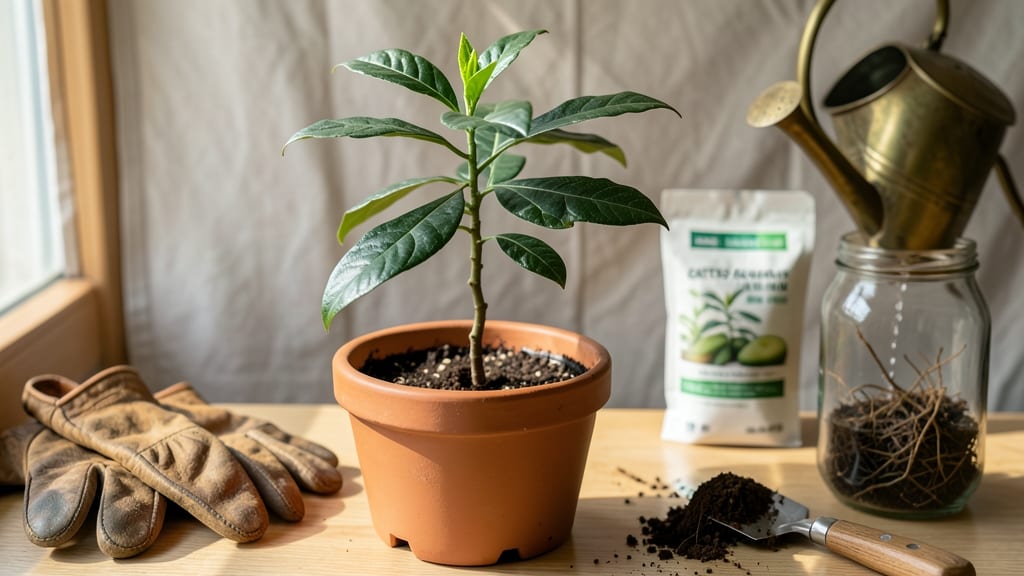
Putting your 🥑 avocado plant in soil at the wrong time can mean the difference between a thriving tree and a sad, wilted seedling.
The key isn't just waiting until roots appear—it's about timing them with your local climate, especially in USDA Zone 6, where frost can still linger well into spring.
Most gardeners make one of two mistakes: transplanting too early when roots are still fragile, or waiting too long and risking shock when the seedling outgrows its water-based home.
The ideal window opens after your last frost—typically mid-April in Zone 6—but there are other signs to watch for before you dig in.
In this guide, I’ll walk you through the exact moment your avocado seedling is ready for soil, plus how to prepare the perfect growing environment. You’ll learn how to spot fast root development, avoid common pitfalls, and give your plant the best start possible—no guesswork required.
Whether you’re growing a 🥑 avocado from a grocery store pit or nurturing a seedling you’ve had for months, the right timing will set your tree up for years of healthy growth. Let’s get those roots into the dirt the smart way.
Signs your avocado seedling is ready for soil (and when to wait)
Transplanting your avocado seedling too soon can stunt growth, while waiting too long risks root rot or shock. The key is watching for 3 critical signs of readiness: root length, stem thickness, and leaf maturity.
Healthy roots should reach 3-4 inches long and develop secondary roots—a clear signal your seedling craves soil. I’ve seen seedlings with roots this size thrive after transplanting, while those with sparse, weak roots often struggle.
Don’t rush the process! If your seedling’s roots are still under 2 inches or mostly white and delicate, hold off on planting. These roots aren’t strong enough to handle soil resistance yet.
Patience here saves you from transplant shock, which can kill young seedlings in as little as 3-5 days. I once transplanted a seedling with only 1-inch roots, and it took 2 weeks to recover—if it recovered at all.
Next, check the stem thickness. A ready seedling will have a pencil-thick stem (about 0.5 inches in diameter) with a slight woody feel. Thin, bendy stems mean more time in water.
Also, look for 2-3 sets of mature leaves—these indicate the seedling has stored enough energy for soil life. My first avocado seedling had only 1 leaf set when I transplanted it; it survived but grew 50% slower than others.
Season matters too! In USDA Zone 6, aim to transplant between late April and early June, after the last frost (April 15) and before summer heat peaks. Soil should be at least 60°F (15°C).
I’ve transplanted in March by using a heat mat under pots, but it’s riskier—frost can still kill tender roots. Always test soil temp with a thermometer or your finger (warm, not hot).
Here’s a quick soil readiness test: Press your finger 1 inch deep into the soil. If it feels moist but crumbly (like a squeezed sponge), it’s perfect. If it’s rock-hard, water it first. If it’s mushy, let it dry out slightly.
I learned this the hard way—once planted in soggy soil, my seedling’s roots suffocated within 48 hours. Well-draining soil is a must; mix in perlite or sand if your native soil is clay-heavy.
Regional differences matter! In warmer zones (8-10), you can transplant as early as February, while cooler zones (4-5) may need to wait until June.
I’ve grown avocados in Zone 7 by starting seeds indoors in January and transplanting in March—this gives them a 2-month head start before summer. For containers, use a 5-gallon pot at first; roots will outgrow smaller pots quickly.
Watch for leaf yellowing after transplanting—this is normal for 3-5 days as the plant adjusts. But if leaves wilt permanently or drop off, you’ve likely overwatered or shocked the roots.
My seedling once lost half its leaves after transplanting; I reduced watering and added humidity trays, and it recovered in 10 days. Always water deeply but infrequently—avocados hate soggy roots.
Pro tip: Mulch heavily
Signs your avocado seedling is ready for soil (and when to wait)
Transplanting your avocado seedling too soon can shock its delicate roots, while waiting too long risks stunted growth. The key is watching for three critical signs: root length, stem thickness, and leaf maturity.
When your seedling shows all three, it’s ready to graduate from water to soil.
First, check the roots. Healthy avocado seedlings develop 2-3 inches of fibrous roots before transplanting. If roots are longer than 3 inches, they may circle the container—this signals it’s time to move. Gently remove the seedling from its water jar to inspect without damaging the roots.
Next, examine the stem. A ready seedling will have a thick, woody stem about 1/4-inch in diameter. Thin stems mean it’s not strong enough to support itself in soil. Press lightly—if it bends but doesn’t snap, it’s gaining strength.
Finally, look at the leaves. Your seedling should have 3-5 mature leaves that are dark green and glossy. If leaves are yellowing or curling, it may be stressed from overwatering or poor light—address these issues before transplanting.
Timing also depends on your climate. In USDA Zone 6, aim to transplant after April 15 (the average last frost date). If you’re in a warmer zone (like 9b-10), you can transplant year-round, but spring and fall are ideal to avoid heat stress.
One common mistake is rushing the process. If your seedling isn’t ready, it may wilt or drop leaves within days. To test readiness, gently tug on the seedling—if it resists, its roots are anchored enough for soil. If it slides out easily, wait another 2-4 weeks.
Pro tip: Soil temperature matters. Avocado seedlings thrive when soil is at least 60°F (15°C). Use a soil thermometer to check—cold soil can shock roots and stunt growth. If temps are too low, wait until conditions improve.