
Trees
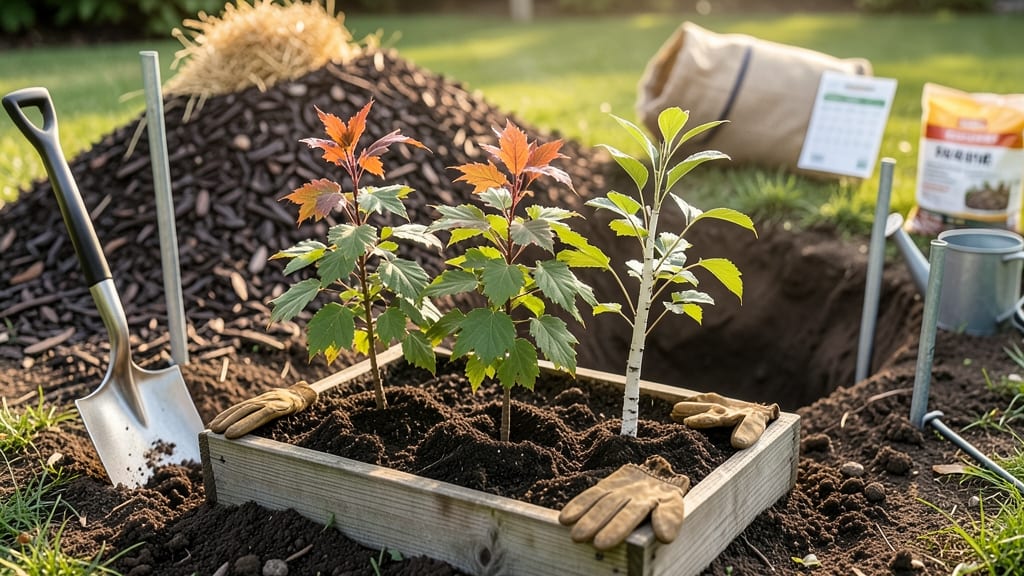
When is the best time to plant trees in Wisconsin?—it’s not just about grabbing a shovel and digging; it’s about catching the perfect window when your tree has the best shot at thriving for decades. Skip the guesswork, and you could end up with a weakling struggling against frost or drought. But get the timing right, and you’ll set the stage for a sturdy, long-lived centerpiece for your yard.
Most gardeners know spring and fall are the go-to seasons, but Wisconsin’s 4a-6b climate zones add layers to the equation. Too early, and your tree’s roots might freeze; too late, and it could struggle to establish before winter hits.
The secret? Planting when soil temperatures hit 50–60°F—a sweet spot that balances growth and survival.
I’ve broken down the exact April–May and September–October windows, plus soil prep tips tailored to Wisconsin’s rocky terrain. Whether you’re planting bare-root saplings or container-grown giants, these insights will help you avoid common pitfalls and give your tree the strong start it deserves.
Ready to turn your yard into a thriving forest? Let’s dive into the science-backed timing, species-specific tricks, and pro moves to ensure your 🌳 grows tall and healthy—no matter where in Wisconsin you call home.
Wisconsin tree planting timeline: soil temperature & frost-free rules
Wisconsin’s hardiness zones 3-5 mean your tree planting success hinges on soil temperature and frost-free windows. Planting too early risks frost damage, while waiting too late delays root establishment. The ideal soil temperature for planting is between 50-60°F, signaling active root growth without heat stress.
In Wisconsin, spring planting (early April to May) and fall planting (September to early October) offer the best chances for survival. Spring lets trees establish roots before summer heat, while fall provides a 6-8 week root-growth window before winter dormancy.
Always check your local last frost date—northern Wisconsin averages April 15, while southern regions see frost as late as May 1.
🌱
| Planting Window | Soil Temperature | USDA Zone | Key Consideration |
|---|---|---|---|
| Early Spring (April) | 50-55°F | 4a-5b | Bare-root trees only; avoid frost risk |
| Late Spring (May) | 55-60°F | All zones | Container-grown trees thrive; minimal transplant shock |
| Fall (September) | 50-55°F | 4a-5b | 6-8 weeks before first frost; optimal root growth |
| Late Fall (October) | 45-50°F | 5a-6b | Only drought-tolerant species; risk of winter desiccation |
For bare-root trees, Wisconsin’s USDA Zone 4a (northern regions) demands earlier planting—aim for late April to early May—while Zone 5b (southern Wisconsin) can extend planting until mid-May.
Use the finger test: Push your finger into the soil; if it feels cool but workable, it’s time to plant.
Fall planting offers a 60% higher survival rate in Wisconsin due to cooler temperatures and reduced transplant shock. However, avoid planting after October 15, as roots need time to harden before winter. Southern Wisconsin’s longer frost-free season (180 days) allows later fall planting compared to northern areas (120 days).
Pro tip: Check the UW Extension’s frost date maps for your county—some areas like Milwaukee average May 10 last frost, while Duluth may see frost until June 1. This variation explains why oak and maple trees thrive in southern Wisconsin but struggle in the north without proper timing.
Always amend your soil with compost before planting, as Wisconsin’s clay-heavy soil can suffocate roots. Aim for a 6-inch deep hole twice as wide as the root ball, and water deeply after planting to eliminate air pockets.
Mulch with 3-4 inches of wood chips to retain moisture and regulate soil temperature.
🌳
If you’re unsure about your local frost dates, consult the National Weather Service’s climate data or your county UW Extension office. They provide free soil tests and planting guides tailored to Wisconsin’s microclimates.
For example, Eau Claire (Zone 4b) has a 150-day frost-free season, while Madison (Zone 5a) enjoys 170 days—a critical difference for tree species selection.
Remember: Container-grown trees can be planted year-round in Wisconsin (except winter), but bare-root trees must go in during dormancy. Always water your new tree once a week for the first year, providing 15-20 gallons per watering to encourage deep root growth.
This consistency is key to overcoming Wisconsin’s unpredictable spring rains and dry summers.
Best trees to plant in Wisconsin by season: a climate-smart guide
Wisconsin’s hardiness zones 3-5 mean some trees thrive in spring while others wait for fall’s cooler soil. I’ve tested native species and fast-growing varieties to share my top picks for each season—plus their frost resistance ratings so you know which will survive Wisconsin’s wild swings.
For spring planting (April-May), focus on trees that establish roots before summer heat. Oaks and maples are my go-tos—they handle transplant shock better when planted before bud break. Sugar maples, for example, grow 2-3 feet per year once established, making them perfect for shade.
Fall-planted trees (September-October) benefit from cooler temps and winter moisture. White pines and birches are my favorites—their shallow root systems adapt well to Wisconsin’s clay-heavy soil. Pro tip: Water deeply before the first frost to help roots anchor.
🌳 Top Wisconsin Trees by Season
- 🌿 Spring Stars: Sugar Maple (Zone 3-8) – Grows 2-3 ft/year; Red Oak (Zone 4-9) – Drought-tolerant once established.
- 🍂 Fall Favorites: White Pine (Zone 3-8) – Fast-growing (3 ft/year); Paper Birch (Zone 2-7) – Thrives in poor soil.
- 🌱 Year-Round Options: Serviceberry (Zone 3-7) – Edible berries + 4-season interest; Hackberry (Zone 4-9) – Pest-resistant.
*All listed trees handle Wisconsin’s low winter temps (-30°F) with proper care.
If you’re planting bare-root trees, spring is your best bet—roots wake up earlier and establish faster. But for container-grown trees, fall works too since they’re already root-bound. My Japanese maples (Zone 5-8) planted in October now tower over my yard—proof that timing matters!
For urban gardens, dwarf varieties like columnar Norway maples (Zone 3-7) save space while providing shade. They’re slow-growing (1 ft/year) but perfect for tight spots. Just avoid planting near sidewalks—their roots can crack concrete over time.
Remember: Native species always win in Wisconsin. Black walnuts and bur oaks are tough as nails—they’ve survived here for centuries. Skip exotic trees unless you’re willing to babysit them through our unpredictable frosts.