
Companion Plants
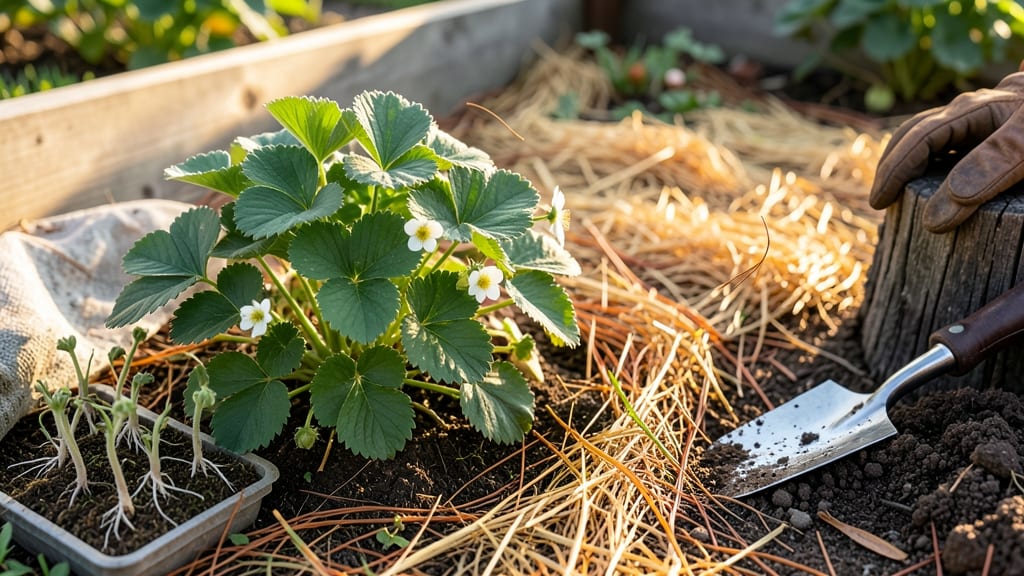
Planting strawberries in Kentucky at the wrong time can mean the difference between a bountiful harvest of sweet 🍓 and a season of disappointment. June-bearing varieties need precise timing to accumulate enough chill hours—something Kentucky's 6a-7a zones handle beautifully, but only if you plant strategically.
Most gardeners in Kentucky make one of two mistakes: planting too early and risking frost damage, or waiting too late and missing the ideal window for strong root establishment.
The key is understanding your microclimate—whether you're in the Bluegrass region or the Appalachian foothills—because even a few degrees can shift your planting schedule.
In this guide, I'll walk you through the exact month-by-month windows for both spring and fall planting, including how to prepare your soil and protect young plants from Kentucky's unpredictable spring frosts. You'll learn why August-September planting often outperforms spring efforts and how container growing can extend your season.
By the end, you'll have a clear timeline tailored to your specific location, ensuring your strawberry plants get the perfect start for maximum fruit production all summer long. Let's get those berries growing!
Kentucky's chill-hour zones: when to plant June-bearing strawberries for maximum yield
Kentucky's USDA zones 6a-7a create a unique challenge for June-bearing strawberries like 'Chandler' or 'Jewel'. These varieties need 500-1000 chill hours (temperatures between 32-45°F) to set fruit properly. Planting outside this window means fewer berries—or none at all.
Northern Kentucky (zone 6a) typically accumulates 800-1000 chill hours, while southern regions (zone 7a) average 500-700 hours.
The key is matching your planting time to your local chill-hour accumulation. In Kentucky, this usually means either early spring (March-April) or late summer/fall (August-September). Spring planting gives plants time to establish roots before summer heat, while fall planting lets them develop strong roots before winter dormancy.
Both approaches work, but timing depends on your specific microclimate.
🌱Did you know? Kentucky's Bluegrass region often gets 100-200 more chill hours than the Appalachian foothills. This means gardeners in Lexington can plant 2-3 weeks earlier than those in Pikeville without risking frost damage.
🌡️ Kentucky Chill-Hour Zones & Optimal Planting Windows
| Zone/Region | Avg. Chill Hours | Spring Planting Window | Fall Planting Window | Best Variety |
|---|---|---|---|---|
| Northern KY (6a) | 800-1000 hrs | Late March - Early April | Mid-August - Early Sept | 'Chandler' |
| Central KY (6b) | 600-800 hrs | Mid-March - Late April | Late August - Mid-Sept | 'Jewel' |
| Southern KY (7a) | 500-700 hrs | Early April - Mid-May | September - Early Oct | 'Seascape' |
*Chill hours calculated using 32-45°F temperature range. Adjust planting dates 1 week later for container-grown plants.
To determine your exact chill-hour accumulation, check your local Cooperative Extension Service records or use a chill-hour calculator like the one from Purdue University.
For most Kentucky gardeners, planting 4-6 weeks before the last frost date (around March 15-April 15) gives plants enough time to establish before summer heat arrives. Fall planting should be done 6-8 weeks before the first frost (typically September 1-October 1).
🌿Pro Tip: If you're planting in containers, extend your fall window by 2-3 weeks. Containers warm up faster in spring and cool down quicker in fall, so adjust your timing accordingly.
For bare-root plants (the most common type), Kentucky gardeners should plant as soon as the soil is workable in spring—usually when soil temperatures reach 45°F. You can test this by pressing your finger into the soil; if it feels cool but dry, it's ready.
In fall, wait until soil temperatures drop below 80°F to prevent early root stress.
💡Key Insight: The Bluegrass region (including Louisville and Lexington) typically has 10-14 more frost-free days than western Kentucky. This means you can plant 1-2 weeks earlier in these areas without risking frost damage.
Finally, consider your strawberry variety. While June-bearing types like 'Chandler' dominate Kentucky gardens, everbearing varieties (like 'Tristar') can be planted 2 weeks later in spring since they produce fruit in both spring and fall.
However, they require fewer chill hours (around 300-500 hours), making them better suited for southern Kentucky's milder winters.
Step-by-step planting timeline: fall vs. spring planting for Kentucky's climate
Kentucky's USDA zones 6a-7a create two ideal windows for planting strawberries: early spring and late summer/fall. Each approach offers unique advantages depending on your location—whether you're in the Bluegrass region or the Appalachian foothills.
Let's break down the exact steps for each timeline to maximize your June-bearing varieties like 'Chandler' or 'Allstar'.
For spring planting, aim to get your strawberries in the ground 4-6 weeks before Kentucky's last average frost date (typically around March 15-April 1). This gives plants time to establish roots before active growth begins.
In southern Kentucky, where frosts arrive slightly later, you might push planting into early April. Northern regions should plant by late March to avoid frost damage.
- Test soil pH (ideal: 5.5-6.5)
- Amend with compost or aged manure
- Loosen soil 8-12 inches deep for good drainage
After soil prep, bare-root plants should be soaked in water for 30 minutes before planting. Position crowns 1/2 inch above soil level—this prevents rot while allowing easy mulching later.
Space plants 18-24 inches apart in rows 3-4 feet apart for proper airflow. Mulch immediately with straw or pine needles (2-3 inches thick) to retain moisture and suppress weeds.
Fall planting offers a second chance for Kentucky gardeners, especially in southern counties where winters are milder. Plant everbearing or day-neutral varieties like 'Seascape' in late July through September, allowing plants to establish roots before winter dormancy. Northern Kentucky gardeners should plant by mid-August to avoid early frosts.
The key advantage? Fall-planted strawberries often produce larger berries the following spring due to earlier growth.
Post-planting care differs slightly between seasons. Spring-planted strawberries need consistent watering (1 inch per week) as they establish, while fall-planted varieties benefit from reduced watering in late fall to harden off plants.
Both should receive a light fertilizer application in early spring (March) to encourage new growth. Avoid heavy feeding in fall—it promotes tender growth that won't survive winter.
Remember: Kentucky's microclimates vary dramatically. If you're in the Appalachian region, expect cooler temperatures and plant 2-3 weeks later than the Bluegrass region. For container growers, fall planting extends your season—just use black plastic mulch to warm soil in spring.
With these precise timelines, you'll avoid the #1 mistake Kentucky gardeners make: planting too early and losing plants to frost.