
Plants
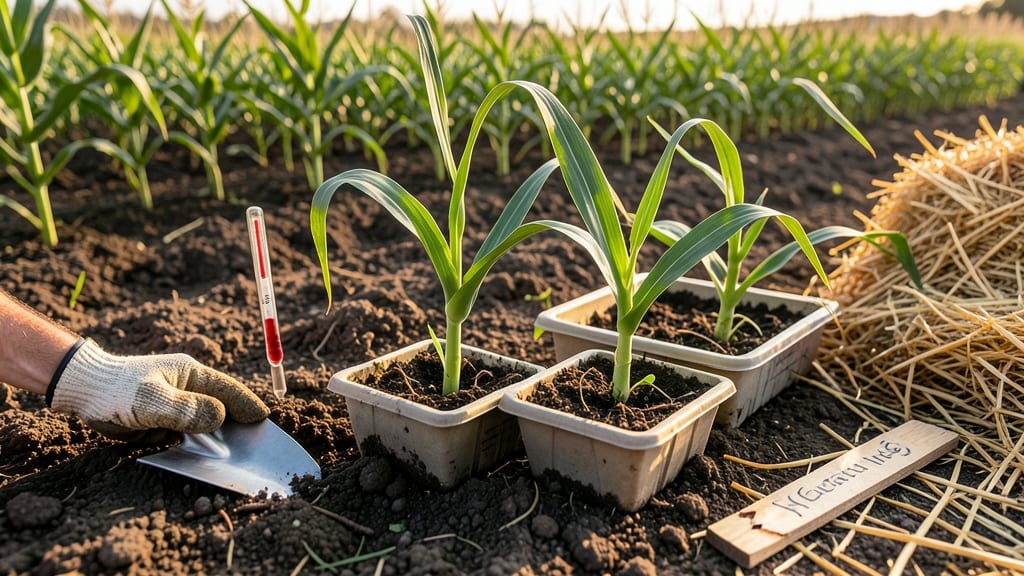
Planting corn in Oklahoma at the wrong time can mean the difference between golden cobs and a sad, stunted harvest. The key to success lies in understanding your local heat zone deadlines—because when those soil temperatures rise, your corn needs to be in the ground and ready to grow.
With Oklahoma's unpredictable spring weather, timing is everything. Most gardeners aim to plant corn after the last frost, typically between mid-April and early May, but the exact window depends on your specific heat zone.
Whether you're growing sweet corn for the dinner table or field corn for livestock, getting it right means fewer pests, better pollination, and a bountiful harvest.
I'll show you exactly when to plant based on Oklahoma's four heat zones, plus how to adjust for late frosts or early heatwaves. You'll discover the best soil temperature thresholds and backup strategies to ensure your corn thrives—no matter what Mother Nature throws your way.
Ready to turn your garden into a cornfield goldmine? Let's dive into the perfect planting schedule for Oklahoma's growing conditions.
Oklahoma corn planting deadlines by heat zone: exact dates for maximum yield
Oklahoma's diverse climate means your corn planting timeline should match your heat zone. The state is divided into four zones—A1 through A4—where soil temperature and frost-free dates vary dramatically.
For example, Zone A1 (western Oklahoma) averages last frost dates around March 15, while Zone A4 (southeastern Oklahoma) typically waits until April 15. Planting too early risks frost damage, while waiting too long can lead to poor pollination.
Corn thrives when soil temperatures reach a steady 60°F (15°C) at a depth of 4 inches. In Oklahoma, this usually happens between late April and early May, but your exact window depends on your zone.
For instance, gardeners in Zone A2 (central Oklahoma) often plant in mid-April, while those in Zone A3 (eastern Oklahoma) may wait until early May to avoid late frosts.
Here’s the critical data you need to plan your planting schedule with precision:
| Heat Zone | Avg. Last Frost | Ideal Planting Window | Soil Temp. Threshold | Last Chance Date |
|---|---|---|---|---|
| A1 (Western OK) | March 15 | Mid-April | 60°F (15°C) | May 1 |
| A2 (Central OK) | March 30 | Late April | 60°F (15°C) | May 10 |
| A3 (Eastern OK) | April 15 | Early May | 60°F (15°C) | May 20 |
| A4 (Southeast OK) | April 1 | Late April | 60°F (15°C) | May 15 |
Sweet corn varieties like 'Silver Queen' or 'Peaches and Cream' are popular in Oklahoma and typically mature in 70-90 days. For these, aim to plant your first batch in your zone’s ideal window, then follow up with succession plantings every 2 weeks for continuous harvests.
Field corn and popcorn varieties may have slightly longer maturity times, so adjust your last planting date accordingly.
Pro tip: Use a soil thermometer to confirm temperatures before planting. Corn seeds won’t germinate below 50°F (10°C), and growth slows significantly below 60°F (15°C).
If your soil is still cool, consider using black plastic mulch to warm it up faster—this can shave 1-2 weeks off your planting timeline.
Local gardener Sarah M. from Zone A3 swears by planting her first batch on April 20 and her last on May 10. She uses a mix of field corn for livestock and sweet corn for her family, ensuring she has cobs ready from July through September.
Her secret? Starting seeds indoors in biodegradable pots and transplanting them once soil temperatures stabilize.
If you’re growing popcorn, like the 'Glass Gem' variety, you’ll want to extend your planting window slightly later—around mid-May in most zones—to avoid early heat stress.
Popcorn takes longer to mature, often 90-110 days, so timing is even more critical to avoid the dog days of summer when pollination can suffer.
For those in Zone A1 or A2, where springs can be erratic, consider planting a frost-tolerant variety like 'Early Sunglow'. This variety can handle cooler soils and still produce a reliable harvest even if planted a week or two early.
Just be prepared to cover young plants with frost cloth if late frosts threaten.
Remember, Oklahoma’s heat zone deadlines aren’t just about avoiding frost—they’re also about ensuring your corn has enough time to pollinate properly and develop full-sized cobs before the first fall frost.
With these exact dates and soil temperature guidelines, you’ll be well on your way to a golden harvest that rivals any Oklahoma cornfield.
How to adjust planting dates for Oklahoma’s unpredictable weather patterns
Oklahoma’s spring weather can be as unpredictable as a whirlwind, making it tough to pin down the perfect planting window for corn. One year, you might get frost-free by mid-April, while the next, late frosts linger into May.
The key to success? Flexible planting strategies that account for these swings—so you’re never left with seeds rotting in cold soil or plants wilting under early heat.
I’ve learned that the best gardeners in Oklahoma don’t just follow a calendar—they watch the soil temperature and adjust their timeline accordingly. Corn needs soil that’s at least 50°F (10°C) for germination, but it thrives when it hits 60-70°F (15-21°C).
If your spring is slow to warm up, don’t panic—there are ways to speed up the process or extend your planting window safely.
Here’s how I adjust my planting dates to hedge against Oklahoma’s weather quirks, whether it’s a late frost or an early heatwave. These strategies have saved my corn crops more times than I can count!
🌱 Traditional Planting (Standard Timeline)
- Aligns with last frost dates
- Reduces risk of late frost damage
- Matches soil warming trends
- Limited buffer for delays
- Vulnerable to early heat stress
- No room for soil warming hiccups
🌡️ Extended-Season Planting (Adjusted Timeline)
- Extra 2-3 week buffer
- Better for late frosts
- Allows soil warming tricks
- Risk of bolting too early
- May face drought stress
- Shorter harvest window
For example, if you’re in Heat Zone A2 (like Oklahoma City), where the average last frost is April 15, I recommend planting your first batch around April 1—but only if the soil is above 50°F.
If not, wait until April 15 or even May 1 for a backup planting. This staggered approach ensures you’ll have corn ready to harvest before the summer heat peaks.
Another trick I swear by is using black plastic mulch or row covers to warm the soil faster. These methods can shave off 1-2 weeks from your planting timeline, giving you that extra buffer when Oklahoma’s spring decides to play hard to get.
Just remember to remove covers once the plants are 6 inches tall to avoid overheating.
If you’re dealing with drought-prone areas like western Oklahoma, consider planting drought-tolerant varieties like ‘Pioneer Brand 38W62’ and adjust your watering schedule to match the extended timeline. The goal is to give your corn enough time to establish roots before the summer dry spell hits.
Finally, keep an eye on the 7-day forecast and the Oklahoma Mesonet for real-time soil and air temperature updates. When those high-pressure systems roll in, your corn will thank you for that extra week of growth before the heat sets in.