
How To
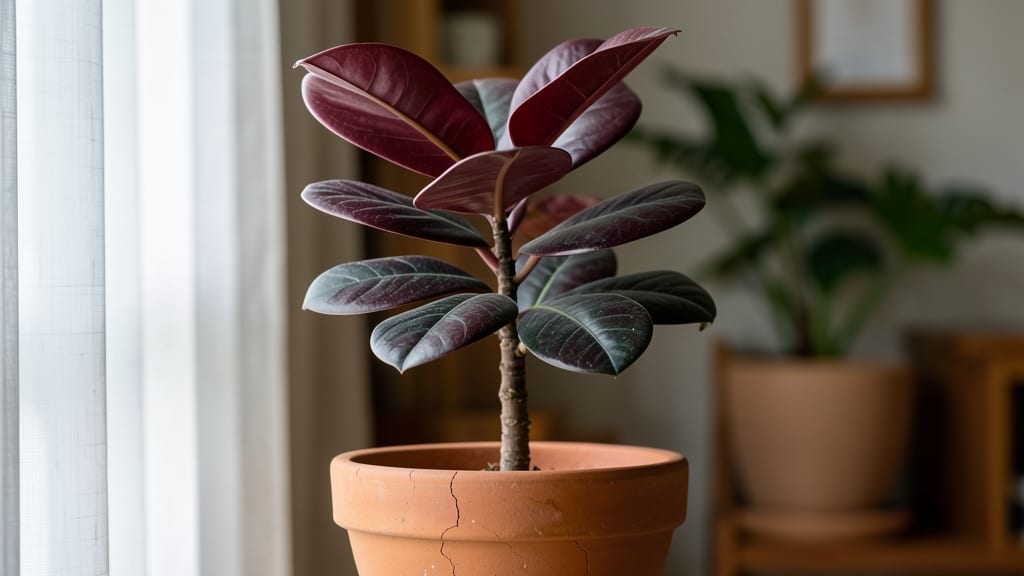
If your rubber plant 🌿 is growing faster than you expected—or staying stubbornly small—you’re probably wondering just how tall rubber plants grow under your care.
The truth is, these lush tropical plants can reach anywhere from 3 to 10 feet indoors, depending on light, pruning, and even the variety you’ve chosen.
I’ve seen rubber plants stretch toward the ceiling in bright, airy rooms, while others barely top 3 feet in dimmer corners. The key to controlling their height lies in understanding their growth habits and giving them the right conditions.
Whether you’re aiming for a towering statement plant or a compact tabletop centerpiece, the right care makes all the difference.
In this guide, I’ll break down the factors that influence rubber plant height—like light exposure, pruning techniques, and even pot size—and share tips to encourage the growth you want.
You’ll also learn how to troubleshoot common issues that might be holding your plant back. Ready to shape your rubber plant’s future?
Let’s dive into what determines how tall your rubber plant will grow and how you can guide its growth to match your space—whether that’s a cozy corner or a room-dividing giant.

Natural height range of rubber plants: what to expect indoors
Rubber plants (Ficus elastica) are known for their dramatic vertical growth, but their final height depends on several factors. Indoors, most varieties reach 6 to 10 feet with proper care, though some dwarf types stay under 3 feet.
The key to understanding their growth lies in genetics, light exposure, and pruning habits.
Genetics play a major role—standard varieties like 'Black Prince' or 'Robusta' typically grow taller, while cultivars such as 'Tineke' or 'Burgundy' often remain more compact. Even within the same species, individual plants can vary by 2 to 3 feet in height due to environmental conditions.
Light is another critical factor. Rubber plants thrive in bright indirect light, which encourages upward growth. Placing them near an east or north-facing window can push their height toward the upper limit of their genetic potential. In low-light conditions, expect slower growth and a bushier, shorter stature.
Pot size also influences height. Root-bound plants grow faster vertically as they compete for space. Upgrading to a 12-inch or larger pot can encourage wider growth instead of stretching upward. Always use pots with drainage holes to prevent waterlogging, which stunts growth.
Age matters too—rubber plants grow fastest in their first 2 to 3 years. In year one, they typically reach 2 to 3 feet, while year two sees a jump to 4 to 6 feet.
By year three, mature growth patterns stabilize, often hitting 6 to 8 feet without intervention.
🌿
| Variety | Mature Height Range | Growth Rate (Year 1-2) | Light Needs |
|---|---|---|---|
| Standard ('Black Prince') | 6–10 ft | 2–3 ft/year | Bright indirect |
| Dwarf ('Tineke') | 3–5 ft | 1–2 ft/year | Low to bright indirect |
| Variegated ('White Princess') | 5–8 ft | 1.5–2.5 ft/year | Bright indirect |
| Burgundy ('Burgundy') | 4–7 ft | 1.5–2 ft/year | Medium to bright indirect |
Note: Growth rates slow after year 3 unless pruned regularly.
Pruning is the easiest way to control height. Regular trimming above a leaf node encourages bushier growth, while allowing the plant to grow unchecked will lead to that 10-foot ceiling-height monster. Even a light pruning every 6 to 12 months can keep your rubber plant at a manageable size.
Soil quality also impacts growth. Use a well-draining potting mix with perlite or orchid bark to prevent root rot, which can halt vertical growth.
Adding a slow-release fertilizer in spring can boost height by up to 20% in a growing season, but avoid over-fertilizing, which can cause leaf burn and stunted growth.
Outdoor rubber plants can grow even taller—up to 15 feet in tropical climates—but indoor conditions typically limit them to their genetic ceiling. With the right care, you can shape your rubber plant to fit your space while enjoying its lush, glossy foliage.
🌳
How to control rubber plant height: pruning and training techniques
If your rubber plant 🌿 is shooting up too fast—or barely growing at all—pruning and training can help you steer its height. The good news? These techniques are simple and give you full control over whether your plant becomes a towering statement piece or a bushy tabletop buddy.
I’ve pruned rubber plants for years, and I can tell you: timing, tools, and technique make all the difference.
Pruning isn’t just about cutting back overgrowth—it’s about encouraging the growth pattern you want. For example, if you want a taller rubber plant, focus on trimming side branches to direct energy upward.
If you prefer a bushier look, prune the top to promote lateral shoots. The key is to prune at the right time: spring or early summer when the plant is actively growing.
Before you grab your shears, gather these essentials: sharp pruning shears, a clean cutting surface, and rooting hormone (optional, for propagation). Always disinfect your tools with rubbing alcohol to prevent disease.
And here’s a pro tip: cut just above a leaf node—this is where new growth will sprout, ensuring your plant stays healthy and full.
Step-by-Step Pruning Guide
- Identify the goal: Taller plant? Trim side branches. Bushier plant? Prune the top.
- Locate the node: Cut just above a leaf node (where leaves grow) at a 45-degree angle.
- Use clean tools: Disinfect shears with rubbing alcohol to avoid infections.
- Remove dead leaves: Snip off yellow or damaged foliage to redirect energy.
- Propagate cuttings: Dip stems in rooting hormone and plant in moist soil.
Training your rubber plant’s height doesn’t stop at pruning. You can also use stakes or trellises to guide its growth vertically. Simply tie the main stem to a sturdy support as it grows, encouraging upward reach.
For a horizontal look, let the plant sprawl on a shelf or hang it in a macramé holder. The beauty of rubber plants is their adaptability—you can shape them to fit any space or aesthetic.
After pruning, your rubber plant will focus its energy on new growth. Keep it in bright, indirect light and water it when the top inch of soil feels dry. Within a few weeks, you’ll see fresh leaves sprouting from the nodes where you cut.
If you’re propagating cuttings, place them in a warm, humid spot and cover with a plastic bag to retain moisture until roots form.
Remember, consistency is key. Prune every few months to maintain your desired shape, and always reward your plant with fresh soil and nutrients after major cuts.
With the right care, your rubber plant will thrive—whether you want it to stretch toward the sky or stay compact and lush on your desk.