
Companion Plants
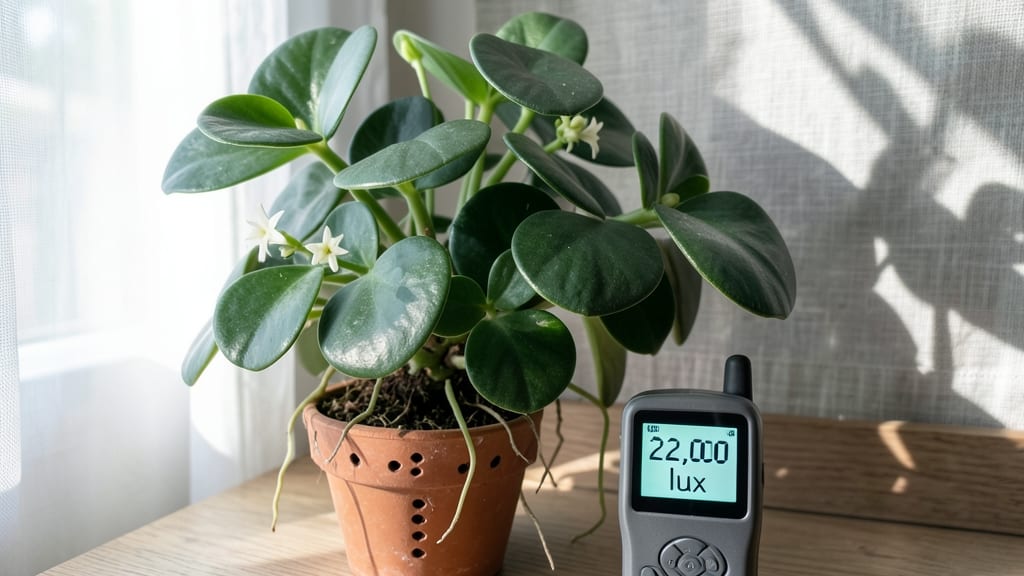
Hoya light requirements: the ideal bright indirect sunlight spectrum for healthy growth
Hoya plants thrive best under bright indirect sunlight, mimicking their natural tropical habitat. Unlike sun-loving succulents, Hoyas burn easily in harsh direct sun, but they won’t flourish in dim corners either.
The sweet spot is 4-6 hours of filtered light daily, which keeps leaves vibrant and encourages those prized waxy, variegated foliage and fragrant blooms.
Think of it like a morning coffee—just enough to wake up without scorching. Hoyas like the gentle glow of an east-facing window or dappled shade under a sheer curtain.
Varieties like Hoya carnosa (the popular "wax plant") tolerate slightly more light, while delicate types like Hoya linearis need extra protection from intense rays.
🌿 Pro Tip: Rotate your Hoya every 2-3 weeks so all sides get even light exposure. Uneven growth (stems leaning toward the light) is a classic sign your plant is light-hungry.
| Light Level | Ideal for Hoya | Effects on Plant | Fixes Needed |
|---|---|---|---|
| Low Light (<30%) | North-facing window or room corner | Leggy growth, sparse leaves, pale variegation | Move to brighter spot, add grow light |
| Medium Light (30-50%) | East/west window, 2-3 ft away | Healthy growth, vibrant leaves, occasional blooms | Perfect! No changes needed. |
| High Light (50-70%) | South window with sheer curtain | Burnt leaf edges, crispy spots, bleached variegation | Move to indirect light, use shade cloth |
| Direct Sun (>70%) | Unfiltered sunlight (e.g., patio in summer) | Severe sunburn, wilting, leaf drop | Immediate relocation to shade |
Hoyas show their light needs through subtle (or not-so-subtle) clues. Watch for yellowing leaves, which often signal too much direct sun, or stretched, leggy stems, a cry for more brightness.
Variegated Hoyas like Hoya obovata need extra light to maintain their stunning cream-and-green patterns—without enough light, those creamy bits fade to plain green.
Seasonal changes matter too. In summer’s intense light, Hoyas may need afternoon shade, while winter’s weak sun might require supplemental grow lights. Even a 10% drop in light can trigger dormancy-like behavior, so keep an eye on your plant’s mood shifts.
💡 Light Test: Hold your hand near your Hoya’s leaves. If you can’t see your shadow clearly, the light is too dim. If your hand casts a sharp shadow, it’s likely too bright—adjust with a sheer curtain or move the plant back.
Outdoor Hoyas? Place them under 50% shade cloth or in morning sun only. Trailing varieties like Hoya australis love climbing near bright but sheltered spots, while compact types like Hoya kerrii (the "Sweetheart Hoya") do well on windowsills with east or west exposure.
Remember: Blooming Hoyas need consistent light to trigger flowers. If your plant isn’t blooming, it might be getting too little light—or not enough of it for long enough. Try moving it to a sunnier spot and keep it there for at least 3-4 months to encourage buds.
✂️ Pruning Tip: If your Hoya gets too much sun, prune back sun-damaged leaves to encourage new growth in shaded areas. This helps the plant redirect energy to healthier stems.
How to provide perfect light for Hoyas: natural vs. artificial solutions
Finding the perfect light setup for your Hoya can feel like solving a puzzle, especially in low-light apartments or bright greenhouses. The key is replicating their natural tropical habitat—bright indirect light—without exposing them to harsh afternoon sun.
Let’s break down how to optimize light in any environment, from east-facing windows to grow lights, so your plant thrives year-round.
Start by assessing your space. Hoyas adapt best to 4-6 hours of bright indirect light daily, which mimics their dappled forest understory. In apartments, east or north-facing windows are ideal because they provide gentle morning light without the intense heat of south or west exposures.
If your home lacks natural light, artificial grow lights become your best friend—LED grow lights are the most energy-efficient choice for Hoyas.
🌱 Pro Tip: Place your Hoya 2-3 feet from an east-facing window for optimal growth. If using grow lights, position them 6-12 inches above the plant and run them for 12-14 hours daily to mimic natural daylight cycles. Adjust the height as your plant grows to prevent leaf burn.
Natural Light Solutions
Gentle morning light, ideal for Hoyas. Avoid direct afternoon sun.
Soft, diffused light—perfect for low-light tolerant Hoyas like Hoya linearis.
Risk of leaf burn from intense afternoon sun. Use sheer curtains to filter light.
Artificial Light Solutions
Energy-efficient, full-spectrum light for 12-14 hours/day. Best for low-light spaces.
Less efficient; may cause stretched or pale growth if not full-spectrum.
Move pots quarter-turn weekly to ensure even growth and prevent leaning.
Seasonal changes can throw off your Hoya’s light balance. In winter, shorter daylight hours mean you’ll need to supplement with grow lights or move plants closer to windows.
Conversely, in summer, filter direct sun with sheer curtains or place your Hoya slightly farther from the window to avoid overheating. Watch for yellowing leaves or bleached patches—these are red flags for light stress.
For a quick DIY light test, place a white piece of paper near your Hoya’s leaves. If the shadow is sharp and dark, the light is too harsh.
If the shadow is faint, your plant is getting enough bright indirect light. Adjust accordingly—your Hoya’s health depends on getting this balance just right!
🌿 Remember: Hoyas are resilient but finicky about light. Start with moderate indirect light and adjust gradually. With the right setup, you’ll reward yourself with glossy leaves, vibrant variegation, and even those prized waxy flowers—all thanks to perfect lighting!