
Flowers
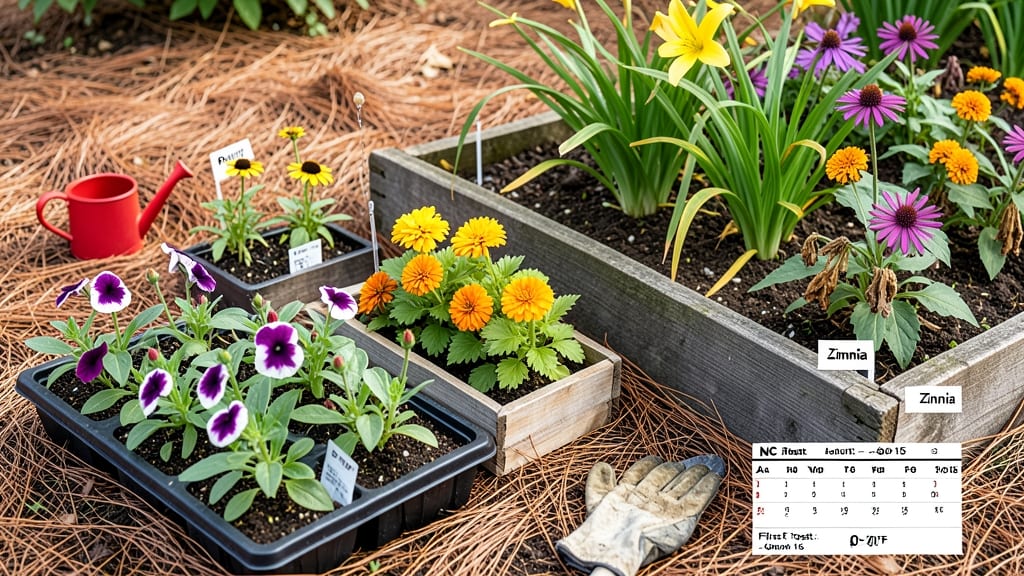
Planting flowers at the wrong time in North Carolina’s Zone 7b-8a can turn your dream garden into a sad, frost-nipped memory—especially when those 🌸 azaleas you counted on bloom a month too late.
The key to vibrant blooms lies in understanding your region’s unique frost dates and microclimates, whether you’re in the Piedmont’s rolling hills or the Mountains’ cooler valleys.
I’ve spent years tracking NC’s planting windows, and what I’m about to share will help you avoid the 3 most common mistakes that ruin flower beds.
From knowing when to tuck in tender annuals before the first frost to timing fall plantings for a second flush of color, these deadlines are your secret weapon for a garden that thrives year after year.
Whether you’re a first-time gardener or a seasoned pro, this guide breaks down the exact months to plant—plus how to adjust for your specific corner of the state. We’ll cover everything from heat-loving sunflowers to frost-hardy daylilies, so you can finally stop guessing and start growing with confidence.
Ready to transform your yard into a blooming paradise? Let’s dive into the perfect planting schedule that works for North Carolina’s climate—no more missed opportunities or wilting dreams.
North Carolina Zone 7b-8a flower planting deadlines by type
North Carolina’s Zone 7b-8a offers a 165-day frost-free season, but timing your flower planting correctly ensures your blooms thrive—not just survive.
The last frost date varies from February 1 (Zone 8b) to March 15 (Zone 7b), while the first frost arrives between November 15 (Zone 7b) and December 15 (Zone 8b). Missing these windows can leave your annuals and tender perennials vulnerable to frost damage.
For cool-season flowers like pansies and snapdragons, start seeds indoors 6-8 weeks before your last frost or plant them directly in early spring (March).
Meanwhile, warm-season favorites such as zinnias and marigolds should only go in the ground after soil temperatures hit 60°F, typically mid-April to early May in most of NC.
Bulbs like tulips and daffodils need to be planted 6-8 weeks before frost, usually in October for fall or early spring.
Here’s your at-a-glance planting schedule for North Carolina’s most popular flowers, broken down by type:
| Flower Type | Planting Window | Notes |
|---|---|---|
| Annuals (e.g., Marigolds, Petunias, Zinnias) | After last frost (April–May) | Soil temp must be 60°F+; deadhead for continuous blooms. |
| Perennials (e.g., Coneflowers, Black-Eyed Susans) | Early spring (March–April) or fall (September–October) | Fall planting establishes roots before winter; spring planting avoids drought stress. |
| Bulbs (e.g., Tulips, Daffodils, Hyacinths) | Fall (October) or early spring (February–March) | Plant bulbs 6–8 inches deep; fall planting yields earlier spring blooms. |
| Tender Flowers (e.g., Geraniums, Impatiens) | After last frost (May–June) | Avoid frost; mulch to protect roots in fall if overwintering. |
| Cool-Season Annuals (e.g., Pansies, Snapdragons) | Early spring (March) or fall (August–September) | Thrive in cooler temps; fall planting extends blooms into winter. |
If you’re planting perennials, fall is your best bet for establishing strong roots before winter. For example, daylilies and coreopsis planted in September or October will bloom earlier and more vigorously the following spring.
Meanwhile, annuals like zinnias should wait until after your last frost—typically mid-April in Zone 7b and early April in Zone 8a—to avoid frost damage.
For bulbs like tulips, timing is critical. Plant them in October for a spring bloom in March or April. If you miss this window, you can still plant in early spring (February–March), but expect blooms to arrive 4-6 weeks later.
Pro tip: Use a soil thermometer to confirm 60°F soil temps before planting warm-season flowers like sunflowers or dahlias.
North Carolina’s mountain regions (Zone 7b) have later last frosts (March 15) compared to the coastal plain (Zone 8a), where you can plant as early as February 15.
Adjust your schedule accordingly—coastal gardeners can start 2-3 weeks earlier than those in the Piedmont or mountains. Always check the NC State Extension’s frost date maps for your specific county to fine-tune your planting timeline.
Don’t forget about container gardening! Potted flowers warm up faster in spring, so you can plant 1-2 weeks earlier than in-ground plants. Just ensure your containers have drainage holes and use a lightweight potting mix to prevent waterlogging.
For heat-sensitive varieties like impatiens, delay container planting until after May 1 to avoid overnight chills.
One of my favorite NC-native flowers, the black-eyed Susan, thrives when planted in early spring (March–April) and blo
How to adjust planting times for North Carolina’s microclimates
North Carolina’s diverse geography means your neighbor’s perfect planting time might be a disaster for your garden. The Mountains (Zone 6a-7a) have later last frosts than the Coastal Plain (Zone 8a-9a), while the Piedmont (Zone 7b-8a) sits right in the middle.
Even within 20 miles, microclimates created by elevation, water bodies, or urban heat can shift ideal planting dates by 2-4 weeks.
For example, Asheville’s average last frost is April 15, while Wilmington’s is March 1. That means tender annuals like impatiens can go in the ground 6 weeks earlier on the coast than in the mountains.
Use these adjustments to fine-tune your schedule based on where you live in the state.
🌱
🌿 Microclimate Adjustments for NC Flower Planting
- Mountains (Zone 6a-7a): Wait until May 1 for heat-loving annuals like sunflowers and marigolds—soil warms slower at higher elevations. Use black plastic mulch to speed up warming.
- Piedmont (Zone 7b-8a): Follow the March 15-April 15 window for most spring plantings. Bulbs like daffodils can go in as early as October 15 for winter blooms.
- Coastal Plain (Zone 8a-9a): Plant tender perennials like canna lilies as early as February 15. Monitor for unexpected cold snaps—coastal areas can still dip below freezing.
- Urban Areas: Concrete and pavement create heat islands—plant heat-sensitive flowers like petunias 2 weeks later than rural areas. Use container gardening with self-watering pots to manage temperature swings.
- Near Water Bodies: Lakes and rivers moderate temperatures—extend your fall planting by 2 weeks if you’re within 1 mile of water. Perennials like daylilies thrive in these cooler microclimates.
Soil temperature is your real planting clock, not just the calendar. Use a soil thermometer to confirm when your garden is ready—60°F for seeds and 65°F for transplants.
In the mountains, this might mean waiting until late May, while coastal gardeners can start as early as February for warm-season flowers.
Container gardeners have an extra advantage: move pots indoors during unexpected cold snaps. Place them near south-facing windows or under grow lights to extend your growing season. I’ve kept geraniums blooming through November in containers by bringing them inside before the first frost.
Don’t forget to check NC State Extension’s frost maps annually—climate change is shifting average frost dates. For example, Raleigh’s last frost has moved from March 15 to March 1 over the past decade.
Stay flexible and adjust your planting dates 1-2 weeks earlier each year if you notice trends in your local weather.