
Companion Plants
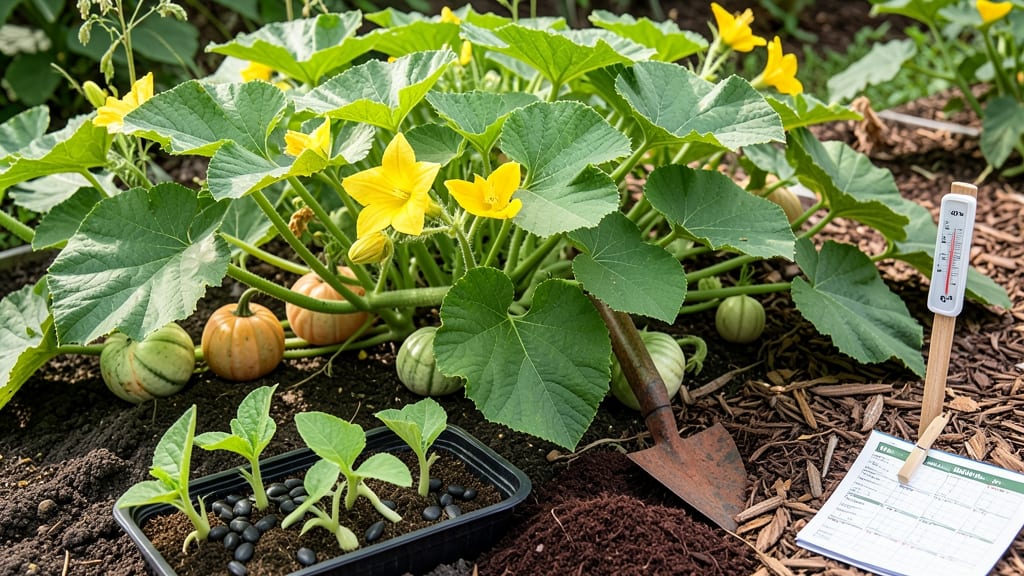
Planting pumpkins in Michigan isn’t just about throwing seeds into the dirt—it’s about timing them perfectly to beat the unpredictable frost that can turn your harvest into a bust.
With the right window, you’ll go from seed to 🎃 in no time, but get it wrong, and you might end up with nothing but wilted vines.
Michigan’s 5b-6b climate gives you roughly 165 frost-free days, which means you’ve got a tight schedule to work with.
Most gardeners here start seeds indoors in early May, then transplant after the last frost—typically mid-to-late May—but direct sowing is also an option if you’re patient enough to wait for soil temps to hit 70°F.
Whether you’re growing tiny Jack Be Little pumpkins or giant Howden varieties, the key is knowing your local frost dates and adjusting your planting strategy.
I’ll break down the exact timelines for Michigan’s regions, plus the best varieties to grow so you can maximize your harvest before the first chill hits in September.
Ready to avoid the common mistakes that leave Michigan gardeners scrambling? Let’s dive into the precise planting schedule—and pro tips—to ensure your pumpkins thrive from seed to harvest, no matter where you are in the state.
Michigan’s pumpkin planting timeline: frost dates by growing zone
Michigan’s USDA growing zones 5b-6b mean pumpkin lovers face a tight window between last spring frost and first fall frost. In most regions, you’ve got just 165 frost-free days—so timing is everything.
Plant too early, and seedlings rot in cold soil; too late, and your 90-day pumpkins never mature. Let’s break down the exact windows by zone and region.
Northern Michigan (zones 5a-5b), like Traverse City or Marquette, has the shortest season. Your last frost date typically lands between May 15-30, while southern regions (zones 6a-6b), including Detroit or Kalamazoo, can start as early as May 1-15.
The key is waiting until soil temps hit 70°F (21°C)—a soil thermometer is your best friend here.
Here’s the golden planting window for Michigan:
| Zone/Region | Last Frost Date | Optimal Planting Window | First Frost Risk |
|---|---|---|---|
| Northern (5a-5b) | May 15-30 | June 1-15 (after soil reaches 70°F) | Late Sept - Early Oct |
| Central (5b-6a) | May 1-15 | May 20-June 5 | Mid-Sept - Late Sept |
| Southern (6a-6b) | April 25-May 10 | May 10-25 | Late Sept - Early Oct |
*Frost dates vary yearly; check Old Farmer’s Almanac for updates.
For small pumpkin varieties (like ‘Jack Be Little’, maturing in 75-85 days), you can push planting to June 1-15 in most zones—just be ready to harvest before frost.
But giant varieties (e.g., ‘Atlantic Giant’, needing 120+ days) must start by May 15 in the south or May 25 in the north.
Pro tip: Use black plastic mulch to warm soil faster and row covers to extend the season by 2-3 weeks. In my zone 6b garden, this lets me plant ‘Sugar Pie’ pumpkins by May 10 and still harvest by October 1—just in time for carving!
If you’re starting seeds indoors, begin 4-6 weeks before your last frost date. Seedlings need 6-8 hours of light daily and warmth (75-85°F) to thrive. Harden them off for 7-10 days before transplanting after May 15 in most of Michigan.
Watch for late spring frosts—they’re sneaky! If temps drop below 50°F (10°C) after planting, cover seedlings with frost cloth or a clear plastic bottle (cut in half) to protect them. I’ve lost 3 batches of seedlings to unexpected frosts—don’t let that be you!
For succession planting, sow a second batch of fast-maturing varieties (like ‘Autumn Gold’) in early July to harvest before frost. Just remember: pumpkins need space—vines spread 10-20 feet, so plan accordingly.
Finally, track your local frost dates using Michigan State University’s frost maps or a garden journal. Over 5 years of planting, I’ve found that Detroit’s frost dates can vary by 10 days—so flexibility is key! ☀️🎃
Michigan’s pumpkin planting timeline: frost dates by growing zone
Michigan’s USDA zones 5b-6b create a tight window for pumpkin planting, where even a week’s delay can mean the difference between a harvest-ready pumpkin and a frost-killed vine.
The last spring frost typically arrives between mid-May and early June, while the first fall frost hits as early as late September—leaving you with just 165 frost-free days to grow your pumpkins.
Your planting strategy depends on your location: Northern Michigan (e.g., Traverse City) has cooler soils and later frost dates, while Southern Michigan (e.g., Detroit) warms up faster.
For most of the state, direct sowing should happen 2-3 weeks after the last frost, once soil temperatures hit 70°F (21°C). If you’re in a hurry, start seeds indoors in early May and transplant after frost.
Here’s a breakdown of your planting timeline by Michigan region, including ideal windows for both small varieties (like Jack Be Little) and large varieties (like Howden):
For fast-maturing varieties (under 90 days), you can push the envelope by planting as early as mid-May in Southern Michigan, but be prepared to use row covers if frost threatens. In Northern Michigan, wait until after June 1 to avoid frost damage to young seedlings.
If you’re growing giant pumpkins, which take 100-120 days, start seeds indoors by early May and transplant after the last frost. These varieties need the full growing season, so don’t risk planting them too late—even a 5-day delay can mean no harvest.
Always check your local Almanac frost dates for your specific town, as microclimates (like hills or lakes) can shift frost timelines by 1-2 weeks. And remember: early planting isn’t always better—cold, wet soil can rot seeds before they sprout.