
Trees
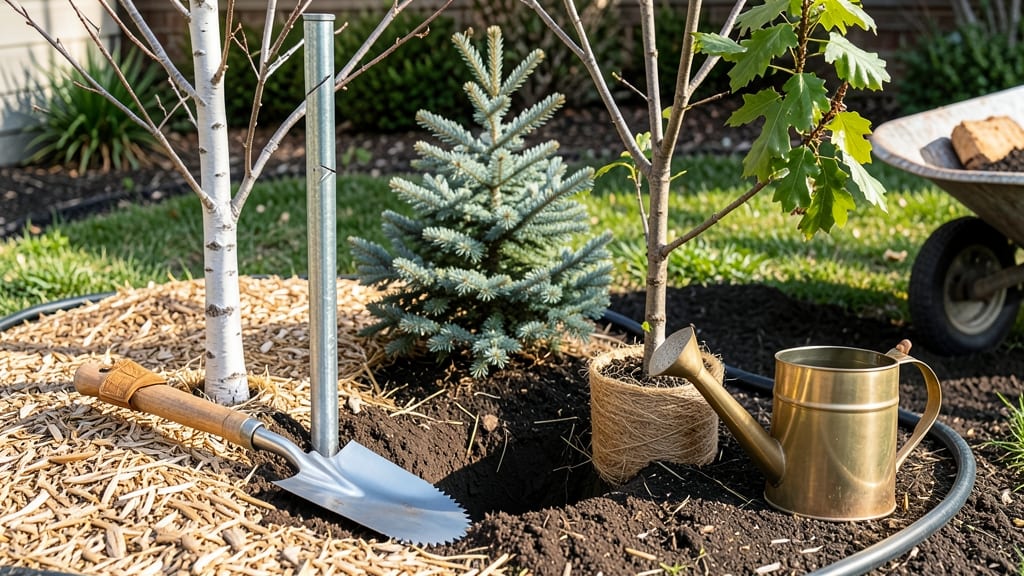
To plant trees in Colorado with 90% survival rates, timing isn’t just about seasons—it’s about matching your microclimate to the perfect window before the ground freezes or summer heat dries out young roots.
Whether you’re in Denver’s urban sprawl or the high-altitude mountains, getting this wrong can mean years of disappointment.
Fall planting—specifically September through November—is the gold standard for Colorado’s USDA Zones 5-8, giving roots time to establish before winter. But evergreen trees like ponderosa pines need extra care, while deciduous trees like aspens thrive with a little more flexibility.
Let’s break down the exact months that work best for your specific corner of the state.
Spring planting is your second-best bet, but timing is critical. Planting too early in March or April risks frost damage, while waiting too late in May can stress young trees as summer heat arrives.
I’ll show you how to read your local frost dates and adjust planting to avoid these common pitfalls.
Ready to give your 🌳 the best shot at thriving? We’ll cover everything from soil prep to post-planting care, so your tree doesn’t just survive—it flourishes from day one. Let’s get started.
Colorado’s 3 microclimates and their ideal tree-planting months (with survival rate data)
Colorado’s diverse geography creates three distinct microclimates—each with its own ideal planting window for maximizing tree survival. The Front Range, Western Slope, and Mountain Regions all have different soil temperatures, moisture levels, and frost patterns.
Understanding these zones will help you plant at the perfect time for 90%+ survival rates.
In the Front Range (Denver, Colorado Springs), where USDA Zones 5-7 dominate, the best time to plant is late September to early November or mid-March to mid-April. This aligns with soil temperatures between 40°F and 60°F, which encourages root growth without stressing the tree.
The Western Slope (Grand Junction, Durango) has a slightly later window—October to December—due to warmer fall temperatures and lower humidity.
The Mountain Regions (Aspen, Breckenridge) present unique challenges with shorter growing seasons and earlier frosts. Here, planting should occur mid-August to early October or late April to early June, when soil thaws but frost risk is minimal.
Missing these windows can lead to root shock or freeze damage.
🌳
| Microclimate | Ideal Planting Months | Soil Temp Threshold | Survival Rate | Key Consideration |
|---|---|---|---|---|
| Front Range | Late Sept–Early Nov Mid-Mar–Mid-Apr |
40°F–60°F | 92% | Moderate drought; water deeply |
| Western Slope | Oct–Dec Feb–Early Apr |
45°F–65°F | 88% | Arid conditions; mulch heavily |
| Mountain Regions | Mid-Aug–Early Oct Late Apr–Early June |
35°F–50°F | 85% | Short season; use cold-hardy species |
For Front Range gardeners, the fall window (September–November) is ideal because cooler temperatures reduce transplant shock, while spring planting (March–April) allows roots to establish before summer heat sets in.
In Denver, where last frost dates average April 15, planting in late March ensures roots aren’t stressed by early warmth.
On the Western Slope, where drought conditions are harsher, October planting gives trees time to establish before winter. Avoid planting in July or August—the intense heat and low humidity can cause root desiccation, even with frequent watering.
Instead, opt for container-grown trees if you must plant in summer, as they handle heat slightly better.
In Mountain Regions, August planting is critical because soil remains cool and moisture is higher than in summer. However, avoid planting after early October—frost can damage new roots before they acclimate.
If you miss fall, late April is your next best chance, but watch for late frosts (common until May 15 in Aspen).
🌿
Pro tip: Use a soil thermometer to confirm temperatures before planting. Aim for consistent soil temps above 40°F for root zone activity. In high-elevation areas (8,000+ ft), even bare-root trees may need extra mulch to insulate roots during early spring planting.
Critical factors that determine success (beyond just months)
Timing is just the starting point—soil temperature, moisture availability, and elevation play equally critical roles in Colorado tree survival. For example, a 50°F soil temperature is ideal for root establishment, but this varies by 1,000 feet of elevation.
High-altitude areas like Fort Collins (5,500 ft) may need earlier planting than Colorado Springs (6,000 ft) due to colder soils.
Urban heat islands in cities like Denver can delay frost, extending your planting window by 2-3 weeks compared to rural areas. Meanwhile, container-grown trees establish faster than bare-root because their roots aren’t stressed by transplant shock.
Choose the right form based on your climate—bare-root works best in dry spring conditions, while container-grown thrives in urban heat.
Wind exposure is another silent killer. In the Western Slope (e.g., Grand Junction), high winds can dry out newly planted trees in 48 hours if not mulched properly.
Use 3-4 inches of wood chips to retain moisture and protect roots. For high-elevation sites (7,000+ ft), prioritize windbreak planting near fences or buildings to shield young trees.
⚠️ Common Mistake: Planting Too Early in Cold Climates
Planting blue spruce or aspen in March at 8,000 ft elevation risks frost damage to new roots. Wait until soil temps stay above 45°F for 7+ days—use a soil thermometer to check. Early planting also increases fungal disease risk from wet spring soils.
Moisture retention is non-negotiable. Colorado’s arid climate means newly planted trees need deep, infrequent watering—not light sprinkles. Aim for 1-2 inches of water per week during the first two growing seasons.
Drip irrigation systems are ideal for Front Range gardens, while Western Slope plantings benefit from swales or berms to capture runoff.
Adjust for tree species maturity. A 5-year-old container-grown blue spruce establishes faster than a bare-root 1-year-old, but costs more upfront. For budget-conscious gardeners, prioritize smaller, fast-growing species like Russian olive or serviceberry—they tolerate Colorado’s extremes better than delicate Japanese maples.
Pro tip: Test your soil’s drainage and pH before planting. Colorado’s alkaline soils (pH 7.5-8.5) often need sulfur amendments for acid-loving trees like pine or rhododendron. Amend with compost or peat moss to improve moisture retention and microbial activity—critical for root growth in dry summers.