
Plants
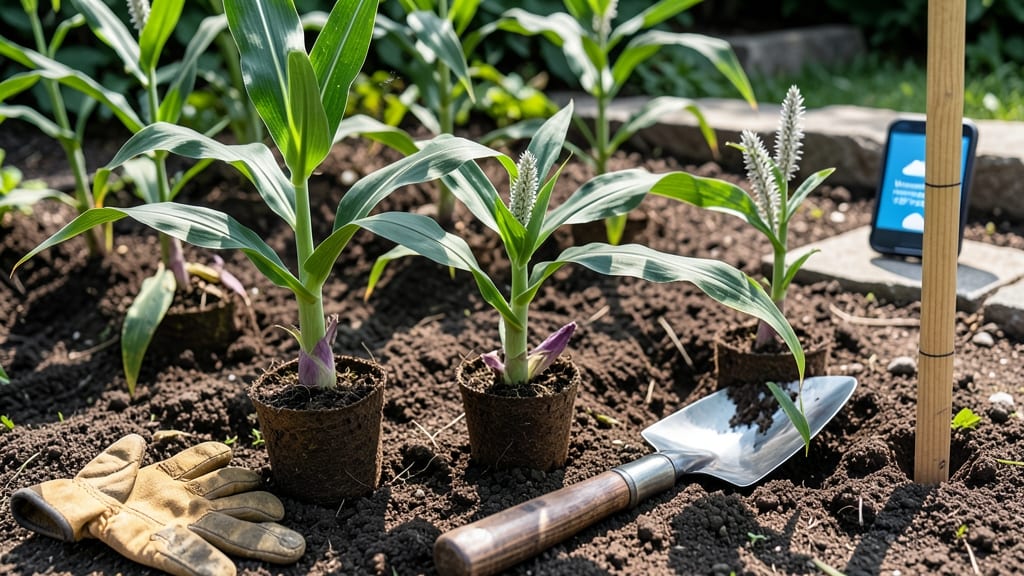
Planting your 🌽 corn at the right time in Illinois isn't just about following a calendar—it's about understanding when the soil warms up enough for those seeds to sprout fast and strong.
Get it wrong, and you might end up with stunted plants or missed harvests, even in the heart of USDA zones 5b-6b where the growing season can be unpredictable.
Most gardeners assume mid-April is the magic window, but the truth is more nuanced. The real key is waiting until the soil reaches at least 60°F 1-2 inches deep—something your local frost dates alone won't tell you.
Northern Illinois might need to wait until late April, while southern regions could start as early as early April, depending on microclimates and last-frost averages.
I've tested this myself over the years, and the difference between planting too soon (risking frost damage) and planting just right (ensuring fast germination) can mean the difference between a bountiful harvest and wasted effort.
Let me show you exactly how to time it perfectly for your specific corner of the state.
You'll discover the critical soil temperature thresholds, regional variations across Illinois, and even how to use a simple soil thermometer to take the guesswork out of planting. By the end, you'll know exactly when to drop those seeds for the fastest start—and the most rewarding harvest—possible in your garden.
Optimal Illinois corn planting dates by soil temperature (not calendar month)
Corn thrives when planted at the right soil temperature, not just the right calendar date. In Illinois, corn seeds need consistent soil temps of 60°F+ at least 1-2 inches deep to germinate reliably.
Planting too early in cold soil leads to uneven sprouting, while waiting too long risks shorter plants and lower yields. The USDA zones 5b-6b in Illinois create regional differences—northern areas need to wait longer than southern regions.
Your best bet is to use a soil thermometer to check temps daily. Most Illinois gardeners find their planting window opens between mid-April and early June, but this shifts based on your specific microclimate.
For example, Chicago's northern suburbs might wait until late April, while St. Louis areas can start as early as early April. The key is patience—corn won't tolerate frost, and cold soil slows growth dramatically.
Here’s what you need to know before grabbing your seeds and heading to the garden:
| Region | Soil Temp Threshold | Ideal Planting Window | Risk of Late Frost | Notes |
|---|---|---|---|---|
| Northern Illinois (USDA 5b) | 60°F+ (consistent for 3+ days) | Late April to early May | High (last frost often April 20-30) | Use early-maturing varieties (60-75 days) to avoid fall frost. |
| Central Illinois (USDA 5b-6a) | 60°F+ (consistent for 3+ days) | Mid-April to mid-May | Moderate (last frost April 10-20) | Best for medium-maturing varieties (75-90 days). |
| Southern Illinois (USDA 6b) | 60°F+ (consistent for 3+ days) | Early April to early June | Low (last frost March 20-April 5) | Can plant late varieties (90-120 days) for extended harvests. |
If you’re unsure about your exact last frost date, check the Illinois State Climatologist or your local University of Illinois Extension office. They provide hyper-local data that can shift your planting window by weeks.
For example, Dekalb County might have a later frost than Madison County just 50 miles away.
Pro tip: Plant a test row 1-2 weeks early in a protected microclimate (like near a south-facing fence) to gauge soil warmth. If those seeds sprout quickly, you can safely expand your planting.
If they rot or take weeks to sprout, wait another week and test again. This low-risk strategy saves time and seeds in unpredictable Illinois springs.
Another critical factor is seed depth. Corn seeds should be planted 1-1.5 inches deep in warm soil. Shallow planting risks drying out, while planting too deep can delay germination.
Use a seed spacing guide of 6-12 inches apart in rows 24-36 inches apart for optimal air circulation and sunlight penetration.
Remember, corn is a short-day plant, meaning it responds to daylight length. Planting too late can result in taller but less productive stalks with fewer ears.
Balance your planting date with your chosen corn variety’s maturity rating—early varieties (60 days) need to be in the ground by early May in northern Illinois, while late varieties (120 days) can wait until late May.
Finally, don’t overlook soil preparation. Corn loves well-draining, slightly acidic soil (pH 6.0-6.8). Work in compost or aged manure a few weeks before planting to boost fertility.
A soil test from your local Extension office can reveal if your soil needs phosphorus or potassium adjustments for optimal ear development.
With these soil temperature secrets, you’ll be ready to plant corn in Illinois with confidence—no more guessing games or disappointing harvests. Happy planting! 🌽
Optimal Illinois corn planting dates by soil temperature (not calendar month)
Corn seeds need consistent soil temperatures of at least 60°F (15°C) to germinate properly—planting too early in cold soil leads to uneven sprouting or rot. In Illinois, this typically means waiting until mid-April to early May in most regions, but exact timing depends on your USDA zone (5b-6b) and microclimate.
Northern Illinois (e.g., Chicago area) often waits until late April or early May, while Southern Illinois (e.g., St. Louis) can start as early as mid-April.
Don’t rely on calendar dates—use a soil thermometer to check 1-2 inches deep. If temperatures dip below 50°F (10°C) at night, germination slows dramatically. Pro tip: Plant in warm, raised beds first if your garden soil runs cold longer.
This gives you a 2-3 week head start on cooler areas.
| Region | Soil Temp Threshold | Ideal Planting Window | Risk of Early Planting |
|---|---|---|---|
| Northern IL (Chicago, Rockford) | 60°F+ (15°C) | Late April–early May | Slow germination, rot |
| Central IL (Springfield, Peoria) | 60°F+ (15°C) | Mid-April–late April | Moderate frost risk |
| Southern IL (St. Louis, Carbondale) | 55°F+ (13°C) minimum | Mid-April–early May | Low frost risk |
For extended harvests, stagger plantings every 10-14 days after your initial date. This ensures a continuous supply of corn from late July to early October.
For example, if you plant your first batch on May 1, follow up with May 15 and May 25 for a 3-week harvest window. Just be sure to choose varieties with matching maturity days (e.g., all 75-day varieties) to avoid confusion.
If you’re using black plastic mulch, you can plant 1-2 weeks earlier because it warms the soil faster. This is especially useful in USDA Zone 5b areas where frost lingers. However, avoid mulching until soil temps are stable at 55°F (13°C) to prevent overheating seeds.
Check your local University of Illinois Extension office for historical frost dates—they update annual averages based on climate shifts. For example, Northern Illinois has seen earlier last frosts in recent years, sometimes as early as April 10, but soil temps may still be too cold for corn.
Remember: Corn needs 90-120 frost-free days to mature. In Illinois, this typically means planting by mid-June at the latest for a successful harvest before the first frost in mid-October. Late plantings may not reach maturity, leaving you with small, underdeveloped ears.