
Watering
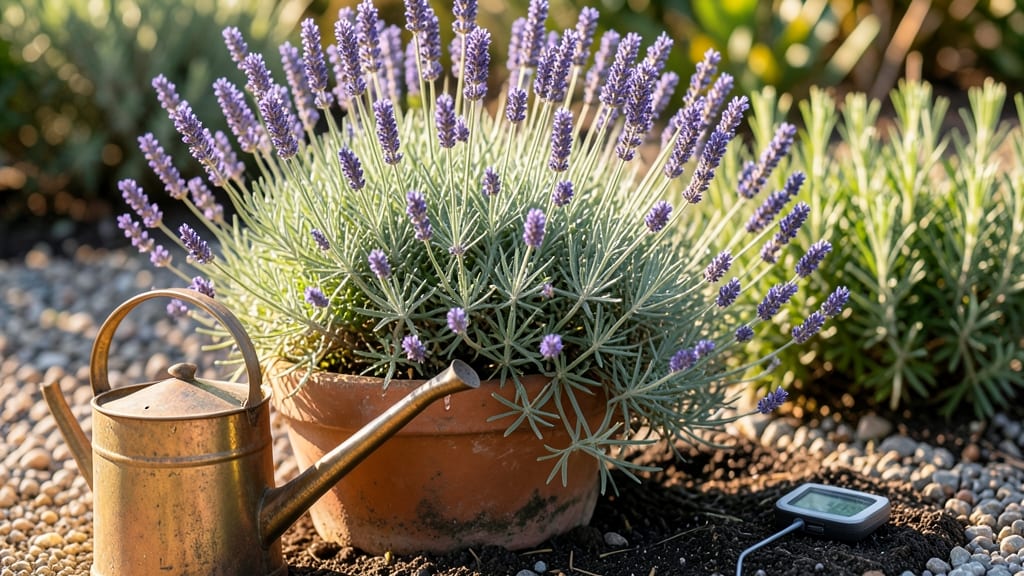
Watering your 🌿 lavender plant with how much water might seem simple, but most gardeners accidentally drown their plants by following the wrong schedule. The key to keeping lavender thriving lies in understanding its Mediterranean roots—too much water leads to root rot, while too little stresses the plant.
I’ve learned the hard way that lavender’s drought tolerance isn’t an excuse to neglect it; it’s a signal to water just enough.
Instead of guessing, I now follow a science-backed routine that matches lavender’s natural habitat. Whether you’re growing it in containers or in the ground, knowing when to water—and how much—can mean the difference between a fragrant, healthy plant and one that struggles to survive.
Let’s break down the exact watering schedule that keeps your lavender lush without overdoing it.
One of the biggest mistakes I see is watering lavender on a fixed schedule, like every week, without checking the soil. The truth? Your plant’s needs change with the seasons, soil type, and even the weather.
By learning to read the soil and adjust your approach, you’ll avoid both underwatering (which causes wilting) and overwatering (which leads to yellow leaves and root rot).
In this guide, I’ll share the simple tricks I use to keep my lavender happy—from the 1-2 inch soil dryness rule to the best times of day to water.
Whether you’re a beginner or a seasoned gardener, these tips will help you master the art of watering lavender without the guesswork.
How much water does a lavender plant really need?
Lavender plants thrive on minimal watering—their Mediterranean roots are adapted to dry conditions, not soggy soil. Unlike thirsty annuals, lavender wilts dramatically when overwatered, but it also struggles when underwatered. The key? A consistent dry-down period between waterings that mimics its natural habitat.
Think of lavender’s water needs like a drought-resistant sponge: it soaks up moisture quickly but releases it slowly. This means deep, infrequent watering beats shallow, frequent sprinkles.
The 1-2 inch soil dryness rule is your golden metric—stick your finger down and if the top 2 inches feel dry, it’s time to water.
Here’s the catch: clay soil holds moisture longer than sandy soil, so adjust your schedule accordingly. In sandy or gravelly soil, lavender may need water every 5-7 days in summer, while heavy clay soil could stretch that to 10-14 days.
Always prioritize well-draining soil—this is non-negotiable for lavender’s survival.
🌱 Lavender Watering Schedule by Season
| Season | Frequency | Soil Moisture Goal | Notes |
|---|---|---|---|
| Spring | Every 7-10 days | Top 1-2 inches dry | Increase if potted |
| Summer | Every 10-14 days | Top 2-3 inches dry | Morning watering only |
| Fall | Every 2-3 weeks | Top 2 inches dry | Reduce as temps drop |
| Winter | Monthly (if no snow) | Top 3 inches dry | Dormant phase—minimal water |
New lavender plants need more frequent watering—about every 5-7 days—for the first 6-8 weeks to establish roots. After that, treat them like mature plants.
Pro tip: Group lavender with rocks or gravel in your garden beds. This creates natural airflow around the base, reducing moisture retention and fungal risks.
Container-grown lavender dries out 3x faster than in-ground plants because pots have limited soil volume. Check the soil daily in summer—if it’s dry by 10 AM, water thoroughly. Use terracotta pots (they wick away moisture) and avoid saucers that trap water at the roots.
One common mistake? Watering lavender at night. This traps moisture on leaves, inviting powdery mildew or fungal diseases. Always water early morning (6-9 AM) so foliage dries quickly in sunlight. If you must water in the evening, aim for the soil base only—never the leaves.
Rainfall counts toward your lavender’s water needs, but 1 inch of rain ≠ 1 inch of soil moisture. Clay soil absorbs rain poorly, while sandy soil drains it instantly.
After heavy rain, stick a screwdriver into the soil—if it slides in easily, hold off on watering for another week.
Remember: Lavender’s fragrance fades when overwatered, and its woody stems soften when underwatered. The perfect balance keeps your plant compact, aromatic, and disease-free. Start with the schedule above, then adjust based on your local climate and soil type.
How much water does a lavender plant really need?
Lavender thrives on minimal watering—its Mediterranean roots evolved to survive drought, not soggy soil. The key is deep but infrequent watering, ensuring moisture reaches the roots without lingering at the surface.
Think of it like giving your lavender a long drink once a week rather than a quick sip daily.
Most gardeners overestimate lavender’s thirst, drowning their plants in root rot instead of nurturing them. I’ve seen wilting lavender revived with proper watering, but the damage from overwatering is often irreversible. Let’s fix that by mastering the 1-2 inch dry soil rule—the golden standard for lavender care.
| Season | Watering Frequency | Soil Dryness Test | Watering Time |
|---|---|---|---|
| Spring | Every 7-10 days | 1-2 inches dry | Morning |
| Summer | Every 10-14 days | 2-3 inches dry | Early morning |
| Fall | Every 2-3 weeks | 2 inches dry | Late morning |
| Winter | Monthly (if no rain) | 3-4 inches dry | Avoid watering |
💧 Pro Tip: Use a soil moisture meter or stick your finger 2 inches deep—if it feels dry, water deeply.
Your soil type plays a huge role. Sandy or well-draining soil dries faster, so you’ll water more often than in clay-heavy ground. I once had lavender in a container dry out in just 5 days—a stark reminder that pots need frequent checks.
Always water until you see moisture drain from the bottom of the pot.
Newly planted lavender needs extra attention for the first 2-3 weeks to establish roots. After that, treat it like a mature plant. The biggest mistake? Watering at night, which promotes fungal diseases. Stick to morning watering—it gives foliage time to dry before evening humidity sets in.
Even in hot summers, lavender’s silvery leaves reflect sunlight, reducing water loss. If your lavender looks stressed despite following this schedule, it might need more sunlight or better drainage. Never let it sit in standing water—lavender’s roots will rot in days.
For container lavender, reduce watering by 20%—pots dry out faster. Group containers together to create a microclimate that retains moisture longer. And remember: yellowing leaves often mean overwatering, while crispy edges signal underwatering. Balance is everything.