
Plants
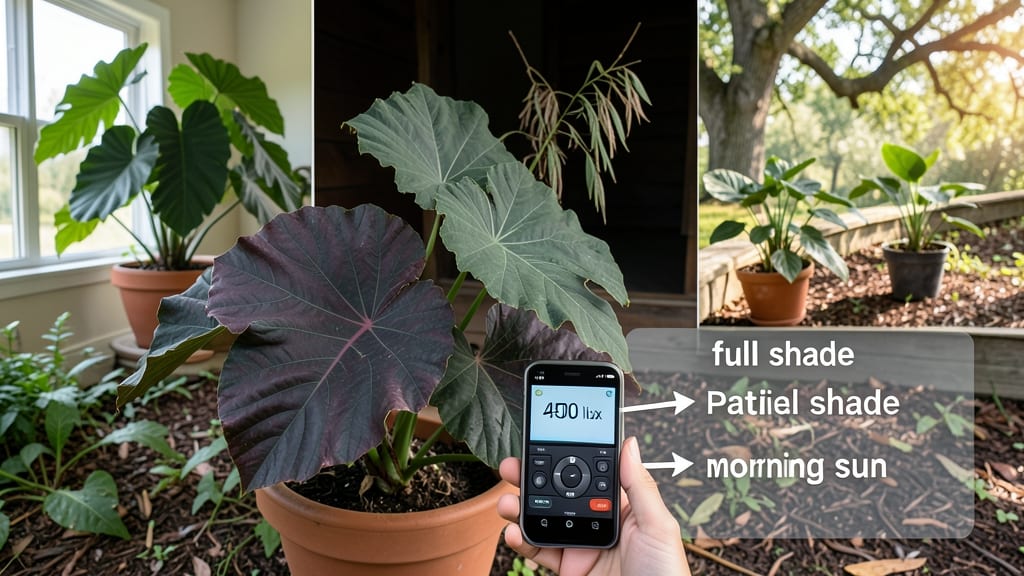
Ideal light requirements for elephant ear plants: partial sun to dappled shade explained
Elephant ear plants (Colocasia spp.) thrive in partial sun to dappled shade, making them perfect for gardeners who want bold foliage without harsh afternoon sun. These tropical beauties prefer 4-6 hours of morning sunlight paired with filtered light during peak heat hours.
Too much direct sun can scorch their leaves, while too little shade slows growth and dulls their stunning colors.
Think of their ideal spot as morning sun with afternoon shade—like under a tree with an open canopy or near a north-facing wall. Varieties like Colocasia esculenta handle slightly more sun, while Colocasia antiquorum prefers gentler light.
Understanding these nuances ensures your plant grows vibrant, healthy, and full-sized rather than leggy or pale.
Here’s how to translate "partial sun" into real-world terms: East-facing windows or west-facing spots with afternoon shade work best. Avoid south-facing areas unless you provide afternoon shade with a sheer curtain or lattice. Even in containers, position them where they get bright, indirect light for most of the day.
| Variety | Sun Tolerance | Best Light Conditions |
|---|---|---|
| Colocasia esculenta | Moderate (4-6 hrs sun) | Morning sun + afternoon shade |
| Colocasia antiquorum | Low (2-4 hrs sun) | Dappled shade or filtered light |
| Alocasia spp. (similar care) | Low (bright indirect) | North-facing windows or shaded patios |
Note: All varieties appreciate humidity and moisture-retentive soil to thrive in lower light.
If you’re in a hot, dry climate, prioritize afternoon shade to prevent leaf burn. In cooler regions, these plants can tolerate more direct sun, especially if the soil stays consistently moist.
A simple trick? Place a white sheer curtain over the plant during peak sun hours (11 AM–3 PM) to diffuse harsh rays while still allowing light through.
For container growers, rotate pots weekly to ensure even light exposure. This prevents one side from stretching toward the sun while the other stays weak. Even a 5-gallon pot can support a mature plant if placed in the right spot—just avoid cramped containers that restrict root growth in low-light conditions.
Pro tip: Observe your plant’s leaf color as a quick light-check. Deep, glossy green means it’s happy; pale or yellowing leaves signal it’s not getting enough light. Conversely, brown or crispy edges mean it’s getting too much direct sun. Adjust gradually—sudden changes in light can shock your plant, causing stress.
In urban settings, balcony railings or trellises can create perfect microclimates. Mount a vertical garden panel facing east or west to maximize indirect light. Even a south-facing balcony works if you use reflective surfaces (like a white wall or mirror) to bounce light onto the plant.
Remember, elephant ears are not drought-tolerant, so pair their light needs with consistent moisture. The right balance of partial sun + water is the secret to those showstopping, oversized leaves you’ve always dreamed of. Start with these guidelines, then tweak based on your plant’s response—every garden is unique!
Ideal light requirements for elephant ear plants: partial sun to dappled shade explained
Elephant ear plants (Colocasia spp.) thrive in bright, indirect light, but their exact needs depend on your local climate and the specific variety you're growing. Unlike sun-loving succulents, these tropical beauties prefer 4–6 hours of morning sun paired with afternoon shade.
Too much direct sun can scorch their delicate leaves, while too little light leads to weak, sparse growth.
Most Colocasia varieties—like the classic **elephant ear (Colocasia esculenta)—do best in partial shade, especially in hotter climates (Zones 8–11). In cooler regions (Zones 6–7), they can tolerate more direct sunlight as long as the soil stays consistently moist.
The key is balancing light and hydration to keep those stunning leaves vibrant.
🌿 Pro Tip: If your plant is in a container**, move it to a shadier spot during peak afternoon sun (12 PM–4 PM) to prevent leaf burn.
🌱 Elephant Ear Light Requirements Summary
| Variety | Ideal Light | Max Direct Sun | Signs of Stress |
|---|---|---|---|
| Colocasia esculenta | Partial shade (4–6 hrs sun) | Morning sun only | Brown leaf edges (too much sun) |
| Colocasia antiquorum | Bright indirect light | 2–3 hrs max | Leggy stems (too little light) |
| Alocasia spp. (e.g., Alocasia zebrina) | Dappled shade (filtered light) | None (indoors only) | Yellowing leaves (low light) |
For outdoor gardens, position your elephant ear near a north-facing wall or under deciduous trees (like maples or oaks) that provide dappled shade. In containers, place them on a patio or balcony where they receive morning sun and afternoon shade.
If you're in a tropical climate, even filtered shade (like under a pergola) works well, but avoid deep shade, which stunts growth.
💡 Light Hack: Rotate your plant quarter-turns weekly to ensure even light exposure and prevent lopsided growth. This is especially important for container-grown elephant ears, which may lean toward the light source.
In indoor settings, place your plant within 3–6 feet of an east- or west-facing window where it gets bright, indirect light. South-facing windows can work, but use sheer curtains to diffuse harsh rays. Avoid dim corners or north-facing rooms unless you supplement with a grow light (12–14 hours/day).
Finally, monitor your plant’s response to light. If the leaves start yellowing or curling, it’s a sign of too much sun. If they stretch upward or lose color, it needs more light. Adjust gradually—sudden changes can shock the plant.